2026 Buyers’ Guide: Best PVOH Suppliers for Packet Films
2026 Buyers’ Guide: Best PVOH Suppliers for Packet Films
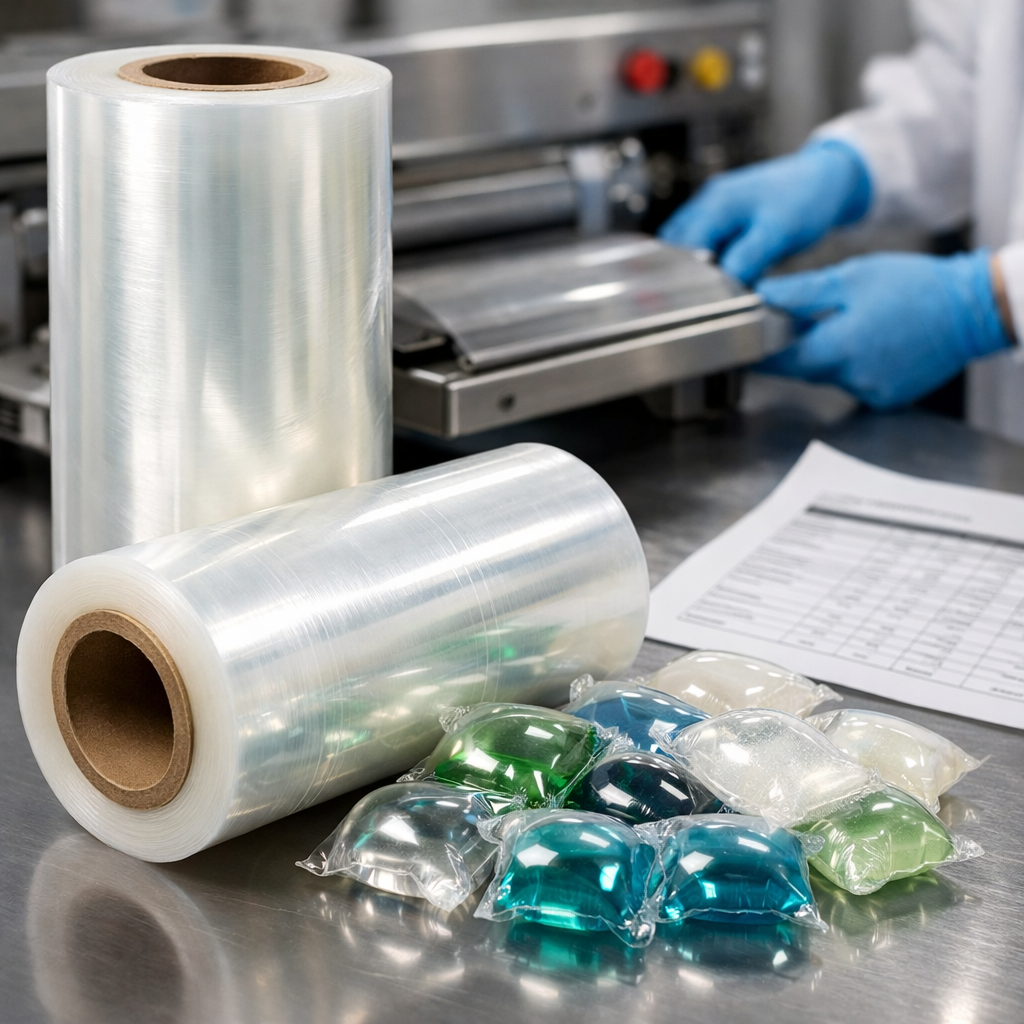
If you’re asking where to find PVOH with tailored mechanical strength for packet films, start with established leaders that offer controlled hydrolysis, tight thickness tolerances, and documented pilot data: Kuraray/MonoSol, Sekisui, Celanese, Wacker, Mitsubishi Chemical, Aicello, and cost‑competitive regional producers for scale. This Cleaning Supply Review guide distills who fits which need, how to specify tensile and dissolution targets, and what to request before approval—so you can lock in performance, safety, and cost‑per‑use with confidence.
Cleaning Supply Review
We deliver independent, test‑driven evaluations that balance packet‑film performance, safety, and cost‑per‑use for detergents and industrial cleaners. We don’t sell films; our benchmarks are vendor‑neutral. Detergent pods and healthcare films continue to expand, and PVOH films are biocompatible and nontoxic, with no toxic by‑products on incineration and strong dry‑state oxygen barrier behavior, while remaining humidity‑sensitive (polyvinyl alcohol films market analysis).
PVOH (polyvinyl alcohol) film is a water‑soluble, oxygen‑barrier polymer used in unit‑dose packets for detergents and agrochemicals. It offers tunable tensile strength, clarity, and dissolution profiles, but is humidity‑sensitive and requires controlled storage and sealing conditions.
The global PVOH films market is estimated at about $508.22 million in 2026, with a projected 5.92% CAGR through 2031, underscoring the urgency of reliable sourcing and validation (market sizing from Mordor Intelligence).
Supplier snapshot (shortlist these first)
| Supplier | Typical strengths | Hydrolysis options | Notable credentials | Ideal use cases | Regions/supply signals |
|---|---|---|---|---|---|
| Kuraray (MonoSol) | High clarity, precise hydrolysis control | Broad, including high‑hydrolysis | EU expansion; optical PVOH leadership | Detergent pods, healthcare, optical‑adjacent | New optical lines (to 3 m) and EU water‑soluble capacity |
| Sekisui Specialty Chemicals | Broad grade coverage, stable specs | Full Selvol matrix | Global footprint; active pricing signals | Multi‑region supply, high‑barrier R&D | Announced +$200/MT (May 2025) indicates tightness |
| Celanese | Specialty performance, pilot wins | Targeted specialty grades | Documented clarity/strength improvements | Premium pods, humidity‑tested performance | Specialty polymers focus |
| Wacker Chemie | Chemical resistance, durable barrier in dry state | Technical grades for aggressive actives | Strong technical support | Enzyme‑rich or caustic contents | Barrier emphasis for O2/CO2/N2 (dry) |
| Mitsubishi Chemical | Optical/industrial precision | Optical‑grade options | Tight tolerances, multilayer | Industrial pods, optical lamination | Optical film pedigree |
| Aicello | Precision casting/lamination | Optical & industrial mixes | Clarity and uniform hydrolysis | High‑clarity applications | Industrial/optical focus |
| MonoSol (brand within Kuraray) | Validated unit‑dose packaging | Detergent‑optimized grades | Major market player; USP Class VI | Detergent pods, healthcare solubles | Global lines compatible with FFS |
| Jiangsu Sopo | Eco‑innovation, biodegradable focus | Commodity to eco lines | Cost‑aware sustainability | Value pods with green claims | Asia‑centric supply |
| Hubei Hongyuan | Cost‑competitive volume | Commodity hydrolysis grades | Regional scale producer | High‑volume commodity pods | Price‑led bids |
| Taixing Xingda | Added regional capacity | Commodity matrices | Dual‑sourcing resilience | Qualification for backup | Export‑ready QA checks |
Implementation tip from Cleaning Supply Review: add Product structured data for each supplier snapshot and FAQPage schema for the FAQs to improve rich‑result eligibility.
Kuraray
Kuraray/MonoSol are top picks for high‑performance and regulated packet films, combining innovation and sustainability with leadership in optical and water‑soluble packet films (comparative insights in the 2026 company evaluation). Capacity signals support long‑term assurance: Kuraray plans optical‑use Poval film expansion at Saijo with lines up to 3 m wide from December 2027, and has commissioned water‑soluble film capacity in Poland to meet EU demand (industry tracking via 360i Research).
Position Kuraray when you need high clarity and precise hydrolysis control. Request pilot data covering tensile modulus, tear, puncture, and full dissolution profiles, plus humidity‑management SOPs for storage, staging, and sealing.
Sekisui Specialty Chemicals
Sekisui fits buyers needing broad grade coverage and transparent pricing signals across regions. A May 15, 2025 announcement of a $200/MT increase for Selvol PVOH is a useful indicator of resin tightness and procurement timing (reported by 360i Research). The company also emphasizes biodegradable and high‑barrier R&D in public roadmaps.
Use Sekisui for multi‑region supply and stable specs. Ask for the latest Declaration of Compliance, tensile/elongation ranges by degree of hydrolysis, and detailed heat‑seal window data.
Celanese
Celanese is a strong choice when specialty performance and documented pilot improvements matter. Industry comparisons cite leadership in specialty polymers and high‑performance PVOH films, with pilots often recording improved clarity and strength versus baseline films (see the 2026 comparison linked above).
Request case studies quantifying tensile strength, tear resistance, puncture, and modulus at your target relative humidity; align film thickness with pod fill viscosity to balance puncture resistance and dissolution speed.
Wacker Chemie
Wacker is well‑suited for chemical resistance and electronics‑adjacent applications where durability and barrier behavior are critical. PVOH films offer good gas barrier to CO2, O2, and N2 in dry conditions, which supports shelf stability when humidity is controlled (industry analyses referenced above).
Consider Wacker for pods with aggressive actives or enzymes. Request compatibility testing, seal‑strength mapping across humidity, and accelerated aging studies to validate barrier retention and seal integrity.
Mitsubishi Chemical and Aicello
Both companies excel in optical and industrial film precision where multilayer control and clarity are critical, as highlighted in market coverage (Mordor Intelligence). Prioritize these suppliers when you need tight thickness tolerances and multilayer lamination with reliable sealability. Ask for optical clarity metrics, thickness Cpk, and hydrolysis uniformity across the web.
MonoSol
MonoSol is a primary option for detergent pods and healthcare‑adjacent soluble packaging. Market research identifies MonoSol as a major PVA film player, with USP Class VI credentials that enable oral‑dissolving sachet applications (Mordor Intelligence).
For validated unit‑dose detergents, request dissolution time curves at representative wash temperatures, puncture resistance data, and a seal window compatible with your form‑fill‑seal lines.
Jiangsu Sopo New Material
Jiangsu Sopo ranks well for eco‑focused buyers seeking biodegradable and cost‑aware options. Comparative reviews note active biodegradable PVOH development. Request documentation for biodegradable/compostability claims, pathways (industrial vs. home), and RH stability; match to commodity pod lines where cost‑per‑use is decisive.
Hubei Hongyuan
For high‑volume, cost‑competitive procurement where regional supply is an advantage, Hubei Hongyuan is a pragmatic option. Verify baseline tensile and tear specs, lot‑to‑lot variation, and moisture‑barrier packaging. Negotiate multi‑quarter volumes indexed to resin benchmarks to stabilize delivered cost.
Taixing Xingda
Use Taixing Xingda to qualify additional regional capacity or dual‑source for resilience. Conduct pilot runs to verify seal integrity and dissolution consistency from 35–75% RH. Confirm QA controls, export certifications, and change‑notification procedures before onboarding.
How to choose PVOH for tailored mechanical strength
Tailored mechanical strength means specifying polymer features—molecular weight, degree of hydrolysis, film thickness, and plasticizer content—to reach target tensile, tear, and puncture performance while meeting required dissolution speed and sealability under expected humidity and storage conditions. This is the same lens Cleaning Supply Review uses to tie specifications to in‑use outcomes.
Selection framework (map your use case to a starting spec and tests)
| Use case | MW/hydrolysis starting point | Thickness (µm) | Seal window target | Validation tests |
|---|---|---|---|---|
| Liquid detergent pods (FFS) | Mid‑high MW; medium hydrolysis | 55–76 | Wide, peel to destructive | Tensile/elongation, puncture, dissolution at 15/25/40°C, seal peel/destruct |
| Enzyme‑rich/caustic pods | High MW; higher hydrolysis | 60–80 | Robust destructive seals | Compatibility with enzymes/surfactants, aging at 50–75% RH, oxygen barrier (dry) |
| Powder/agro chem packets | Mid MW; medium‑lower hydrolysis | 40–60 | Moderate with peel option | Tear path control, low‑temp dissolution (10–15°C), residue check |
| Healthcare/ODT sachets | High clarity; tight hydrolysis | 40–55 | Narrow but stable | USP/food‑contact DoC, clarity haze, dissolution uniformity, particulate |
Match molecular weight and hydrolysis to tensile and tear targets
Higher molecular weight generally increases tensile strength and tear resistance, while higher degree of hydrolysis boosts dry strength and barrier but slows dissolution. PVOH films are widely used in detergents and medical applications and provide strong gas barrier in dry conditions, supporting pod integrity during storage (context from Cognitive Market Research and GM Insights).
Action: define target tensile (MPa), elongation (%), and preferred tear direction; then request the supplier’s MW/hydrolysis matrix with mechanical curves to choose the optimal trade‑off.
Specify film thickness and dissolution profile for your packet contents
Tie thickness to content form and handling risk. Liquids and gels often require mid‑gauge films for puncture resistance without slowing release, while powders can allow thinner gauges if drop resistance is validated. Require dissolution curves at 10–15°C, 20–25°C, and 40–60°C to reflect real wash cycles, with clear residue thresholds. Confirm compatibility with enzymes, surfactants, and high‑pH actives; PVOH’s biocompatibility and nontoxic incineration profile support safe end‑of‑life when properly handled (see GM Insights).
Validate heat seal window, puncture resistance, and humidity tolerance
Map the seal window—temperature, pressure, dwell—for each thickness, including peel vs. destructive modes for safety. Perform puncture and drop tests at multiple RH setpoints; humidity sensitivity is a principal limitation for PVOH films, demanding careful conditioning and packaging (noted by Grand View Research). Add storage SOPs: multilayer moisture‑barrier packaging, desiccant, and RH/temperature logging from plant to warehouse.
Request pilot data and multi‑lot consistency before scaling
Run pilots with clarity, tensile modulus, tear, puncture, and dissolution KPIs; leading suppliers routinely validate performance through case studies and pilots (see the 2026 comparison). Ask for multi‑lot COA comparisons and Cpk/Ppk on critical properties and define acceptable variation in seal strength and thickness. Secure trial reels for on‑line testing and confirm change‑notification policies for resin or process shifts. Use Cleaning Supply Review’s approval checklist below to standardize requests.
Approval package checklist
- Tensile/tear/puncture curves and dissolution profiles at target temperatures
- Full heat‑seal window maps by thickness and RH
- Multi‑lot COAs with Cpk/Ppk and thickness profile data
- DoC for food/healthcare where applicable; EPA/REACH as needed
- Humidity‑aged performance data and storage SOPs
- Change‑control and traceability documentation
Pricing, lead times, and supply assurance
Expect segmentation between commodity grades for mass detergent packs and premium optical/medical grades, with premiums tied to advanced properties and periods of resin tightness (market structure tracked by 360i Research). Sekisui’s $200/MT 2025 increase is a practical signal for budgeting and timing. Pursue multi‑quarter agreements, dual‑sourcing, and indexed pricing; request capacity and expansion disclosures (e.g., Kuraray’s new optical lines and EU soluble‑film capacity) to de‑risk supply. Cleaning Supply Review consolidates these signals so teams can budget and de‑risk procurement with current, vendor‑neutral context.
Simple cost‑per‑use calculator
- Convert film price/MT to cost/kg.
- Multiply by area weight (g/m²) for the target thickness and web width.
- Divide by number of pods per m² after trim and scrap.
- Adjust for line scrap rate to compare commodity vs. premium grades on delivered cost‑per‑pod.
Sustainability and compliance checkpoints
Suppliers are investing in biodegradable PVA films to align with evolving regulations and buyer expectations (highlighted in the 2026 comparison). PVOH’s safety profile—biocompatible, nontoxic, and no toxic by‑products on incineration—supports responsible use when humidity and disposal are managed (GM Insights). Industry coverage also notes pathways to partially plant‑derived feedstocks, with examples showing up to 45% fossil replacement trends (Mordor Intelligence).
Checklist
- Biodegradability/compostability evidence, including test method and conditions; note any partial bio‑content options and fossil replacement percentage.
- DoC and food‑contact where applicable; USP Class VI for certain solubles (MonoSol credential cited in market coverage).
- RH‑stable packaging, handling, and disposal guidance; confirm PFAS‑free coatings where relevant.
Frequently asked questions
What thickness and tensile range work best for detergent pods?
For most liquid or gel pods, mid‑gauge films that balance puncture resistance with quick dissolution perform best. Set tensile and elongation targets with your supplier and validate via pilots across typical wash temperatures and humidity using Cleaning Supply Review’s approval checklist above.
How does degree of hydrolysis affect film strength and dissolution?
Higher hydrolysis typically boosts dry strength and barrier but slows dissolution. Match hydrolysis to your desired release profile and validate in cold, warm, and hot water using the test steps outlined by Cleaning Supply Review.
Can PVOH films maintain integrity in high‑humidity storage?
PVOH is humidity‑sensitive, so use moisture‑barrier packaging, desiccants, and climate‑controlled storage. Test seal strength and puncture after high‑RH conditioning to confirm durability; Cleaning Supply Review recommends logging RH exposure in SOPs.
What test reports should I request before approving a supplier?
Ask for tensile, tear, puncture, and dissolution curves; seal‑window maps; multi‑lot COAs; and declarations of compliance per Cleaning Supply Review’s approval checklist. Include humidity‑aged performance data to ensure integrity from plant to consumer.
How do I compare commodity and premium PVOH grades for cost‑per‑use?
Calculate cost per pod from film price, thickness, and scrap rate using Cleaning Supply Review’s simple method above, then weigh against validated performance and dissolution. Premium grades often reduce defects and residue, improving total cost‑per‑use despite higher price.