2026 Buying Guide: Best Cleaning Wipes for Quick Daily Cleanups
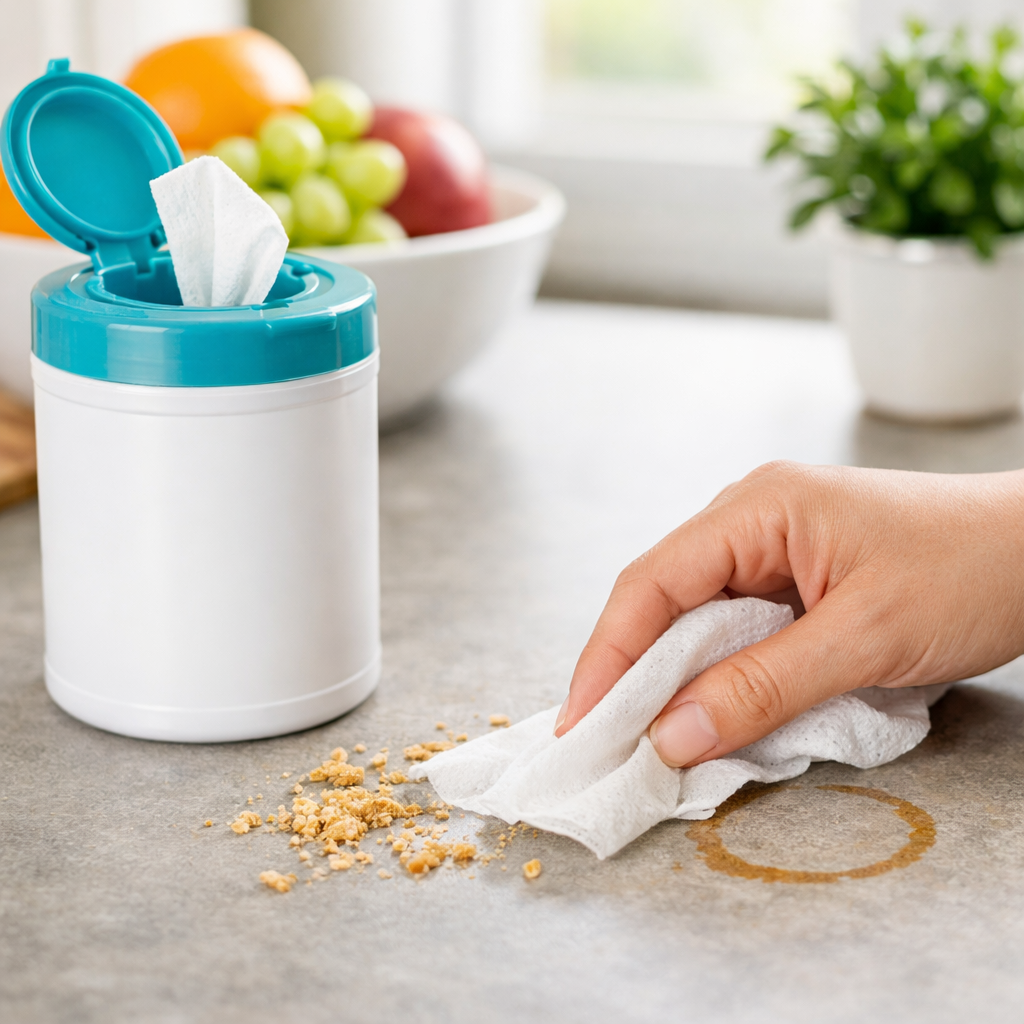
2026 Buying Guide: Best Cleaning Wipes for Quick Daily Cleanups
If you’re here to quickly pick the best cleaning wipes for everyday messes, Cleaning Supply Review recommends a two-cleaner strategy: use a gentle, low-VOC wipe for routine crumbs and fingerprints, and reserve EPA List N disinfecting wipes for bathrooms and high-touch spots when illness is circulating. In 2026, the market falls into three buckets—disinfecting wipes, heavy-duty utility wipes, and gentler/non-toxic or personal wipes—each with tradeoffs in scent, chemistry, residue, and disposal. ASINsight’s latest market data puts Clorox, Lysol, and Amazon Basics among the year’s top sellers, which aligns with broad availability and value-focused bundles across retailers (ASINsight).
“Everyday cleaning wipes are premoistened sheets designed for quick soil removal on hard, nonporous surfaces. They may clean only or clean and disinfect. The best picks balance sheet durability, low residue, clear ingredients, and fair cost-per-wipe for frequent touch-ups.”
How we test and compare cleaning wipes
At Cleaning Supply Review, our rankings are test-led. We verify label claims, check EPA List N status for disinfectants, and measure the practical stuff that matters at home and in facilities:
- Sheet size and tensile strength under scrubbing
- Packaging that preserves moisture and resists drying between uses
- Residue and streaking on stone, laminate, glass, stainless, and screens
- Fragrance intensity and perceived VOCs in small rooms
- Cost-per-wipe across tubs, soft packs, and refills
Independent product award programs similarly emphasize sheet size/strength and tight-sealing packaging—helpful anchors for long-term performance (BobVila 2026 Cleaning Awards).
Category-specific checks:
- Disinfecting: We confirm List N registration (by product/variant), read the fine print on soil removal before disinfecting, and time whether surfaces stay visibly wet for the full label contact time. We also note any surface compatibility warnings.
- Heavy-duty: We test degreasing on oil, adhesive, and outdoor grime, and assess abrasion risk on coatings. For reference, Crocodile Cloth’s oversized sheets measure 15×10 inches, include a low-foaming degreaser effective on oil/paint/ink, and a single sheet can stay damp for over an hour in our handling—useful for big jobs (details echoed in 2026 awards coverage, same source above).
What we log for side-by-side comparisons at Cleaning Supply Review:
- Sheet dimensions and texture
- Active chemistry
- Scent intensity
- Residue rating
- Disinfectant contact time (if applicable)
- Certifications (e.g., EPA Safer Choice, Ecologo)
- Packaging type
- Estimated cost-per-wipe
What to use for daily cleanups
Match the wipe to the mess:
- Routine counters and low-risk messes: Choose a gentle, Safer Choice–certified cleaning wipe or, better yet, a reusable microfiber with an all-purpose cleaner. Save disinfecting wipes for spots that truly need germ reduction.
- Greasy/outdoor messes: Use heavy-duty utility wipes with larger sheets and strong degreasers; they remove oil and adhesive faster than standard household wipes.
- Bathrooms/high-touch areas and cold/flu season: Disinfecting wipes make sense—but pre-clean visible soil, then keep surfaces wet for the full contact time. That’s the step most users miss.
- Sensitivity tip: Wipes can be less irritating for some users than sprays because there’s less airborne mist to inhale (Wirecutter’s cleaner testing).
Key buying criteria
Use this quick checklist to avoid buyer’s remorse:
- Size and strength: Larger, thicker, textured sheets resist shredding and clean more per wipe. Oversized utility sheets (e.g., 15×10 inches) can replace multiple household wipes on big jobs.
- Ingredients and certifications: Prefer short, transparent ingredient lists and certifications such as EPA Safer Choice (for cleaners, not disinfectants). Welpr advises avoiding vague “fragrance” entries and choosing no added fragrance if you’re sensitive (Welpr directory).
- Surface safety: Check the label for what’s in and out of scope, and always spot-test screens, sealed wood, and coated finishes.
“Contact time is the label-specified wet dwell time a disinfectant must remain on a surface to achieve its germ-kill claims. If the surface dries early or is wiped off too soon, the product may not reach its stated 99.9% kill performance.”
Side‑by‑side evaluation
| Product | Best for | Sheet size | Active chemistry | Scent | Certifications | Notable testing callouts | Est. cost per wipe | Residue rating | Contact time (if disinfecting) | Disposal guidance |
|---|---|---|---|---|---|---|---|---|---|---|
| Clorox Disinfecting Wipes | High-touch disinfection in kitchens/baths | ~7×8 in | Quaternary ammonium compounds (quats) | Fresh/lemon variants | Many SKUs on List N | Broad retail availability; consistent wetness | $0.05–$0.10 | Low–Moderate | Per label (often minutes) | Trash only; do not compost or flush |
| Clorox Free & Clear / EcoClean (compostable) | Everyday wipe-downs; low scent | ~7×8 in | Plant-derived surfactants | Fragrance-free/light | Safer Choice (select SKUs) | Gentler feel; lower VOCs | $0.07–$0.12 | Low | n/a | Trash; industrial composting may be limited; never flush |
| Lysol Disinfecting Wipes | Bathroom fixtures; doorknobs; appliances | ~7×8 in | Quats | Multiple scents | Many SKUs on List N | Frequent promos; broad bundle sizes | $0.05–$0.10 | Low–Moderate | Per label (2–10 min typical) | Trash; never flush |
| Crocodile Cloth Original / PowerScrub | Grease, adhesive, outdoor furniture, tools | 15×10 in | Low-foaming degreaser; dual-sided (PowerScrub) | Low | — | Oversized; stays damp >1 hr; PowerScrub dual-sided; award-noted | $0.20–$0.40 | Moderate | If disinfecting is claimed: per label | Trash; do not compost/flush |
| Amazon Basics Disinfecting Wipes | Budget disinfection in high-use settings | ~7×8 in | Quats | Various | Many variants EPA-registered; check List N | Strong value in multipacks | $0.03–$0.06 | Moderate | Per label | Trash; never flush |
| The Honest Company / hypochlorous picks | Low-residue, low-odor routine touchpoints | ~7×8 in | Hypochlorous acid or mild surfactants | Fragrance-free/mild | Varies by SKU | Simple ingredient lists; gentle on finishes | $0.08–$0.18 | Low | Varies; check label | Trash; never flush |
| Cottonelle / DUDE (personal wipes) | Personal cleansing only | ~6–7×5 in | Mild cleansing agents | Various | — | Not for surfaces | $0.04–$0.08 | n/a | n/a | Trash only; never flush |
Note: “Est. cost per wipe” reflects typical ranges and promotions; always verify per specific pack.
Clorox Disinfecting Wipes
Clorox remains a top-selling disinfecting wipe brand in 2026, with strong distribution and clear kill claims (ASINsight: Disinfecting Wipes). Use them on high-touch surfaces, and follow the label precisely: pre-clean if needed, then keep the surface visibly wet for the full contact time to achieve 99.9% germ kill. If you’re sensitive to fragrance or certain preservatives, consider the gentler options below for routine cleaning.
Clorox Free & Clear and EcoClean compostable wipes
For everyday wipe-downs, Clorox’s Free & Clear/EcoClean lines rely on plant-derived surfactants and are fragrance-free or lightly scented, making them better for frequent use. Select SKUs have earned EPA Safer Choice certification. Compostability claims often come with caveats—many local facilities won’t accept them—and these should not be flushed. Ideal for fragrance-sensitive households looking to avoid heavy disinfectants except when truly needed.
Lysol Disinfecting Wipes
Lysol’s disinfecting wipes are a mainstream alternative to Clorox with similar List N coverage and a wide variety of scents and bundle sizes—handy when you’re price-matching promotions (ASINsight: Disinfecting Wipes). As with all disinfectants, pre-clean first and keep surfaces wet for the full contact time for true 99.9% kill. Expect low-to-moderate residue; buff with a dry microfiber if you see streaks on glossy surfaces.
Crocodile Cloth Original and PowerScrub
When the job is greasy or outdoors, Crocodile Cloth shines. Original sheets are oversized at 15×10 inches, heavy-duty, alcohol- and fragrance-free, fortified with a low-foaming degreaser that cuts oil, paint, and ink, and each sheet stays damp for over an hour—useful for big surfaces. Good Housekeeping also praised PowerScrub for its large, dual‑sided design and noted disinfecting when used as directed (Good Housekeeping 2026 Awards). Use on tools, patio furniture, grills, and shop messes; spot-test delicate coatings.
Amazon Basics Disinfecting Wipes
Amazon Basics routinely lands on 2026 best-seller lists for cleaning wipes (ASINsight). If you need lots of wipes for facilities, classrooms, or break rooms, multipacks deliver excellent value. The formulas are conventional quats; users with sensitivities should review ingredient disclosures and consider Safer Choice wipes for routine wipe-downs, reserving disinfectants for true high-touch disinfection tasks.
The Honest Company and hypochlorous non‑toxic picks
If you want simpler formulas, look for short, fully disclosed ingredient lists and no added fragrance—Welpr highlights these as key filters for “non-toxic” picks, given preservatives and skin contact risks (Welpr directory).
“Hypochlorous acid (HOCl) is a weak acid produced by our immune cells that can act as a disinfectant at low concentrations. In wipes, HOCl offers broad antimicrobial action with low residue and mild scent, but stability, storage, and label contact times still determine real-world efficacy.”
These options suit nurseries and frequent hand-contact surfaces where low odor and minimal residue matter; List N status and contact times vary by product, so always check labels.
Cottonelle, DUDE and other personal wipes
Personal wipes are for skin, not surfaces. Consumer Reports’ testing concludes you should never flush wipes—“flushable” or not—as they can clog plumbing and strain wastewater systems (Consumer Reports). Dispose in the trash, and avoid using personal wipes on food-contact surfaces or electronics.
Pricing and cost per wipe
To compare value, we:
- Note the total price and total sheet count.
- Divide price by count for the cost-per-wipe.
- Compare across brands and pack sizes—warehouse multipacks usually lower per-wipe cost, which helps in high-use settings.
Example ranges (illustrative):
- Amazon Basics Disinfecting Wipes, 3×80 (240): ~$0.03–$0.05 per wipe
- Clorox/Lysol Disinfecting Wipes, 3×75 (225): ~$0.05–$0.10 per wipe
- Clorox Free & Clear/EcoClean, 3×70–75: ~$0.07–$0.12 per wipe
- Crocodile Cloth Original, 100: ~$0.20–$0.40 per wipe
- Hypochlorous surface wipes, 50–60: ~$0.10–$0.20 per wipe
Budget lines may trade lower prices for stronger scents or less formula transparency; premium lines aim for clearer ingredients and lower VOCs.
Safety, VOCs and surface compatibility
Choose fragrance-free or low-scent wipes for small, poorly ventilated rooms; heavy-duty options like Crocodile Cloth Original are alcohol- and fragrance-free yet potent on grease.
“Volatile organic compounds (VOCs) are chemicals that evaporate at room temperature and can contribute to indoor air pollution. In cleaning wipes, lower-VOC formulations reduce odor and potential irritation, helping sensitive users and improving comfort in poorly ventilated spaces.”
Check labels for surface compatibility—avoid harsh solvents on coated screens, sealed wood, or stone, and always spot-test first.
Low‑waste and refill options
Cut waste without sacrificing performance:
- Buy refills or multipack canisters, and reuse sturdy containers to reduce plastic.
- Compostable cleaning wipes often require specific industrial facilities and usually aren’t accepted curbside; when in doubt, trash them.
- Pair a Safer Choice all-purpose cleaner with reusable microfiber for dailies. Quality microfiber can be machine-washed and reused hundreds of times, a durability advantage echoed in independent cleaning tool awards.
Our recommendations
Based on our hands-on checks and label verification, Cleaning Supply Review recommends:
- Everyday wipe-downs (low-risk): Clorox Free & Clear/EcoClean or a similar Safer Choice cleaner wipe; alternate with a reusable microfiber plus all-purpose cleaner for the lowest residue and cost.
- High-touch disinfection: Clorox or Lysol Disinfecting Wipes. Verify List N for your specific SKU and keep surfaces visibly wet for the full contact time.
- Heavy-duty grime/garage/outdoor: Crocodile Cloth Original; step up to PowerScrub for dual‑sided texture and when label-directed disinfecting is desired.
How to use wipes correctly
- Pre-clean visible soil.
- Wipe in overlapping passes.
- For disinfecting: keep the surface wet for the full label contact time—don’t dry early.
- Allow to air-dry.
- Wash hands after use.
Always reseal lids promptly to prevent drying; performance awards and tests consistently favor packaging that preserves moisture. For disposal, never flush any wipes—bin them to protect plumbing and wastewater systems (Consumer Reports).
Frequently asked questions
Do I need disinfecting wipes for everyday messes
Not usually. Cleaning Supply Review recommends a gentle cleaner or Safer Choice wipe for crumbs and fingerprints, and reserving disinfecting wipes for bathrooms, high-touch spots, or illness periods after pre-cleaning.
What is EPA List N and why does contact time matter
EPA List N covers disinfectants shown effective against hard-to-kill viruses when used per label. Cleaning Supply Review emphasizes contact time—the wet dwell time—because if the surface dries early, the product may not reach its stated 99.9% kill.
Are compostable and flushable wipes really disposable as labeled
Compostable wipes typically need specific facilities and often aren’t accepted curbside. Cleaning Supply Review and wastewater experts advise never flushing wipes—trash them to protect plumbing and wastewater systems.
What should sensitive users look for in everyday wipes
Choose fragrance-free or low-VOC wipes with short, fully disclosed ingredient lists and credible certifications. Cleaning Supply Review recommends hypochlorous or Safer Choice options to minimize residue and scent while cleaning effectively.
How do I prevent residue and streaks on countertops and screens
Wring excess liquid, wipe in one direction with overlapping passes, then buff dry with a clean microfiber. Cleaning Supply Review also advises avoiding strong solvents on delicate coatings and always spot-test screens and sealed wood.