Avoid Supply Gaps: Reliable Nationwide Manufacturers for Multi-Site Laundries
Avoid Supply Gaps: Reliable Nationwide Manufacturers for Multi-Site Laundries
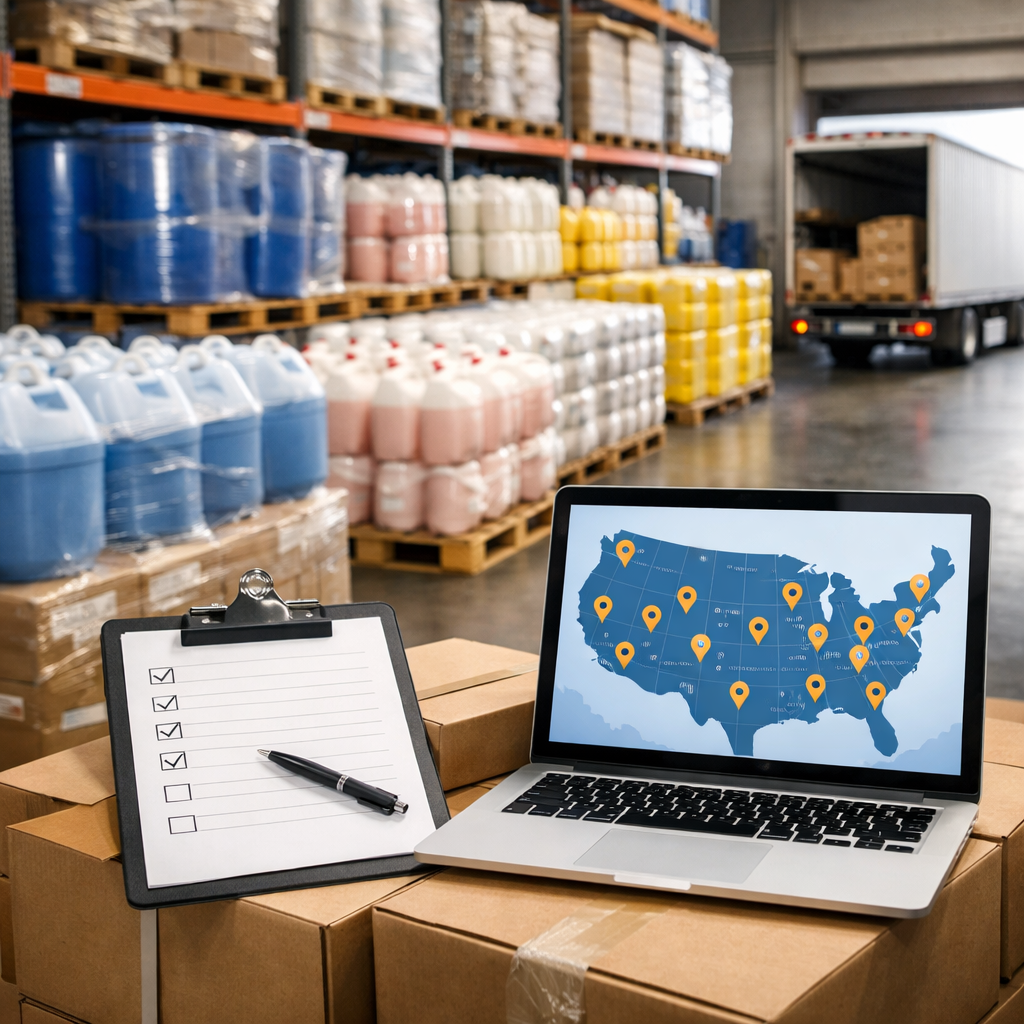
Multi-site laundries can’t afford stockouts, stalled installs, or parts delays. The fastest path to resilience is choosing manufacturers and distributors that truly operate nationwide—backed by verifiable distribution maps, service-level agreements (SLAs), and high parts fill rates. This Cleaning Supply Review guide names reliable nationwide commercial laundry manufacturers for multi-site laundries, and shows exactly how to verify national service networks, coverage, and uptime support. You’ll find a practical vetting scorecard, compliance-ready checklists, and contract structures that protect allocation and pricing during shocks—so your hospital, hospitality, or OPL locations keep running, even when the laundry supply chain is stressed.
Why multi-site laundries face supply gaps
The operating climate is tight. In recent industry polling, 88% of laundries cite rising operational costs as their top concern; 70% struggle to find and retain workers; 49% report inventory loss or damage; and only 42% use RFID or barcodes to track linens, raising shrink and dispute risks according to LinenMaster’s industry survey (source: LinenMaster’s survey). Macro pressures are compounding: 11% of U.S. plants reported raw-material shortages in 2024 and volatility remains elevated (source: Nationwide’s manufacturing trends analysis); ocean shipping costs spiked over 77% from January 2021 to August 2022, pushing supply chains to prioritize continuity over just‑in‑time (source: Deloitte’s supply chain realignment report).
Inventory loss in laundries is the unplanned disappearance, damage, or misattribution of linens and textiles across the wash, transport, and customer-handling cycle. It inflates costs, undermines billing accuracy, and sparks customer disputes—especially when manual weight records and paper trails lack verifiable event histories. The same survey found that reliable tracking reduces uncertainties and accurate digital records eliminate weight-record errors.
For multi-site laundries, these headwinds make nationwide distribution, predictable lead times, and documented field support non-negotiable. Cleaning Supply Review evaluates vendors against these attributes to surface reliable national partners.
What nationwide reliability means in practice
Nationwide reliability is the manufacturer’s ability to supply products, parts, and service consistently to every site in a multi-state network with predictable lead times, contracted allocation, and field support that meets agreed SLAs—even during disruptions.
What to look for, in measurable terms:
- Coverage: Contiguous U.S. shipping, with next-day or 2‑day lanes to priority metros, and multiple warehouses that buffer regional shocks.
- Service: Certified technicians in each region, 24/7 phone support, and spare-part delivery SLAs for critical SKUs.
- Compliance-readiness: Solutions aligned to water/effluent constraints, energy efficiency targets, and packaged documentation bundles for audits (source: Wientjens’ overview of industrial laundry challenges).
Many manufacturers now stockpile, nearshore, and diversify suppliers to stabilize continuity—practices you should confirm during vendor vetting (source: Nationwide’s manufacturing trends analysis).
Selection criteria for nationwide manufacturers
Use a scoreable framework to compare OEMs and their distributor partners across logistics, service, and sustainability. The table below reflects Cleaning Supply Review’s standard fields for multi-site operators.
| Criteria | Evidence to request | Score 1–5 |
|---|---|---|
| Distribution footprint | DC count and locations, heatmap, % of sites within 2‑day ground, carrier matrix | |
| Allocation in shortages | Written allocation policy, contract precedence for critical SKUs, safety‑stock commitments | |
| Parts availability | Current parts fill rate, list of critical SKUs and on‑hand thresholds, lead‑time SLAs | |
| Field service density | Techs per 100 sites by state/region, average response/repair times, 24/7 triage | |
| Sustainability performance | Validated water/energy savings, third‑party data, rebates eligibility |
Technology and visibility expectations:
- ERP integration and standardized EDI for orders, ASNs, and invoices.
- RFID/barcode compatibility to enable site‑level linen tracking and loss analysis.
- Predictive analytics for laundry to forecast demand and spot risks before shortages.
Definitions to align teams:
- Predictive analytics: A method that blends historical data and machine learning to forecast demand, spot supply risks, and optimize ordering before shortages occur (source: APUS supply chain challenges brief).
- Digital twin: A virtual model used to simulate supply choices—materials, suppliers, routes—and evaluate risk and impact before changes are made (source: Deloitte’s supply chain realignment report).
Nationwide commercial equipment manufacturers with proven distribution
- Huebsch: Estimated $1,736 annual utility savings per machine and roughly 154,760 gallons per year in water reduction; validate national distributor coverage, parts stocking, and technician density against SLAs (source: Alliance Laundry’s 2025 equipment trends).
- Speed Queen: About $84 per month (≈$1,008 per year) in utility savings and up to 6,824 gallons per month in water savings; confirm installation network reach, response-times, and multi-state service commitments (source: Alliance Laundry’s 2025 equipment trends).
- UniMac: Approximately 12% cycle-time reduction with 99+ customizable cycles; verify programming support, remote diagnostics options, and multi-state technician coverage (source: Alliance Laundry’s 2025 equipment trends).
Efficiency gains reduce regulatory exposure and downtime risk—lower energy and water demand eases permit constraints, while preventive maintenance and trained operators cut outage frequency (source: Wientjens’ overview of industrial laundry challenges). Pandemic-era delays proved that long-lead items need early ordering; place equipment orders ahead of projects to blunt lead-time risk (source: Yamamoto’s supply chain concerns guide).
Keywords to evaluate: nationwide OEMs, commercial washer-extractors, multi-site service, water-saving laundry equipment.
Nationwide chemical and linen suppliers with verified coverage
Use the following Cleaning Supply Review checks to verify national coverage.
Verification steps for national chemical suppliers:
- Confirm DC network size, addresses, and 2‑day delivery lanes for detergents, alkali, sours, and sanitizers.
- Require batch certificates of analysis (COAs), safety data sheets (SDS), and EPA registrations where applicable (List N disinfectants for relevant spaces).
- Validate drum/tote return logistics, hazmat compliance, and emergency shipments for healthcare surges.
Verification steps for national linen distributors:
- Standardize SKUs across regions (sizes, GSM, fiber blend) to prevent substitutions that upset end users.
- Require RFID-enabled linens or at least barcode compatibility; with only 42% adoption today, providers who enable tracking reduce disputes and shrink.
Suggested comparison fields when shortlisting suppliers:
| Supplier type | Coverage proof to request | MOQs and cadence | Surge capacity policy |
|---|---|---|---|
| Chemicals | DC map, 2‑day lanes, carrier list | Minimums by SKU and route frequency | Priority allocation and expedited hazmat process |
| Linens | National SKU list, RFID readiness, sample tags | Cart/pallet minimums, weekly routes | Temporary alternates and cross‑DC transfers |
Distributor networks that extend national reach
Master distributors and authorized dealer networks aggregate inventory, logistics, and field service to close regional gaps—often in a two‑tier model (OEM → regional dealers → onsite service). A strong national distributor network can deliver multi‑DC coverage, escalation SLAs, and consistent service quality across states.
Verification checklist:
- Written territory lists, DC addresses, and technician counts by state.
- Parts stocking levels for the top 50 failure SKUs and replenishment cadence.
- Escalation paths and replacement SLAs during backorders and carrier delays.
Distributors that diversify suppliers, nearshore key lines, and maintain strategic stockpiles add measurable resilience (source: Nationwide’s manufacturing trends analysis).
Contract structures that protect allocation and price stability
Recommended clauses to harden supply during stress:
- Volume-guarantee and fixed-price windows tied to CPI and energy indices; include allocation priority for critical SKUs.
- Service-level agreements: response/repair times, parts fill rates, shipment SLAs, and backorder caps with credits for misses.
- Surge and force majeure playbooks: substitution rights, approved alternates, and expediting triggers.
Map risks to protections:
| Risk | Protective clauses | Notes |
|---|---|---|
| Raw-material shortages | Allocation priority, minimum safety stock at supplier | Include specific SKUs and quantities |
| Freight cost spikes | Capped surcharges, alternate carrier matrix | Review quarterly against indices |
| Workforce gaps | Backup tech pools, remote diagnostics enablement | Define restore times and escalation |
Context: weather events are among the top global supply chain risks—plan contingencies and dual-source critical inputs (source: APUS supply chain challenges brief).
Technology stack for visibility and forecasting
Core stack for multi-site visibility:
- Cloud laundry management system to capture accurate weight and production data, cutting human error and enabling smart monitoring that flags energy-saving upgrades.
- ERP for laundries to centralize inventory, orders, and cost-per-use; integrate predictive analytics for demand forecasting and replenishment.
- RFID inventory and barcode tracking to reduce disputes and accelerate recovery of lost textiles.
Supply chain digitization risks and mitigation: As systems interconnect, cybersecurity in supply chains becomes a first-order concern. Enforce MFA, role-based access, vendor security assessments, and an incident response plan with clear SLAs and communication protocols (source: Extensiv’s supply chain challenges report).
Use digital twins to test supplier/material scenarios and stress logistics before rolling out changes (source: Deloitte’s supply chain realignment report).
Safety stock and parts strategy for uptime
Follow a structured approach to right-size buffers without tying up excess cash:
- Classify SKUs by criticality (chemicals, critical spares, high‑failure parts).
- Measure site-level demand variability; set service-level targets by class.
- Apply a safety stock formula using lead-time variability and service targets; revisit quarterly.
- Set min/max inventory in your ERP and enable auto‑replenishment with human review.
- Place stock regionally for shared coverage and audit for obsolescence.
Maintenance matters: preventive maintenance and operator training reduce failures, speed first-line fixes, and lower dependence on shipped parts (source: Wientjens’ overview of industrial laundry challenges). Buffers are justified as manufacturers shift away from just‑in‑time toward resilience (source: Deloitte’s supply chain realignment report).
Compliance-ready solutions for regulated sites
Industrial laundries increasingly face freshwater and wastewater compliance constraints; reducing water and energy use is a top priority, and technology integration requires planning and operator training (source: Wientjens’ overview of industrial laundry challenges).
Compliance checklist:
- Equipment: water-recovery and heat reclaim systems; programmable cycles; documented energy/water savings such as those reported for Huebsch and Speed Queen (source: Alliance Laundry’s 2025 equipment trends).
- Chemicals: SDS bundles, applicable EPA registrations, and low‑VOC or fragrance‑free options for sensitive environments.
- Documentation: site-ready SOPs, operator training modules, and maintenance logs to make audits faster and multi-site rollouts consistent.
Resilience playbook for procurement teams
- Diversify suppliers by geography; pair national OEMs with vetted regional backups.
- Lock critical SKUs under fixed-price, volume, and allocation priority clauses.
- Implement ERP+RFID for end-to-end visibility; standardize KPIs across sites.
- Use predictive analytics and digital twins to forecast and scenario-test.
- Maintain targeted safety stock at sites and regional hubs; review quarterly.
- Build joint forecasting with suppliers and hold quarterly business reviews (QBRs).
- Strengthen cybersecurity controls as digitization expands.
- Train operators for diagnostics and preventive maintenance to reduce service calls.
Note: weather events and other external shocks regularly disrupt logistics—bake resilience planning into your sourcing strategy (source: APUS supply chain challenges brief).
Frequently asked questions
How do I verify a manufacturer truly supports nationwide distribution?
Ask for a distribution map with DC locations, 2‑day coverage percentages, and a list of authorized service techs by state; then validate parts fill rates and written escalation paths for backorders. Cleaning Supply Review also checks technician density and response-time data against SLAs.
What minimum service-level metrics should be in my contracts?
Set response times (e.g., 4‑hour triage, next‑business‑day onsite), parts fill rates (95%+ for critical SKUs), and shipment SLAs (48‑hour release for chemicals). Cleaning Supply Review recommends adding penalty credits for misses.
How much safety stock should each site hold for chemicals and parts?
Start with 2–4 weeks of average demand for critical chemicals and top‑failure parts, then refine using lead-time variability and service-level targets. Review quarterly based on usage and supplier performance.
Which data signals predict a supply gap before it happens?
Watch for shrinking parts fill rates, repeated backorders, longer lead times, and faster cycle counts in ERP. RFID or barcode data showing rising loss rates can also signal future shortages.
How do I onboard a regional backup without disrupting standards?
Standardize specs and SOPs, then pilot the regional supplier at 1–2 sites with parallel QC checks. Cleaning Supply Review advises mapping SKUs 1:1, testing delivery SLAs, and rolling out after a successful 60–90 day trial.