Best Bulk PVA Resin Suppliers for Cleaning Manufacturers: Certifications, MOQs
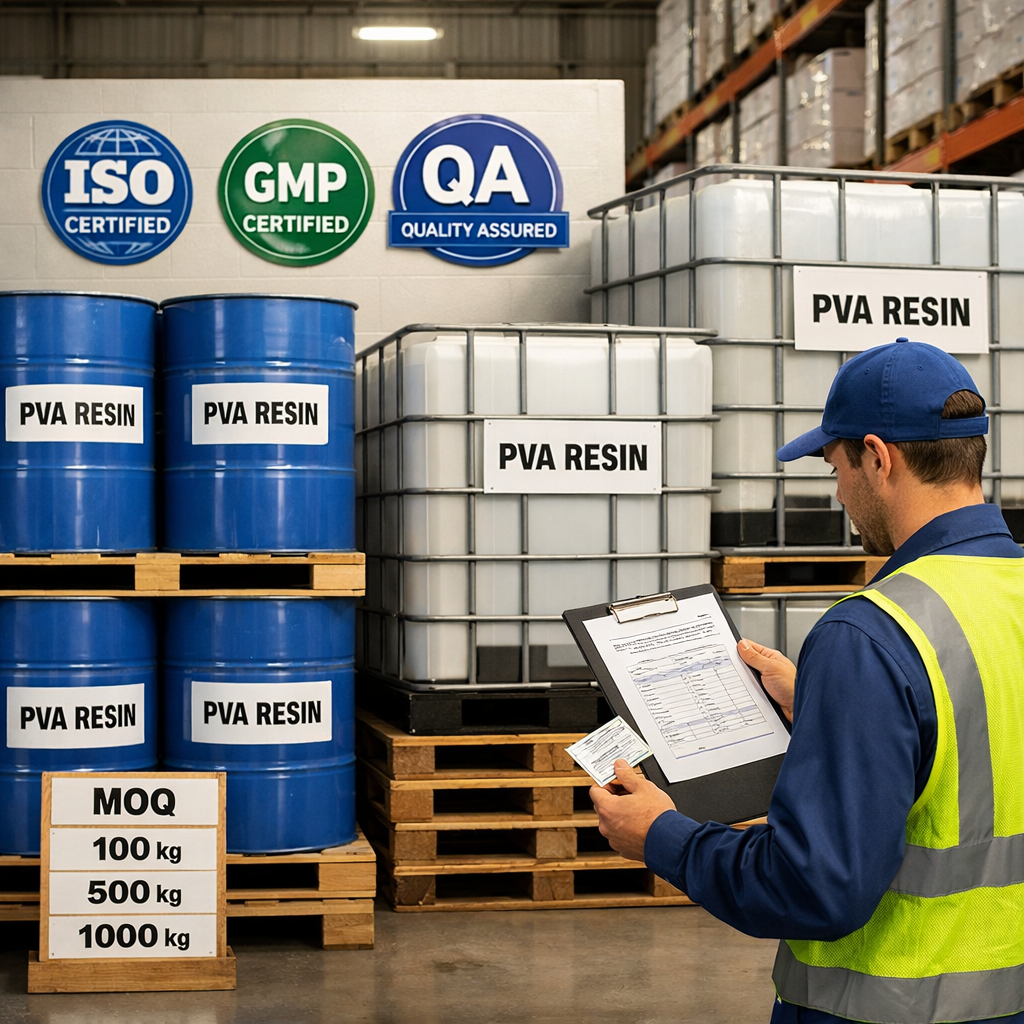
Best Bulk PVA Resin Suppliers for Cleaning Manufacturers: Certifications, MOQs
Cleaning Supply Review
If you’re sourcing bulk PVA resin for detergent sheets, water‑soluble films, or adhesive systems in wipes and all‑purpose cleaners, this guide compares global producers alongside China marketplace options and sets expectations on certifications, MOQs, and pricing. Polyvinyl alcohol (PVA/PVOH) is a water‑soluble, film‑forming synthetic polymer used as a binder, stabilizer, and barrier in detergents, water‑soluble films, and adhesives. Grade selection hinges on molecular weight and degree of hydrolysis, which drive viscosity, solubility, and tensile properties; PVA is noted as water‑soluble with excellent film‑forming properties and high tensile strength by Kuraray POVAL’s technical literature (see Kuraray POVAL resources). Identity check: CAS 9002‑89‑5; empirical formula (C2H4O)n; appearance: white granular/powder.
How we work: Cleaning Supply Review independently combines lab/field testing of wipes and APCs, side‑by‑side direct vs. marketplace sourcing comparisons, and registry‑based sustainability verification (including chain‑of‑custody). For due diligence on “green” claims, see our sustainability verification guide.
Kuraray
Kuraray is a leading global PVA producer with broad grade families—POVAL, EXCEVAL, ELVANOL, MOWIFLEX—and a long track record supporting film‑forming and tensile strength requirements in detergent sheets and water‑soluble packaging. For regulated or food‑adjacent use, Kuraray’s comprehensive documentation and technical support can shorten qualification timelines. The company publishes ISCC PLUS information on select products, which can support mass‑balance and chain‑of‑custody claims; always request product‑level certificates tied to lot numbers.
Where Kuraray fits best:
- Water‑soluble films for detergent sheets and unit‑dose sachets.
- Adhesive binders in cleaner concentrates where clear films and consistent DH are critical.
- Regulated or food‑adjacent packaging where documentation depth and global support matter.
Mitsubishi Chemical
Mitsubishi Chemical is widely recognized among major PVA producers with industrial and specialty grades for films and adhesives, suited to buyers prioritizing stable supply and R&D support over lowest price points (see PVA market landscape by Dataintelo). When engaging, request grade datasheets with DH and molecular weight windows, certificate of analysis (CoA) templates, and regulatory statements (REACH; FDA food‑contact where applicable). Emphasize film‑forming and adhesive performance needs for cleaning SKUs.
Pros to consider:
- Strong global logistics for multi‑site manufacturing.
- Consistent grade availability to support long‑running SKUs.
- Typically higher pricing than marketplace suppliers, offset by technical support and documentation.
Sinopec
Sinopec (including Sinopec Great Wall Energy) is a major Chinese PVA producer with competitive industrial grades at scale. Marketplace listings often show PVA 1799 with claimed 98% purity; treat such claims as provisional and verify via third‑party testing before scale‑up (market context per Dataintelo; example listings commonly seen on Alibaba). Best‑fit applications include adhesives, mortar/construction blends, and cost‑sensitive films where internal QC and incoming inspection are strong.
Caution for detergent film use:
- Require per‑lot CoAs and verify DH, viscosity, and residuals.
- Run mechanical and solubility tests against your film targets.
- Confirm DH mapping for the grade code you’re buying.
Anhui Wanwei Group
Anhui Wanwei is a recognized large‑scale producer widely cited in market assessments, with cost‑competitive grades relevant to cleaning manufacturing. Marketplace catalogs frequently feature Wanwei PVA 2488A as a high‑quality, lower‑price option compared with branded Western producers (see Made‑in‑China). Ask for stable supply plans across common families (2488/1788) and packaging specs that control humidity in transit.
For detergent sheets and films, run pilot batches to verify dissolution temperature profile and tensile strength vs. your spec, then lock grade and supplier lot‑change notification terms into the supply agreement.
China Marketplace Suppliers
Alibaba and Made‑in‑China can be effective for small lots, aggressive pricing, and flexible pack sizes. Listings commonly present grades such as 088‑20, 1788, and 2488 with DH 87–89% for adhesives, mortar/textiles, and films; product pages typically note CAS 9002‑89‑5 (see Alibaba for representative listings; see Made‑in‑China for wholesale catalog context). Platform safeguards like verified business licenses and audited‑supplier badges help, but you should still independently verify with CoAs and trials.
Marketplace due‑diligence tips:
- Ask for a recent CoA plus third‑party DH and viscosity verification for the exact lot.
- Confirm grade‑code mapping to your spec (e.g., 2488 ≈ ~88% DH, mid‑MW).
- Use trade assurance or escrow for first transactions and stage payment to QC milestones.
How we evaluated suppliers
Certifications and declarations. We prioritized verifiable documentation—ISCC PLUS or equivalent when sustainability claims are made, REACH/FDA statements as relevant, and per‑lot CoAs.
CoA depth and analytical clarity. Strong suppliers report DH, viscosity, MW range, moisture, and residual monomers/additives, with test methods stated.
Grade library and technical support. Breadth across DH/MW, film vs. adhesive grades, and access to application engineers factored heavily.
Pricing and MOQs. We benchmarked quotes against market ranges and noted MOQ flexibility for pilots vs. container‑scale buys.
Logistics footprint. Multi‑region production, bonded warehousing, and reliable lead times improved scores.
Sustainability transparency. We checked for public sustainability reports, registry‑based claims, and chain‑of‑custody documentation tied to product numbers.
We weighted regulated‑use readiness and documentation quality higher for SKUs touching skin or integrating into water‑soluble films. Our process combines lab/field testing, at‑home validation of film strength/solubility, and registry‑based sustainability verification with chain‑of‑custody confirmation. We remain vendor‑neutral and base recommendations on documented performance and risk.
Certifications to verify for PVA sourcing
Degree of Hydrolysis (DH) indicates the percentage of acetate groups converted to alcohol groups in PVA. Higher DH generally increases crystallinity and film strength while reducing cold‑water solubility; partially hydrolyzed grades around 87–89% are often selected for fast‑dissolving cleaning films (see representative marketplace specs on Alibaba).
Kuraray publishes ISCC PLUS information for some products, which can support sustainability and mass‑balance claims when backed by chain‑of‑custody documentation (see Kuraray POVAL). Ask for (the same items Cleaning Supply Review requests during reviews):
- CoA with DH, viscosity, MW range, residuals, and moisture (with test methods).
- REACH and, if applicable, FDA food‑contact statements for packaging/films.
- ISCC PLUS or equivalent chain‑of‑custody documents when bio‑attributed or mass‑balanced inputs are claimed.
- Third‑party mechanical and dissolution test results for film grades.
- Safety data sheet (SDS) and GHS‑compliant labeling declarations.
Typical MOQs, packaging and pricing ranges
Industrial PVA (e.g., 2488) commonly prices around $1.50–$2.50/kg at ≥1,000 kg, while food/pharma‑aligned grades often reach ~$3.00–$4.50/kg; large orders (10 t+) may unlock discounts (see MWPVA price guide). Specialty outlets can supply smaller packs for lab work, often with packaging/crating charges and time‑limited quotes (e.g., 60 days) typical of conservation/lab suppliers (see Museum Services’ PVA resin catalog).
| Grade band | Typical DH/MW band | Common uses | Typical MOQ band | Price range per kg | Common packaging |
|---|---|---|---|---|---|
| Industrial 2488/1788 | ~87–89% DH; mid MW | Adhesives, detergent films, coatings | 1–5 t | $1.50–$2.50 | 25 kg bags; 500–1,000 kg FIBCs |
| Film‑grade partially hydrolyzed | ~87–89% DH; process‑matched MW | Detergent sheets, unit‑dose sachets | 5–10 t | $2.20–$3.50 | 25 kg bags; moisture‑barrier liners |
| Food/pharma grade | Tighter specs; DH per app | Food‑adjacent packaging, specialty | 10–25 t | $3.00–$4.50 | 25 kg bags; validated liners |
Note: Prices are indicative and vary by region, energy costs, and documentation scope; secure written validity periods on quotes.
Due diligence checklist for procurement
Use the concise checklist Cleaning Supply Review applies in evaluations.
- Pre‑qualify suppliers: confirm certifications, audited status, and customer references.
- Request CoA plus third‑party verification for DH, viscosity, and MW for offered lots.
- Run lab trials in target formulations (detergent sheets, gel/APC systems).
- Test films for tensile strength and dissolution at target temperatures.
- Negotiate logistics: freight terms, moisture‑controlled packaging, lead times, and safety stock.
- Place a pilot order (200–1,000 kg) using trade protection or escrow.
- Approve container‑scale orders with QC hold points and change‑of‑grade notification clauses.
Definition: Molecular weight (MW) in PVA influences solution viscosity and film strength—higher MW typically raises viscosity and tensile properties but may slow dissolution, a key trade‑off in detergent sheet performance (aligned with the film/tensile property focus in Kuraray’s literature).
Application considerations for wipes and all purpose cleaners
- Detergent sheets and water‑soluble films: Grades like 1788/2488 (~87–89% DH) offer faster dissolution with manageable handling in casting/coating; align MW to your processing method to balance tensile strength and dissolution kinetics (range context from marketplace catalogs on Alibaba). PVA’s barrier and film properties also support packaging performance in cleaning formats (see North America PVA market analysis by Cognitive Market Research).
- Wipes and all‑purpose cleaners: PVA can serve as a thickener/binder in formulas and an adhesive base for labels/packaging. Optimized PVA‑based glues can reach bonding strengths around 2.97 MPa and are vegan‑friendly and non‑toxic—useful for sustainable brand positioning (see furniture‑grade PVA adhesive data from Lanciano Furniture).
- Manufacturing aids: PVA release agents are water/alcohol‑based, form clean barrier films, resist solvents/styrene, and wash off with water—useful for tooling, composite fixtures, and maintenance in plant environments (see product notes from Fibertek).
Frequently asked questions
What certifications matter most when sourcing PVA resin?
Cleaning Supply Review looks for CoAs reporting DH/viscosity/MW, REACH and food‑contact statements if films touch packaging, plus chain‑of‑custody credentials like ISCC PLUS when sustainability claims are made.
What MOQ should cleaning manufacturers expect for bulk PVA?
In our sourcing reviews, expect tonne‑scale MOQs—often 1–5 t for trials and 10 t+ for best pricing—with smaller lab packs available at higher unit costs.
How do I verify grade suitability for detergent sheets or film forming uses?
Cleaning Supply Review recommends matching DH (~87–89% for fast‑dissolving films), confirming viscosity/MW to your process, and running tensile and dissolution tests on pilot lots.
What tests should I run before a container order?
We validate DH and viscosity, film tensile/elongation, dissolution rate at target temperatures, residuals/moisture, and lot‑to‑lot consistency with at least two pilot shipments.
Is PVA biodegradable and how should I validate sustainability claims?
Claims vary; Cleaning Supply Review recommends requesting third‑party biodegradability reports plus chain‑of‑custody documentation and product‑level certification numbers.