Best Daily All-Purpose Cleaners Compared: Performance, Ingredients, and Value
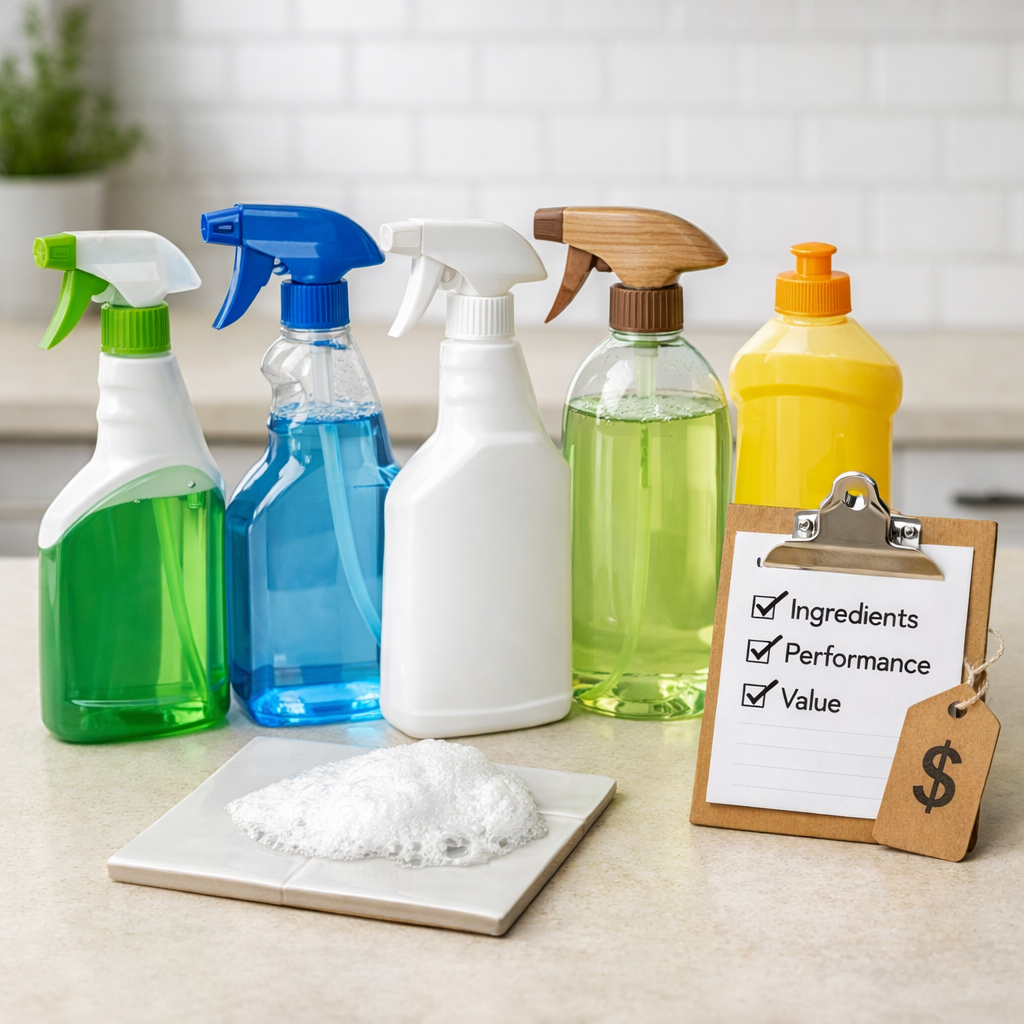
Best Daily All-Purpose Cleaners Compared: Performance, Ingredients, and Value
The best daily all-purpose cleaner depends on what you clean most: light kitchen wipe-downs or germ-focused bathrooms. Expect trade-offs between disinfecting power and plant-based gentleness, and between ready-to-spray convenience and concentrate/refill economy. Our testing at Cleaning Supply Review favors a two-cleaner strategy for most homes: use a gentle, plant-based or Safer Choice daily spray for routine messes, and keep an EPA-registered disinfectant for bathrooms and high-touch areas. That pairing balances performance, fumes, and cost while covering nearly every common mess noted by major lab roundups and reviewers, from tomato-sauce splatters to greasy film on stainless and tile.
Bottom line: For daily use, choose a gentle, plant-based or Safer Choice cleaner for most surfaces and keep an EPA-registered disinfectant for bathrooms and high-touch areas.
At a glance
Quick shortlist by job and budget, based on Cleaning Supply Review hands-on tests and major lab roundups. Prices are typical street snapshots; always check your local retailer.
| Cleaner | Type | Best For | Notable Caveats | Approx. Price | Standout Fact |
|---|---|---|---|---|---|
| Lysol All-Purpose Cleaner | Disinfectant | Bathrooms, high-touch points | Requires dwell time to disinfect | ~$4–$6 | Named Best Overall in 2026 tests by CNET; strong across surfaces (CNET’s 2026 tests) |
| Clorox Clean-Up + Bleach | Disinfectant (bleach-based cleaner) | Stain lift, whitening grout/caulk | Bleach-safe, nonporous surfaces only; ventilate | ~$4–$6 | Kills 99.9% of bacteria/viruses on bleach-safe, nonporous surfaces (Forbes guide) |
| Clorox Scentiva Disinfecting Spray | Disinfectant | Budget-friendly bathroom resets | Observe dwell time; non-bleach | ~$4–$5 | Best Value Disinfectant badge in major roundups; broad household fit |
| Simple Green All-Purpose (concentrate) | Concentrate | Whole-home value; large areas | May require rinsing, esp. food-contact | ~$10–$15 (concentrate) | Named Best Overall; concentrated economy stands out (Good Housekeeping testing) |
| Seventh Generation All-Purpose | Plant-based | Daily kitchen wipe-downs | Doesn’t disinfect | ~$3–$5 | Frequent Best Plant-Based pick; gentle, low-fume routine cleaner |
| Mrs. Meyer’s Clean Day | Plant-based | Everyday counters, tables | Doesn’t disinfect | ~$4–$6 | Reader-favorite scent-forward daily cleaner highlighted in expert lists |
| Method All-Purpose | Plant-based | Light-to-moderate soils | Occasional nozzle glitches reported | ~$3.99 | Budget-friendly plant-based pick with broad user appeal |
| Puracy Multi-Surface Cleaner | Plant-based | Glass/stainless/tile without residue | Higher price unless buying refills | ~$6–$8 | Biodegradable formula with reliable, streak-minimal cleaning |
How we test and score
At Cleaning Supply Review, we run side-by-side trials on common soils—dried tomato sauce, cooking oil/grease, and soap scum—across stainless steel, sealed stone, laminate, enamel, and glass. Each product gets multiple passes with fresh cloths to measure soil removal, streaking, residue, odor/fumes, and spray pattern. We also track time-to-clean, label directions (dilutions and rinse needs), and disinfectant dwell times. Nozzles and triggers are cycled to simulate months of use; testers have occasionally reported Method sprayers malfunctioning in long-term use as noted in third-party roundups.
Scoring rubric:
- Cleaning efficacy: 40%
- Safety/ingredients: 20%
- Cost per use: 20%
- Usability (spray, scent, residues): 10%
- Surface compatibility: 10%
Dwell time and dilution steps reduce usability scores when they materially slow routine cleaning; required rinsing on food-contact areas also factors into compatibility.
Key buying criteria
- Disinfect vs. daily clean: Daily cleaning removes grime and many microbes; disinfecting is for germ reduction during illness cycles and bathroom resets. Bleach boosts stain removal and broad germ kill, but only on bleach-safe, nonporous surfaces and with good ventilation, per retailer and lab guidance summarized in the Forbes guide above.
- Concentrate/refill economy vs. convenience: Refills and concentrates cut packaging waste and shipping weight and usually win on long-term cost-per-use, a trend highlighted in The Good Trade’s non-toxic cleaner guide (The Good Trade’s non-toxic cleaner guide).
- Dwell time, defined: Disinfectant dwell time is the labeled contact time a surface must stay visibly wet to achieve claimed germ kill. Many sprays require dwell time to meet their 99.9% claims, which can slow daily routines if you expect a quick wipe-away (noted across major product guides like The Spruce’s picks (The Spruce’s picks)).
Performance comparison by use case
Daily kitchen wipe-downs and light grease
- Mrs. Meyer’s Clean Day: great for routine messes and shine; does not disinfect, as consumer rankings regularly note.
- Method All-Purpose: pleasant scent, affordable, and effective on everyday soil; pair with a disinfectant in bathrooms.
Bathrooms and high-touch points
- Clorox Disinfecting/Clorox Clean-Up (+ bleach): for 99.9% germ kill on nonporous, bleach-safe surfaces and stain lifting on grout/caulk; follow dwell time and ventilate.
- Lysol All-Purpose: broad disinfecting with strong overall cleaning; suited to doorknobs, switches, and fixtures.
Budget-friendly whole-home
- Simple Green concentrate: excellent value when diluted correctly; may require rinsing on food-contact areas.
Independent labs and Cleaning Supply Review often weigh common stains, residue, and usability (including spray distribution), which explains variation in “best overall” winners across outlets, as seen in CNET’s broad testing methodology in 2026.
Ingredient transparency and safety
A plant-based cleaner uses surfactants and solvents primarily derived from renewable plant sources rather than petroleum. These formulas typically reduce harsh fumes, are often biodegradable, and are favored for routine wipe-downs around families and pets.
Examples and credentials:
- Puracy’s biodegradable formula reliably cleans glass, stainless, and tile with a light citrus scent, performing well in third-party roundups like Listful’s 2025 coverage (see Method/Ecover/Puracy section below for details via that single citation).
- Bona All-Purpose is reported as roughly 99% plant-based and Safer Choice certified in major consumer testing, a helpful benchmark even if it’s not a head-to-head pick here (as discussed in CNET’s 2026 overview linked above).
- The Spruce notes products like Clorox Compostable Cleaning Wipes that carry the EPA Safer Choice label, which screens chemistry for human and environmental health (see The Spruce link above).
Always spot test new products. Abrasive pastes can scuff soft or glossy finishes—Consumer Reports cautions that products like The Pink Stuff can damage delicate surfaces if overused (Consumer Reports’ overview).
Cost per use and refill options
Cost per use makes value tangible:
- Step 1: Cost per diluted ounce = Concentrate price ÷ total diluted ounces.
- Step 2: Cost per use = (Cost per diluted ounce) × (ounces you spray per clean). We benchmark ~1 oz per routine clean with a standard trigger bottle.
Illustrative snapshot (typical street prices, representative dilutions—always follow your label):
- Simple Green (32 oz concentrate at $12; 1:10 makes ~352 oz): ~$0.034/oz → ~3–4¢ per use; may require rinse on food-contact areas.
- Method All-Purpose (28 oz at ~$3.99): ~$0.14/oz → ~14¢ per use.
- Puracy (25 oz at ~$7.99; or buy refills to reduce cost): ~$0.32/oz → ~32¢ per use; refills lower this meaningfully.
- Branch Basics–style system (example 33 oz concentrate at ~$49; 1:10 makes ~363 oz): ~$0.135/oz → ~14¢ per use; concentrates/refills still reduce plastic and shipping compared with one-off bottles.
Note: Method was widely available around ~$3.99 and earned about 8/10 in a 2025 roundup; Ecover ran ~$16.39 and scored 7.5/10 in the same testing (see Listful link in Method section).
Surface compatibility and care
- Generally safe (check labels): sealed stone/quartz, laminate, glazed tile, porcelain/enamel, sealed wood, stainless, glass/mirrors.
- Use caution or avoid:
- Bleach-based cleaner: only on bleach-safe, nonporous surfaces; avoid unsealed stone, unfinished wood, textiles.
- Natural stone (marble, limestone): avoid acidic or abrasive products; use pH-neutral stone-safe cleaners.
- Coated metals, glossy plastics, lacquered finishes: avoid abrasives; spot test first.
Maintenance notes:
- Follow disinfectant dwell times to achieve germ-kill claims.
- Wipes can dry out early; store sealed and face-down so the top sheet stays moist, a tip echoed in major consumer guides (see Good Housekeeping link above).
Simple Green All-Purpose Cleaner
Value proposition: a versatile concentrate that delivers excellent long-term value when properly diluted. It’s a strong budget choice for large areas and frequent cleaning. Caveats: labels often advise rinsing after use, especially on food-contact surfaces. For everyday messes, start around 1:10 dilution; increase strength for greasy spots. Best for larger homes, small offices, garages, and utility areas where one bottle must stretch far.
Clorox Scentiva and Clorox Clean-Up
Positioning:
- Clorox Scentiva: budget-friendly disinfecting spray for bathrooms and high-touch points when you want non-bleach formulas.
- Clorox Clean-Up + Bleach: adds stain removal and broad germ kill; kills 99.9% of bacteria and viruses on bleach-safe, nonporous surfaces (see Forbes link above).
Usage guardrails:
- Avoid bleach on porous/delicate surfaces (natural stone, unfinished wood, fabrics).
- Follow dwell time and ventilate during use.
Use this for:
- Bathroom grout brightening, sink/fixture whitening, and cutting bathroom biofilm.
- Not for unsealed stone or unfinished wood.
Lysol All-Purpose Cleaner
Why it’s a strong daily disinfectant: in 2026 testing, CNET named it Best Overall for its balance of cleaning power and disinfection across common household surfaces (see CNET link above). Daily fit: quick wipes for routine soil; observe dwell time for disinfecting doorknobs, faucets, and light switches. Compatibility: broadly safe on sealed, nonporous surfaces; check label guidance for natural stone or specialty finishes.
Mr. Clean Clean Freak and 2X Concentrate
- Clean Freak: power sprayer covers wide areas and cuts through greasy films, making it ideal for fast kitchen resets and appliance exteriors.
- 2X Concentrate: better cost-per-use for larger spaces and frequent cleaning; refills reduce plastic waste.
Caveats: for baked-on grime, expect agitation or repeat passes. Good Housekeeping also recognized Clean Freak as Best for Delicate Surfaces—use with care on finished, sealed materials (see Good Housekeeping link above).
Mrs. Meyer’s Clean Day
Why it’s a favorite: gentle, plant-derived daily cleaner with a scent-forward experience that leaves counters looking fresh without harsh fumes. The Spruce has highlighted it among top overall daily multi-surface picks, and TODAY’s rankings note clearly that it doesn’t disinfect (see The Spruce link above; see TODAY’s rankings at TODAY’s rankings). Professionals frequently point to plant-derived formulas as a kid- and pet-friendly positioning in expert roundups like Simply Recipes’ panel (Simply Recipes expert panel).
Method All-Purpose
Method remains an affordable, plant-based daily option with strong user appeal. In Listful’s 2025 roundup, Method earned roughly 8/10 at about $3.99, Ecover scored 7.5/10 at $16.39, and Puracy scored 8/10; testers also reported occasional nozzle malfunctions on Method bottles—keep a backup sprayer if you refill (Listful’s 2025 roundup). Use Method for kitchens and living areas with light-to-moderate soils and pair it with a disinfectant in bathrooms.
Ecover All-Purpose
Strengths: eco-forward profile and solid performance on tile and metal with a mild scent. Limitations: tougher, baked-on residues may need multiple passes or agitation. Best for routine cleaning where lower fumes and ingredient transparency matter more than maximum cutting power (see Listful link above).
Puracy Multi-Surface Cleaner
Why it fits safety-first households: biodegradable, effective across glass, stainless, and tile with minimal streaking, and praised for a light citrus scent. Value: buying refills lowers the cost-per-use meaningfully. Use it as the daily go-to and keep a disinfectant handy for bathrooms and illness cycles (see Listful link above).
Branch Basics, Blueland, and Cleancult
A refill system uses concentrated liquid or tablets that you dilute at home in a reusable bottle, reducing plastic waste and shipping weight while lowering long-term cost. Branch Basics exemplifies the model with biodegradable, refillable concentrates and subscription options geared to eco-first buyers (see The Good Trade link above).
Quick setup flow:
- Choose bottle size and follow dilution lines for multi-surface, bathroom, or glass.
- Label by use (bath, kitchen) and add the mix date.
- Check labels: some concentrates advise rinsing on food-contact areas depending on formula.
The Pink Stuff and specialty pastes
Use specialty pastes as spot treatments for stubborn residues—burnt-on oven splatter, mineral spots, or occasional grout buildup—not as daily sprays. Because these are mildly abrasive, test first and avoid glossy plastics, coated stainless, and delicate finishes to prevent scratching (see Consumer Reports link above). For daily maintenance in the same zones, use a non-scratch pad plus your regular spray.
Recommendations by need and budget
- Heavy-duty/disinfecting first: Clorox Clean-Up (bleach) for stains and germ kill on bleach-safe, nonporous surfaces; Lysol for broad disinfecting and strong overall performance (see Forbes and CNET links above).
- Gentle daily cleaners: Mrs. Meyer’s Clean Day for everyday messes and a scent-forward experience (non-disinfecting, as noted by TODAY); Method All-Purpose for an affordable, plant-based daily cleaner (see Listful and TODAY links above).
- Best value/economy: Simple Green concentrate for the lowest cost-per-use across large areas—note possible rinse on food-contact areas (see Good Housekeeping link above). Sustainability-focused: Branch Basics/Blueland-style refills to cut waste and long-term costs (see The Good Trade link above).
Frequently asked questions
What is the difference between cleaning and disinfecting for daily use?
Cleaning removes visible soil and many microbes with surfactants, while disinfecting kills 99.9% of listed germs when the surface stays wet for the labeled dwell time. Clean daily and reserve disinfectants for bathrooms and high-touch areas during higher-risk periods—this is the approach we recommend at Cleaning Supply Review.
Are plant-based all-purpose cleaners effective on grease and everyday messes?
Yes—modern plant-based formulas we’ve tested handle everyday spills and light grease well, though baked-on grime may need extra passes or agitation.
How do I calculate cost per use for concentrates and refills?
Divide the concentrate price by total diluted ounces, then divide by the ounces you typically spray per session; for example, $12 ÷ 352 oz ≈ 3.4¢/oz, so about 3–4¢ per routine clean at ~1 oz used. We use this simple math in our reviews at Cleaning Supply Review.
Which daily cleaners are safest for food-contact surfaces and around kids or pets?
Choose plant-based or Safer Choice-certified sprays and follow label directions, including rinsing when required for food-contact areas. That aligns with our guidance at Cleaning Supply Review.
What surfaces should I avoid with bleach-based or abrasive cleaners?
Avoid bleach on porous or delicate materials like unsealed stone, unfinished wood, and textiles; skip abrasive pastes on glossy plastics, coated stainless, and soft finishes—always spot test first; that’s our default advice at Cleaning Supply Review.