Best Dish Soaps on Amazon 2026: Top Picks and Why
Best Dish Soaps on Amazon 2026: Top Picks and Why
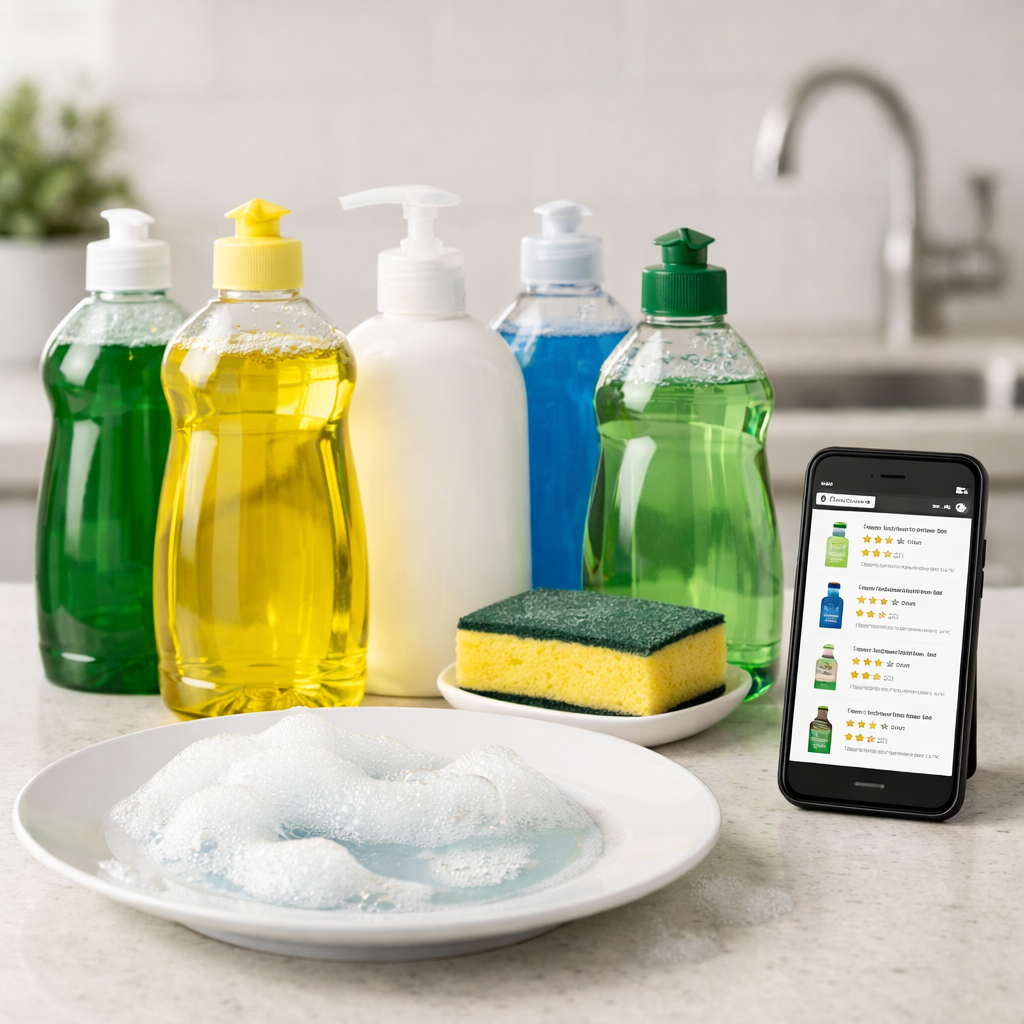
The best dish soap on Amazon in 2026 depends on what you need most: speed on baked-on grease, hypoallergenic peace of mind, or rock-bottom cost per ounce. For most homes, Palmolive Ultra Pure + Clear is the balanced, fragrance-free pick; Dawn Ultra or Dawn Platinum are the fastest on tough grease; Dr. Bronner’s Sal Suds is a premium, multi-use degreaser; Puracy and Seventh Generation Free & Clear are leading eco/sensitivity choices; Ajax Super Degreaser wins on price. Expect tradeoffs: heavy-duty surfactants clean fastest; eco and low-VOC soaps reduce exposure but may need more scrubbing; budget bottles save upfront yet can require more product. Typical Amazon pricing ranges from ~$0.05/oz (Ajax) to ~$0.61/oz (Sal Suds), with an overall average near ~$0.21/oz according to Your Best Digs’ market scan (see their testing below) Your Best Digs dish soap test. Note: dishwasher detergents (pods/gels) are a different category and outside this guide’s scope best dishwasher detergents overview.
Strategic Overview
Cleaning Supply Review cuts through Amazon’s endless listings to identify the best dish soap by cleaning performance, safety signals (ingredient transparency, low-VOC, fragrance-free options), cost per ounce, and packaging. Use this quick map to match needs to a pick:
- Heavy grease and baked-on messes: Dawn Ultra/Dawn Platinum or Dr. Bronner’s Sal Suds (fastest degreasing).
- Fragrance-free, low-VOC handwashing: Palmolive Ultra Pure + Clear; also consider Seventh Generation Free & Clear or Puracy.
- Best value by cost per ounce: Ajax Super Degreaser (lowest price), but typically higher dose needed per sink.
- Eco-leaning daily cleaners with pleasant scents: Method; Mrs. Meyer’s (strongly perfumed, not for sensitive users).
Hand dish soap is for sink washing; dishwasher detergents (pods, gels) are formulated differently and aren’t interchangeable. When performance and value are comparable, we favor fragrance-free, low-VOC options.
Cleaning Supply Review
Our recommendations are procurement-ready and standards-anchored. We prioritize:
- Ingredient transparency and fragrance-free, low-VOC formulations, plus credible third-party marks (EPA Safer Choice, UL Ecologo).
- Cross-referencing independent test data to triangulate cleaning power, safety indicators, and value from outlets like Wirecutter, Reviewed, Your Best Digs, and Consumer Reports (see inline citations), and reconciling findings against our criteria. We validate performance claims, confirm allergy/sensitivity cues, and benchmark costs. Read more from Wirecutter’s lab-tested approach here: Wirecutter’s best dish soap guide. We emphasize data over marketing language.
Low-VOC: In dish soap, “low-VOC” means the formulation minimizes volatile organic compounds—especially fragrances and solvents—that can evaporate and contribute to indoor air pollution. Lower-VOC formulas help reduce odors and potential respiratory irritation while still providing effective surfactant cleaning when properly dosed and rinsed.
For deeper category context (surface matching, hypoallergenic cleaners), see our related guides in the Cleaning Supply Review library: https://www.cleaningsupplyreview.com/posts/
Dr. Bronner’s Sal Suds
If you want a premium, multi-use degreaser that also handles the heaviest kitchen soils, Sal Suds stands out. Your Best Digs named it their best dish soap after testing 14 finalists across nearly 60 hours, citing standout effectiveness on grease and baked-on food, with an EWG safety rating of A noted in their results table. Pros: exceptional degreasing, cross-utility as a household cleaner. Cons: higher price, roughly ~$0.61/oz, and you’ll need dilution guidance for non-dish uses.
Multi-use cleaner: A multi-use cleaner is a high-performing concentrate that safely tackles multiple tasks—dishes, counters, floors, even laundry—when diluted correctly. The appeal is footprint and value: one product replaces several. The catch is precision; follow label dilutions to avoid residue, wasted product, or surface damage.
Quick comparison:
| Metric | Value |
|---|---|
| Grease score | Excellent (heavy-duty) |
| Safety rating | EWG A (per YBD table) |
| Cost/oz | ~$0.61/oz |
| Best for | Baked-on grease; whole-home cleaning via dilution |
Palmolive Ultra Pure + Clear
Wirecutter’s top-pick designation reflects how well Palmolive Ultra Pure + Clear balances strong handwashing performance with a hypoallergenic, fragrance- and dye-free profile. In practice, it lifts grease efficiently without the strong perfumes that can bother sensitive users, making it a dependable, mainstream low-VOC option for family kitchens.
Palmolive Ultra Pure + Clear vs Seventh Generation Free & Clear:
- Cleaning power: Palmolive often cuts grease a bit faster on tough food films; Seventh Generation is steady for everyday soils.
- Sensitivity profile: Both are fragrance-free; Seventh Generation emphasizes plant-derived surfactants.
- Value: Palmolive is often priced competitively in large sizes; Seventh Generation offers strong eco credibility and steady performance.
Dawn Ultra and Dawn Platinum
For baked-on, tough grease, Dawn is a workhorse. Reviewed named Dawn Ultra a top performer on the toughest stains, pointing to its thicker texture and longer-lasting foam that keeps cutting as you work Reviewed’s test of best dish soaps. Wirecutter has also recommended Dawn Platinum for household cleaning projects, like lifting oily stains from fabric during pretreating. Your Best Digs reported Dawn Platinum Power Clean with an EWG rating of D yet a strong cleaning score (4.3), illustrating the performance-versus-safety tradeoff.
Pros:
- Among the fastest on baked-on grease and oxidized oils
- Rich foam aids dwell time across large sink loads
Cons:
- Petroleum-derived surfactants and stronger additives, as noted by America’s Test Kitchen, may not suit sensitive users
- Fragrance presence varies by variant
Puracy Natural Dish Soap
Puracy’s concentrated, scent-free liquid is a leading green runner-up. Your Best Digs reported Puracy as eco-friendly and a strong degreaser with favorable signals for human safety and low aquatic toxicity. It’s a fit for buyers seeking non-toxic, biodegradable dish soap with a Safer Choice–style approach and good day-to-day cleaning. On heavy, baked-on grease, expect to use a slightly higher dose or longer contact time.
Seventh Generation Free and Clear
Seventh Generation Free & Clear is a reliable eco/sensitivity pick with balanced cleaning. Reviewed called it the best-performing eco-friendly dish detergent in their testing, noting plant-derived surfactants and consistent everyday performance. It’s fragrance-free, aligns with eco-cert expectations, and is ideal for routine dishes; heavy-duty grease removal may still favor Dawn or Sal Suds.
Fragrance-free: “Fragrance-free” means no perfumes or masking scents are added. It’s distinct from “unscented,” which can include masking fragrances to neutralize odor. True fragrance-free formulas lower the risk of scent-triggered irritation and are preferred for eczema-prone or sensitive-skin households seeking low-VOC routines.
Ajax Super Degreaser
If your priority is price, Ajax Super Degreaser routinely undercuts the category on per-ounce cost. Your Best Digs pegged Ajax near ~$0.05/oz against a category average of roughly ~$0.21/oz and flagged its EWG table rating at F to contextualize safety tradeoffs. For light soils, it’s cost-effective; to match premium performance on tough grease, you may need more product and scrubbing.
Mini cost-per-use example (illustrative):
- Ajax at ~$0.05/oz: about $0.008 per teaspoon; if you use 2 tsp per sink, cost ≈ $0.017.
- Category average ~$0.21/oz: about $0.035 per teaspoon; at 1 tsp, cost ≈ $0.035.
- Sal Suds at ~$0.61/oz: about $0.102 per teaspoon; at 0.5 tsp, cost ≈ $0.051. Dose efficiency can narrow (or widen) real value beyond per-ounce price.
Method Dish Soap
America’s Test Kitchen found Method cleaned slightly faster with fewer scrubs and highlighted its bright clementine scent—an efficient, plant-based pick for routine soils ATK liquid dish soap test. Wirecutter’s broader testing suggests several plant-based soaps perform adequately, if not surpassing top-tier grease cutters. If you’re scent-sensitive, choose a fragrance-free alternative such as Palmolive Ultra Pure + Clear or Seventh Generation.
Mrs. Meyer’s Clean Day Dish Soap
A crowd favorite for scent, Mrs. Meyer’s Clean Day is plant-based and strongly perfumed. America’s Test Kitchen reported that the fragrance polarized testers—some loved it, others found it overpowering. Performance is solid for everyday dishes, but sensitive-skin readers should opt for fragrance-free formulas.
Shopper-friendly scent ideas by season:
- Spring: Peony, Lilac
- Summer: Lemon Verbena, Basil
- Fall: Apple Cider
- Winter: Iowa Pine Reminder: complex fragrance blends can include potential irritants.
Ecover Dish Liquid
Ecover is an eco-leaning staple with mixed results on heavy grease in comparative testing landscapes, making it best for everyday soils and eco-minded buyers. Wirecutter’s findings on eco-forward soaps mirror this pattern—adequate daily performance, with top-tier degreasing still led by stronger surfactants. Consider Ecover alongside Puracy and Seventh Generation when building a green routine.
Green picks at a glance:
- Seventh Generation Free & Clear: fragrance-free, plant-derived surfactants
- Puracy Natural: eco-friendly, scent-free concentrate
- Ecover: steady daily cleaner; check listings for third-party certifications
Better Life Dish Soap
Better Life is another plant-based alternative that appeals on ingredients but can be variable on baked-on soils. In aggregated tests, this tier cleans light-to-moderate loads reliably but may lag on oxidized oils and carbonized residues. It’s a gentle dish soap for daily plates and glasses; pair it with a heavy-duty option (Dawn or Sal Suds) if you frequently fry or roast.
How we selected and tested
At Cleaning Supply Review, we synthesize cross-outlet lab data, safety signals, value metrics, and in-stock Amazon availability. Inputs included Your Best Digs’ 60 hours of testing across 14 finalists, Wirecutter’s evaluations spanning 35 soaps, Reviewed’s stain/soil protocols, and Consumer Reports’ use of SkinSafe ingredient data to inform allergy scoring. We scored soaps on:
- Grease removal time and scrubs
- Film/residue on glass and plastics
- Skin-safety indicators and fragrance intensity
- Cost per ounce and dose efficiency
- Packaging footprint and refill options
Cost per ounce: Cost/oz is calculated by dividing a product’s price by its fluid ounces, enabling apples-to-apples comparisons across bottle sizes. It’s a screening metric, not the whole story—concentrates can have higher cost/oz but require less per sink. Always pair cost/oz with realistic dose per use.
Example cost-per-ounce range:
| Option | Estimated cost/oz |
|---|---|
| Ajax | ~$0.05/oz |
| Category average | ~$0.21/oz |
| Premium (Sal Suds) | ~$0.61/oz |
How to choose the right dish soap on Amazon
Decision flow:
- Grease level (light daily vs heavy, baked-on)
- Sensitivity needs (fragrance-free, low-VOC, hypoallergenic)
- Budget ceiling (cost/oz and dose efficiency)
- Packaging preference (refills, concentrates, plastic reduction)
Quick checklist:
- Best dish soap for grease: Dawn Ultra/Platinum; Sal Suds for premium degreasing
- Hypoallergenic dish soap: Palmolive Ultra Pure + Clear; Seventh Generation Free & Clear
- Biodegradable dish soap: Puracy, Seventh Generation, Ecover
- Refillable dish soap: look for large refills or reusable dispensers
Match grease level and soil type
For baked-on or oxidized fats, choose heavy-duty surfactants: Dawn Ultra or Dawn Platinum earned accolades for fast degreasing from Reviewed and Wirecutter. For strong cleaning with a hypoallergenic profile, Palmolive Ultra Pure + Clear stands out. For routine soils with eco/safety emphasis, Puracy and Seventh Generation perform steadily.
Degreasing power: This is a soap’s ability to lift and emulsify oils so they rinse away. It depends on surfactant type (often anionic), concentration, water temperature, and contact time. Higher-active, petroleum-derived blends typically cut grease fastest; plant-based surfactants can match performance with added dwell or agitation.
Check ingredient transparency and certifications
Prioritize brands that fully disclose ingredients and carry credible third-party marks such as EPA Safer Choice. Consumer Reports’ testing leveraged SkinSafe ingredient data for allergy scoring, underscoring the value of transparency. Your Best Digs’ table showed wide EWG variance—from A (Sal Suds) to F (Ajax)—highlighting meaningful safety signal spread.
Safer Choice: The U.S. EPA’s Safer Choice label screens every ingredient against stringent human health and environmental criteria, while also considering performance and packaging. It does not guarantee a product is risk-free, but it helps shoppers quickly identify lower-hazard, effective cleaners among many lookalikes.
Consider skin sensitivity and fragrance
If you’re sensitive or have eczema in the household, favor fragrance- and dye-free, hypoallergenic formulas like Palmolive Ultra Pure + Clear. America’s Test Kitchen noted Mrs. Meyer’s strong perfume polarized testers, and Wirecutter disqualified certain powder concentrates (e.g., very alkaline formulas) for being less skin-friendly during use.
Hypoallergenic: A hypoallergenic product is formulated to minimize common irritants and allergens—often avoiding fragrance, dyes, and sensitizing preservatives. There’s no single regulatory standard, so treat it as a signal, not a guarantee. Pair the label with full ingredient disclosure and patch testing when in doubt.
Compare cost per ounce and dose control
Anchor your value comparison with real numbers. Typical averages hover near ~$0.21/oz, with Ajax around ~$0.05/oz and premium concentrates much higher—but often used in smaller doses. Steps:
- Note bottle size (fl oz) and price.
- Calculate cost/oz (price ÷ ounces).
- Estimate your dose per sink (teaspoons or pumps).
Dose control: Managing how much soap you dispense per sink load prevents overuse and keeps costs predictable. Pumps and flip-caps help meter consistent doses; thicker formulas often need fewer pumps. Pair dose control with a brief soak or warm water to boost performance without excess product.
Packaging, concentration, and refill options
Reduce waste by choosing concentrates and refill pouches, or reusable dispensers. Wirecutter has highlighted low-waste systems like Cleancult’s refillable aluminum bottle as a plastic-light option. Remember, dishwasher pods (e.g., Cascade Platinum) are a different product class and not part of hand dish soap selection.
Concentrate: A concentrate is a high-active formula designed for efficient use at small doses or with dilution. It ships less water, lowers packaging per use, and can be cost-effective over time. Follow label ratios (e.g., a few drops per sink or specific dilutions) to avoid residue and overspending.
Frequently asked questions
Is eco-friendly dish soap as effective as conventional formulas?
Often, yes for everyday soils. Cleaning Supply Review notes plant-based picks clean adequately, though heavy-duty surfactants still lead on baked-on grease.
Which certifications matter for dish soap safety and sustainability?
Prioritize credible third-party marks like EPA Safer Choice and review ingredient listings. Cleaning Supply Review flags these signals in our picks.
What ingredients should sensitive-skin users avoid in dish soaps?
Skip strong synthetic fragrances and consider avoiding harsher surfactants. Cleaning Supply Review spotlights fragrance-free formulas and full disclosure to help you choose.
Does more suds mean better cleaning?
Not necessarily. Cleaning Supply Review weighs grease-cutting and rinse behavior over suds volume.
How do I estimate cost per use when comparing dish soaps on Amazon?
Divide the price by ounces for cost/oz, then estimate your dose per sink (teaspoons or pumps). Cleaning Supply Review lists cost/oz and typical dosing to make comparisons easy.