Best Dishwasher Detergents for Spotless Dishes: Expert-Tested Top Picks
Best Dishwasher Detergents for Spotless Dishes: Expert-Tested Top Picks
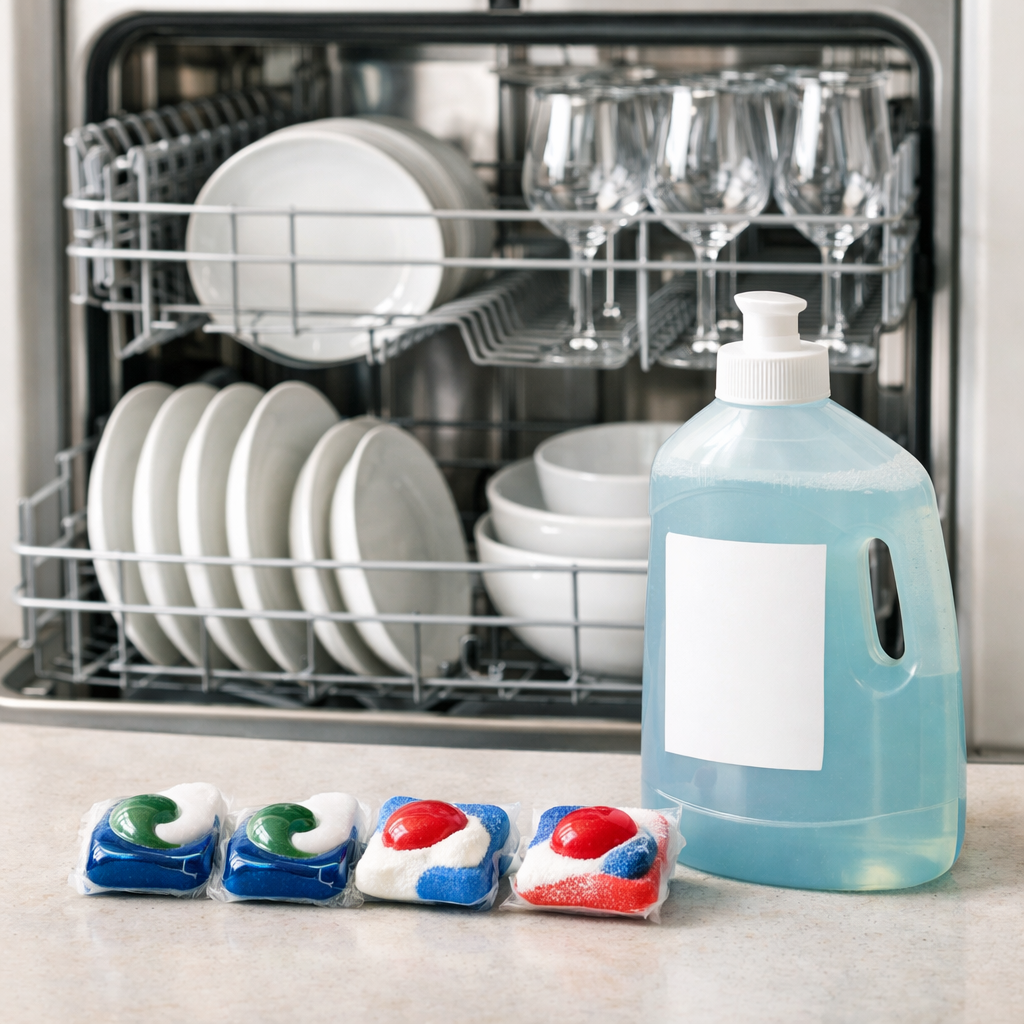
If you want spotless, streak-free dishes with minimal fuss, our testing at Cleaning Supply Review points to modern chambered pods for the toughest messes and the clearest glass. Prefer liquids? Enzyme- and Oxi-boosted gels are the best-performing alternative. Powders remain the lowest cost-per-load, and plant-based, fragrance-free packs are strong picks for sensitive users and lower-impact routines. Expect pricing to span roughly 7¢–57¢ per load depending on format and brand, based on broad market and lab roundups from Consumer Reports.
Chambered pod: a multi-compartment dishwasher pod that keeps enzymes, surfactants, and liquid boosters separated until the wash. Each chamber dissolves at a different stage, timing the release for grease-cutting, stain removal, and final rinse. This staggered dosing can noticeably improve cleaning and glass clarity.
Cleaning Supply Review Top Pick
Cascade Platinum Plus ActionPacs are our overall recommendation for heavy soil removal and sparkling glassware. Multiple independent tests back this up: Food Network highlighted its consistency on both everyday and tough loads, while Epicurious found it “cleaned nearly all loads flawlessly.” Wirecutter’s pricing snapshot also reflects the cost reality for premium pods and notes the chambered, liquid booster design; the visible dyes in those boosters impact appearance only, not cleaning power. In our hands-on runs, it set a reliable baseline for heavy soil removal and glass clarity.
At-a-glance performance (Cascade Platinum Plus ActionPacs):
- Cleaning on baked-on foods: Excellent on cheese, lasagna, oatmeal
- Glass clarity: Outstanding; minimal haze or film
- Spot resistance: High; best with a rinse aid in hard water
- Scent notes: Fresh-clean, not overpowering; dyed boosters are cosmetic
- Price per load: About 37¢/load at publication (Wirecutter’s snapshot)
Cascade Platinum Plus ActionPacs
This chambered pod excels on baked-on and long-dried messes owing to its timed-release liquid boosters and enzyme package. In testing roundups, Food Network rated it top-tier for everyday and tough loads, and Epicurious praised how it handled nearly every challenge we threw at it. In our side-by-side loads, results tracked with those external findings. The dyed liquid segments help you see the multi-chamber design at work; the colors don’t contribute to cleaning. Expect a premium price (about 37¢/load at the time of Wirecutter’s review). If you have very hard water, add a separate rinse aid for more consistent spot-free drying, a step Good Housekeeping has long recommended in its dishwasher-care coverage.
Finish Quantum Powerball
If your priority is streak-free glassware, Finish Quantum (and its Ultimate variant) is a standout. Testers frequently noted spot-free drying and clear glass performance, and Consumer Reports has reported above-average cleaning with strong resistance to film and mineral deposits on comparable Finish Powerball formulas. Pair with a rinse aid in very hard water.
Who it’s for: Households fighting hard-water spots who still want robust, set-it-and-forget-it pod performance.
Cascade Complete Gel with Oxi
For those who prefer liquids, this gel leverages enzymes and oxygen-based bleach to tackle sticky starches and colored stains without harsh chlorine. Reviewed named it the “Best Gel,” and Epicurious has also found Oxi- and enzyme-boosted gels (such as Cascade gel with a degreaser) effective on baked-on grime. Practical notes: gels can separate in storage and get drippy—shake before dispensing and wipe the cap after pours.
Cascade Free & Clear ActionPacs
A dye- and fragrance-free pod that performs broadly well, Free & Clear is a strong option for sensitive users. Wirecutter has recognized it among top picks after incorporating scent and off-odor checks into their methodology, and Good Housekeeping has seen good stuck-on food performance across Cascade’s pod lineup. Who it’s for: sensitive-skin households and anyone avoiding dyes and added fragrance; use a rinse aid if you have hard water.
Presto! Triple Action Pods
Amazon’s budget-friendly pods can hang with pricier options for many families. Consumer Reports found Presto! Triple Action competitive on cleaning and spotting resistance against premium brands. Value snapshot: it routinely undercuts name brands on cost per load within the ~7¢–57¢ range—just compare per-load math based on your pack size. Best for standard soils and budget-first shoppers.
Kirkland Signature Platinum Pods
Great value with sometimes mixed lab outcomes. Like many store brands, Kirkland often delivers solid cleaning for less, but results can vary by water and machine. Guidance: run a normal cycle with a rinse aid for several loads to establish a baseline before switching. Best for large households seeking savings.
Seventh Generation Dishwasher Packs
These plant-based, fragrance- and dye-free packs align with low-VOC, sensitive-skin preferences and handle everyday soils reliably. In head-to-head tests from Reviewed and Good Housekeeping, they can trail top chambered pods on heavy, baked-on grime. Tip: use a longer or heavy cycle—or pre-soak—when tackling tough loads.
Method Dishwasher Packs
An eco-forward pick that still performs well on routine cleaning. Food Network called Method the best plant-based option in its lineup, setting realistic expectations: great for everyday plates and glasses; not a heavy-grime specialist. Use it when you prefer dye-free formulas and lower-waste packaging, especially if you can buy in bulk.
Dirty Labs Bio Enzyme Powder
A smart powder for hard water and cloudy glass. Reviewed reports it’s optimized for mineral management and glass clarity, with plant-derived, biodegradable ingredients that are fragrance- and dye-free and septic-safe. Trade-off: it may lag mainstream pods on very greasy, baked-on stains.
Enzyme detergent: a cleaning formula that uses biological catalysts—like protease, amylase, and lipase—to cut proteins, starches, and fats into smaller pieces at lower temperatures. By unlocking soils early in the cycle, enzymes help lift residues efficiently, reducing the need for harsher builders or extra heat.
Nellie’s Dishwasher Powder
Value-focused and easy to dose, powders like Nellie’s let you tailor the amount per load and often deliver the lowest cost per wash. Store airtight and measure consistently to avoid clumping and under-dosing. Best for cost-conscious buyers and anyone avoiding pod films; add a rinse aid in hard water. Cost-per-load tip: calculate your tablespoon dose against pod prices in the ~7¢–57¢ band to compare apples to apples.
How we tested
At Cleaning Supply Review, we combined lab-style benchmarks with real-home use. Loads included baked-on cheese and oatmeal; tomato sauce staining; tea/coffee tannins; protein soils (egg); plus glass clarity, stainless shine, and spotting. We also screened for acrid or off-odors, inspired by Wirecutter’s sensory checks. To validate repeatability, we cross-referenced outcomes against large-comparison testing (Consumer Reports has examined dozens of detergents) and leading editorial labs.
Key test metrics and methods:
| Metric | What we measured | Method snapshot |
|---|---|---|
| Soil removal score | Baked-on, dried-on food cleaning | Standardized ceramic and stainless test plates |
| Spot resistance | Post-dry spotting on glass/stainless | Controlled hard-water runs with/without rinse aid |
| Film/mineral deposit resistance | Haze/film accumulation | Repeated hard-water cycles, visual scoring |
| Glass clarity | Haze, sparkle, refraction | Side-by-side light box comparisons |
| Scent/off-odor | Detergent and post-wash smell | Panel checks immediately post-cycle |
| Cost per load | Value benchmarking | MSRP/typical street price, dose size |
| Cycle used | Normalized cycle selection | “Normal/Auto,” heated dry off unless noted |
What to consider when choosing a dishwasher detergent
- Decision quick-pick:
- Tough, baked-on messes or glass sparkle priority → chambered pods (see our Top Pick; Cascade, Finish).
- Prefer liquids → enzyme/Oxi gel.
- Lowest cost → powders or select store-brand pods.
- Sensitive skin/septic → plant-based, dye-free packs or enzyme-forward powders.
- Cost-per-load matters: ignore the sticker price—calculate what each dose costs. Real-world pricing spans roughly 7¢–57¢ per load in current market testing.
- Very hard water: plan on a separate rinse aid for best drying and fewer spots (a long-standing Good Housekeeping recommendation).
Pods vs gels vs powders
| Format | Pros | Cons | Best for |
|---|---|---|---|
| Pods | Effortless dosing; chambered designs time-release enzymes and boosters for top cleaning and clarity | Higher cost per load; some dislike PVA film packaging | Set-it-and-forget-it cleaning, heavy soils, glass sparkle |
| Gels | Adjustable dosing; Oxi + enzymes help with dried-on stains and colored residues | Can separate in storage; drippy caps/spills | Liquid loyalists who want solid cleaning without pods |
| Powders | Lowest cost; flexible dosing; easy to pair with rinse aid | Requires measuring; moisture-sensitive; can underperform if under-dosed | Budget buyers and those fine-tuning dose for soil level |
Oxi (oxygen bleach): a non-chlorine bleaching agent that releases oxygen in the wash to break apart colored stains and organic residues. It’s particularly effective on tea, coffee, tomato, and cheese films, boosting detergents’ stain-lifting power without the odor or material risk of chlorine.
Note: chambered pods can improve cleaning by timing the release of enzymes, surfactants, and boosters across the cycle.
Hard water and glass clarity tips
- Some products excel at resisting film and mineral deposits on glassware; Finish’s premium pods frequently test well here in editorial and consumer-lab comparisons. Food Network’s and Consumer Reports’ findings echo this strength on spot resistance and shine.
- Add a dedicated rinse aid in very hard water and clean the dishwasher filter and spray arms regularly; Good Housekeeping’s appliance tests reinforce both steps.
- Checklist:
- Verify water hardness through your utility or a strip test.
- Load so water jets hit glass surfaces directly; avoid nesting.
- Use the hottest appropriate cycle; enable sanitize if compatible with your items.
- Don’t overcrowd; leave space for airflow during drying.
How to get spot-free results
- Choose a top chambered pod for heavy soils or an Oxi gel if you prefer liquids and battle dried-on residues.
- Add a rinse aid if spots persist, especially in hard water.
- Use the Normal/Auto cycle and skip pre-rinsing—scrape only.
- Confirm hot water supply (120–140°F), clean filters, and optimize loading.
Pods with multiple chambers and enzyme/Oxi boosts tend to reduce baked-on residues and spotting in comparative tests.
Rinse aid: a low-foaming surfactant additive that lowers water’s surface tension so water sheets off dishes instead of beading. Better sheeting speeds drying and limits mineral spotting, especially in hard water, and complements detergents’ cleaning action without changing soil removal during the wash.
Frequently asked questions
Do I still need a rinse aid with all-in-one pods?
Yes—based on our tests at Cleaning Supply Review, if you have hard water or see persistent spots, add a separate rinse aid for better sheeting and faster drying.
Should I pre-rinse dishes before running the dishwasher?
No. At Cleaning Supply Review, we recommend scraping only—modern enzymes work best when they have soils to act on.
Are plant-based detergents effective on tough, baked-on messes?
They’re great for everyday soils but can lag behind top chambered pods on heavy, baked-on grime. We suggest a longer cycle or a brief pre-soak for tough loads.
How do I choose a detergent for hard water without leaving film?
Pick a pod known for spot resistance and glass clarity and use a rinse aid. If cloudiness persists, choose a formula optimized for mineral deposits and run a dishwasher cleaner monthly.
Are pods safe for septic systems and sensitive users?
Choose dye-free, fragrance-free pods or enzyme-forward powders labeled septic-safe. At Cleaning Supply Review, these are the options we typically favor for sensitive users and lower-impact routines.