Best EPA List N Disinfectants for COVID-19: Expert Recommendations
Best EPA List N Disinfectants for COVID-19: Expert Recommendations
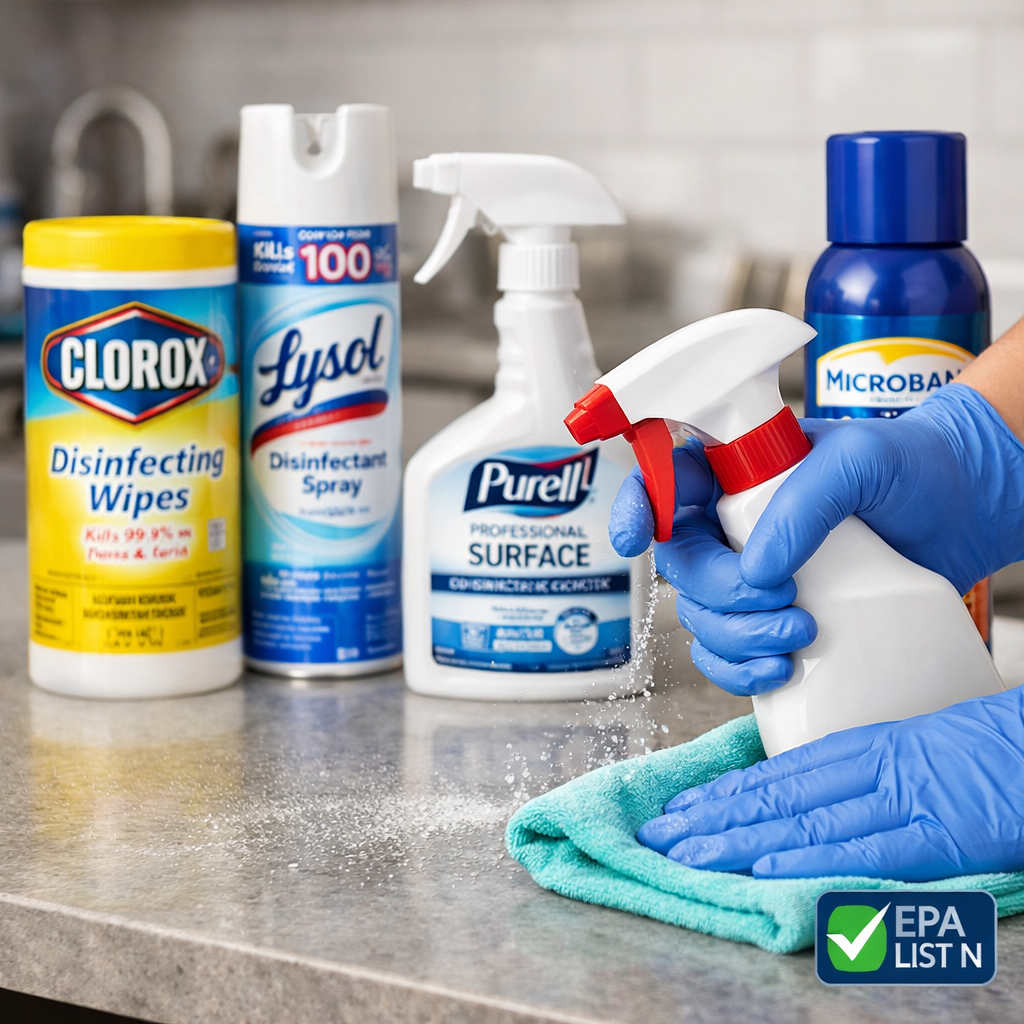
Choosing the right disinfectant matters as much as using it correctly. EPA List N is the EPA’s list of disinfectants for use against SARS‑CoV‑2 (COVID‑19), including products tested directly on the virus or proven effective against harder‑to‑kill pathogens; each entry shows the required “contact time” for COVID‑19 claims. You can verify any product and its dwell time by searching its EPA registration number on the EPA List N advanced search. For most homes and facilities, fast 1–5 minute products—especially hydrogen peroxide–based sprays and wipes—balance speed, safety, and practicality. Below, we explain how to verify List N status, what to prioritize for safety and performance, and Cleaning Supply Review’s expert‑vetted picks for hard nonporous, high‑touch surfaces, with low‑VOC and fragrance‑free options highlighted where available.
Cleaning Supply Review Top Picks Methodology
Our selections are grounded in independent verification and real‑world usability:
- Pillars we value: List N verification, short contact times (ideally 1–5 minutes), broad surface compatibility, low‑VOC/fragrance‑free availability, credible third‑party certifications (e.g., EPA Safer Choice or UL Ecologo where applicable), and cost‑per‑use.
- Chemistry tradeoffs: Most List N products use hydrogen peroxide, quaternary ammonium compounds (quats), sodium hypochlorite (bleach), peracetic/peroxyacids, or hypochlorous acid. Hydrogen peroxide and hypochlorous acid are generally considered lower‑toxicity choices; bleach and quats can be more irritating and may require rinsing on food‑contact surfaces. Contact times on List N span roughly 30 seconds to 10 minutes depending on chemistry and label, so usability can vary widely (see the archived List N PDF for examples). A safer‑chemistry review notes hydrogen peroxide options frequently deliver rapid, 1‑minute performance alongside a favorable health profile. Sources: EPA List N advanced search; EcoCenter/RPN report on antimicrobials; archived List N PDF.
- Cost/performance context: Concentrates and bleach deliver lowest per‑use cost but require training and careful handling; ready‑to‑use (RTU) sprays and wipes improve compliance and speed but cost more per application.
Quick‑compare of our top picks (verify exact product/EPA Reg. No. and contact time on List N before purchase):
| Product | Active chemistry | Format(s) | COVID‑19 contact time | Key safety/compatibility notes | Relative cost‑per‑use |
|---|---|---|---|---|---|
| Clorox Healthcare Hydrogen Peroxide Cleaner/Wipes (EPA 67619‑24/25) | Hydrogen peroxide | RTU spray, wipes | 1 minute | Lower odor; broad hard‑surface compatibility; fragrance‑free variants available | $$ |
| Diversey Oxivir TB / Oxivir Wipes (EPA 70627‑56/60) | Hydrogen peroxide | RTU spray, wipes | 1 minute | Healthcare‑proven; check food‑contact rinse guidance | $$ |
| PURELL Multi‑Surface Disinfecting Cleaner (EPA 84368‑1) | Ethanol (alcohol) | RTU | 5 minutes | Familiar handling; ensure full wet time | $$ |
| Clorox Germicidal Bleach / CloroxPro bleach | Sodium hypochlorite | Concentrate | Typically 1–6 minutes | Powerful, low cost; may require rinse on food‑contact; strong odor/irritation potential | $ |
| Provastride by Sterilex (institutional) | Sodium percarbonate blend | Concentrate | ~1.5 minutes | For trained users; verify dilutions and application methods | $ |
| PeridoxRTU / peracetic systems | Peracetic acid (often with H2O2) | RTU, systems | Often up to 10 minutes | Strong oxidizers; check material/PPE/ventilation notes | $$–$$$ |
| Viking Pure Hypochlorous Acid (HOCl) | Hypochlorous acid | RTU/on‑site gen. | Often ~5 minutes | Milder odor; verify shelf life and allowed methods | $$ |
How to verify EPA List N registration
- Find the EPA registration number on the product label. EPA registration number: a structured identifier where the first set indicates the primary registrant and later sets show distributor/manufacturer (see this EPA registration number explanation).
- Enter that number in the EPA List N advanced search to confirm the product is listed for SARS‑CoV‑2 and to note the specific COVID‑19 contact time and directions.
- Review the List N entry for formulation type (RTU, wipes, concentrate) and any surface notes, such as whether a post‑rinse is required on food‑contact surfaces (archived List N PDF).
- Understand the evidence: some products were tested directly against SARS‑CoV‑2, while others qualify by killing a harder‑to‑kill pathogen under EPA’s policies (EPA List N overview).
- Cleaning Supply Review follows this same process to validate every pick.
What to prioritize for safety and performance
- Contact time: Many List N entries range from 30 seconds to 10 minutes; 1‑minute formulas help with turnover and compliance (archived List N PDF; EcoCenter/RPN report).
- Safer handling: Hydrogen peroxide and hypochlorous acid are often preferred for lower odor and irritation potential. Bleach and quats can be effective but more irritating and may require rinsing on food‑contact surfaces (EcoCenter/RPN report; archived List N PDF).
- Cost and format: Diluted bleach is typically lowest cost; concentrates reduce cost but demand training. RTU sprays and wipes improve consistency and are faster for spot disinfection, at higher per‑use cost. Always follow the label contact time exactly for efficacy (EPA List N overview).
1. Cleaning Supply Review two-cleaner strategy
Use a gentle, low‑VOC daily cleaner to remove soils, then deploy an EPA List N disinfectant on high‑touch areas during outbreaks or higher‑risk periods. EPA guidance reinforces this sequence: clean first, then apply the List N disinfectant and keep the surface wet for the full labeled time (EPA guidance on List N usage).
Examples:
- Daily clean: a fragrance‑free, low‑VOC all‑purpose cleaner for kitchen counters and tables.
- Targeted disinfect: a 1‑minute hydrogen peroxide wipe for doorknobs, faucets, appliance handles, and toilet flush levers.
High‑touch checklist (prioritize during illness/outbreaks):
- Door handles, light switches, faucet and refrigerator handles
- Phones, keyboards, remote controls, shared touchscreens
- Stair rails, chair backs, elevator buttons
- Toilet seats/lids, flush levers, sink basins
2. Clorox Healthcare Hydrogen Peroxide Cleaner and Wipes
Clorox Commercial/Healthcare Hydrogen Peroxide Cleaner (EPA 67619‑24) and Wipes (EPA 67619‑25) carry 1‑minute contact times for SARS‑CoV‑2 and offer broad material compatibility with a lower‑odor profile typical of hydrogen peroxide disinfectants (EcoCenter/RPN report). They’re well‑suited to homes and facilities that need fast turnarounds on hard nonporous surfaces. Choose RTU spray for larger areas and wipes for high‑touch points. Before buying, match the exact product name and EPA Reg. No. in the EPA List N advanced search.
3. Diversey Oxivir TB and Oxivir Wipes
Diversey Oxivir TB RTU (EPA 70627‑56) and Oxivir Wipes (EPA 70627‑60) are healthcare‑proven hydrogen peroxide disinfectants with 1‑minute COVID‑19 contact times (EcoCenter/RPN report). Use on hard nonporous surfaces; review the label/List N entry to confirm if a post‑rinse is required for food‑contact areas (archived List N PDF). RTU spray covers larger surfaces quickly; wipes excel on door hardware, rails, and shared devices. Facilities can lower cost‑per‑use by buying case quantities.
4. PURELL Multi-Surface Disinfecting Cleaner
GOJO’s PURELL Multi‑Surface Disinfecting Cleaner (EPA 84368‑1) is an ethanol‑based List N option with a 5‑minute COVID‑19 contact time (EcoCenter/RPN report). The alcohol chemistry offers a familiar handling profile and generally low residue, but you must keep surfaces visibly wet for the full 5 minutes to meet label claims. Check your List N entry for the exact formulation type and directions (archived List N PDF).
5. Clorox Germicidal Bleach and CloroxPro bleach
Bleach is a potent, low‑cost disinfectant when used strictly per label. List N bleach products typically list COVID‑19 contact times from about 1 to 6 minutes depending on concentration and formulation; verify by EPA Reg. No. using the EPA List N advanced search. Follow label ratios when diluting, ventilate well, and remember many bleach products require a post‑rinse on food‑contact surfaces (archived List N PDF). Never mix bleach with ammonia, acids, or other cleaners.
6. Provastride by Sterilex
For trained institutional users, Provastride is a sodium percarbonate–based concentrate listed on List N with an approximate 1.5‑minute contact time. Confirm exact dilution ratios and labeled application methods (e.g., mop, sprayer, electrostatic if permitted) in the List N entry and product label (EPA List N advanced search; EcoCenter/RPN report). As with all concentrates, ensure correct PPE and staff training.
7. PeridoxRTU and peracetic acid systems
Peracetic acid formulations, including hydrogen peroxide/peracetic blends like PeridoxRTU, appear on List N with powerful broad‑spectrum claims, often requiring up to 10 minutes of wet contact for COVID‑19 (archived List N PDF). These strong oxidizers can be more aggressive to metals and soft surfaces; review PPE, ventilation, and compatibility notes on the label. RTU options simplify training and help ensure validated claims are met.
8. Viking Pure hypochlorous acid
Hypochlorous acid (HOCl) is an antimicrobial generated by electrolyzing saltwater; it inactivates microbes via a chlorine‑based oxidizing action and often has a milder odor than bleach. Some HOCl products on List N, such as Viking Pure Disinfectant, list around 5‑minute contact times—verify specific claims and allowed application methods (spray/wipe) in the archived List N PDF and the EPA List N advanced search. Check shelf life (or on‑site generation requirements) and storage guidance before purchase.
Buying tips for homes and facilities
- Verify first: Confirm List N listing by EPA Reg. No., then note COVID‑19 contact time, formulation type, and any food‑contact rinse directions (EPA List N advanced search; archived List N PDF).
- Choose chemistry for your setting: Prefer hydrogen peroxide or hypochlorous acid for lower‑odor, lower‑irritation needs; use bleach or quats when cost or availability is the priority and label directions can be rigorously followed (EcoCenter/RPN report).
- Pick a format that fits workflow: RTU sprays/wipes for convenience and compliance; concentrates for bulk areas with trained staff. Diluted bleach offers the lowest per‑use cost when prepared and used exactly as labeled.
- Sensitive spaces: Prioritize low‑VOC and fragrance‑free options, and look for credible certifications or safer‑chemistry acknowledgments on labels.
Correct use and contact times
Contact time is how long a surface must stay visibly wet with disinfectant to achieve the labeled kill (commonly 1–10 minutes depending on product). Contact times on List N vary widely—from 30 seconds to 10 minutes—so read each label carefully (archived List N PDF).
Step‑by‑step:
- Clean visibly dirty surfaces first to remove soils (EPA guidance on List N usage).
- Apply enough product to keep the surface wet for the full labeled time; re‑wet if it starts to dry early (EPA guidance on List N usage).
- Follow label PPE, dilution, ventilation, and rinse directions. Do not improvise dilutions; use only manufacturer‑specified ratios (EPA registration number explanation).
Do/don’t quick list:
- Do ventilate and wear required PPE.
- Do keep products away from children and pets.
- Don’t mix chemicals (especially bleach with ammonia/acids).
- Don’t use disinfectants on skin or ingest; they are for hard nonporous surfaces only.
Quick‑reference contact time guide (verify on List N for your exact SKU):
| Product | COVID‑19 contact time | Re‑wet likely in dry climates? |
|---|---|---|
| Clorox Healthcare Hydrogen Peroxide Cleaner/Wipes | 1 minute | Rarely; apply adequate volume |
| Diversey Oxivir TB / Wipes | 1 minute | Rarely; ensure full coverage |
| PURELL Multi‑Surface Disinfecting Cleaner | 5 minutes | Sometimes; re‑apply if drying |
| Clorox Germicidal Bleach / CloroxPro | 1–6 minutes (varies) | Sometimes; watch evaporation |
| Provastride by Sterilex (conc.) | ~1.5 minutes | Unlikely if applied liberally |
| PeridoxRTU / peracetic systems | Up to 10 minutes | Often; re‑wet as needed |
| Viking Pure Hypochlorous Acid | ~5 minutes | Sometimes; monitor and re‑wet |
For more cleaning strategy insights, explore our latest guides at Cleaning Supply Review.
Frequently asked questions
What is EPA List N and how do I check a product?
EPA List N is the EPA’s list of disinfectants for use against SARS‑CoV‑2. Use the product’s EPA registration number in the EPA List N search to confirm listing and contact time; Cleaning Supply Review recommends confirming the exact Reg. No. before purchase.
What contact time should I look for and how do I keep surfaces wet?
Shorter is easier—1–5 minutes is practical at home or in facilities. Apply enough product to keep the surface visibly wet for the full time and reapply if it starts to dry early.
Are fragrance-free or low-VOC disinfectants available?
Yes—hydrogen peroxide–based sprays and wipes often come in low‑odor or fragrance‑free options, and some hypochlorous acid products have minimal scent; Cleaning Supply Review flags these in our picks. Always verify List N status and label details.
Do I need to disinfect daily or only high-touch areas?
Cleaning Supply Review recommends focusing disinfection on high‑touch surfaces, especially during outbreaks or when illness is present. Routine cleaning is fine for most areas; use List N disinfectants where risk is higher.
Can I dilute bleach safely and when should I avoid it?
You can dilute bleach safely by following the label’s exact ratios and safety steps. Avoid using bleach on sensitive surfaces, mixing it with other cleaners, or using it without needed ventilation or post‑rinse.