Best Hospital-Grade Disinfectants Compared: Sprays Versus Wipes For Homes
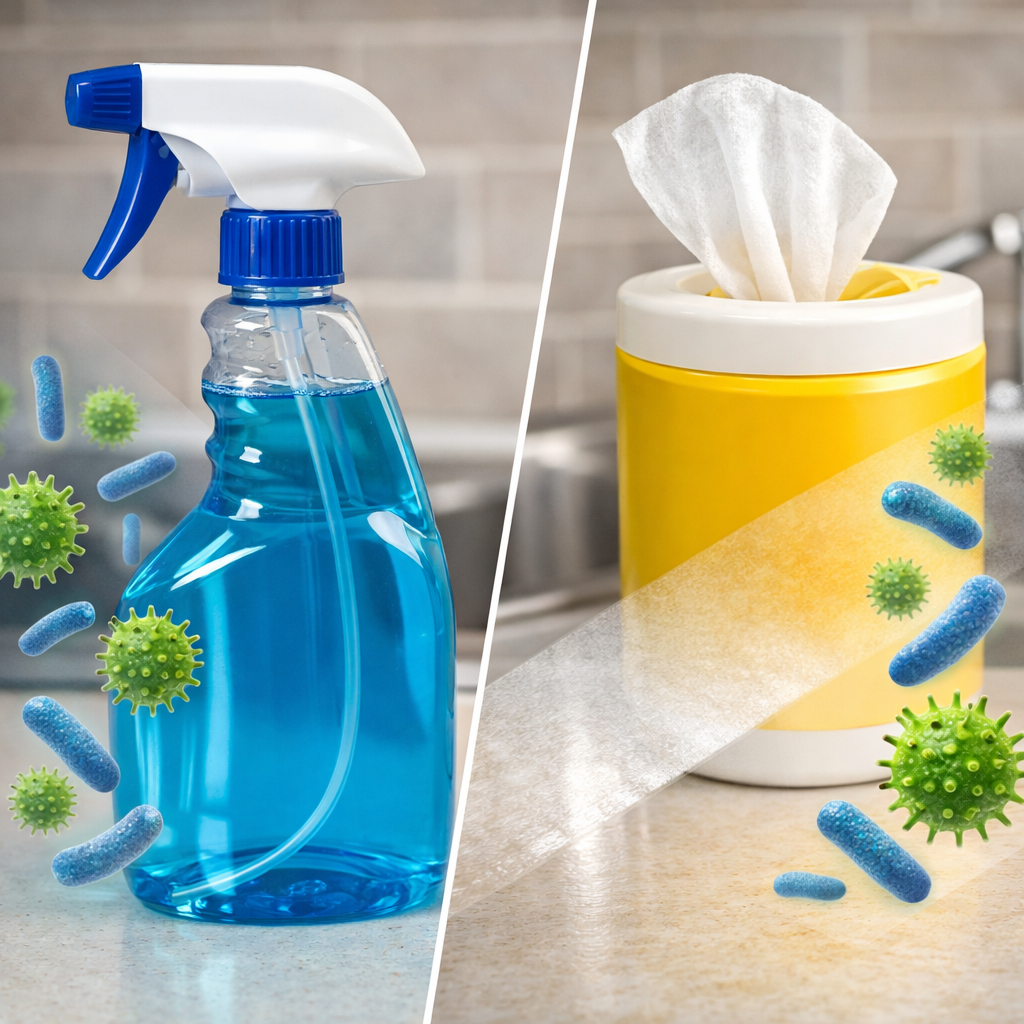
Best Hospital-Grade Disinfectants Compared: Sprays Versus Wipes For Homes
Choosing the best hospital-grade disinfectants for home use comes down to two things: verified efficacy and how you apply the product. There’s no single “winner” between sprays and wipes—both can achieve hospital-grade disinfection when they’re EPA-registered and used at the labeled contact time with full surface coverage. Sprays typically excel on large or irregular areas and cost less per use; wipes shine on small, high-touch items with less cross-contamination risk. Below, we compare formats, explain technique, and map scenarios so you can decide when to reach for a spray, a wipe, or both.
How we evaluate hospital-grade disinfectants for homes
At Cleaning Supply Review, we test and compare products against four pillars: verified pathogen kill, user and indoor air safety, surface compatibility, and total cost-per-use (including waste). EPA-registered products are required for true disinfection at home; among them, we prioritize low-VOC, fragrance-free options and clear ingredient disclosure.
Working definition: Hospital-grade disinfectants are EPA-registered products formulated to inactivate broad classes of microbes on hard, nonporous surfaces when used as directed, often validated for healthcare settings but practical in homes with correct dwell time and coverage.
What we score (preview):
- Efficacy/EPA registration: pathogen claims, EPA List N (when relevant), contact/dwell time, and technique fidelity.
- Safety: VOCs, fragrance-free and non-irritant choices, ingredient transparency, and PPE/ventilation needs.
- Surface compatibility: fit to materials (electronics, sealed stone, laminate, stainless, vinyl, bathroom fixtures), residue risk, and rinse notes.
- Cost-per-use and waste: RTU vs concentrate dilution ratio, per-application cost, refills, and disposables footprint.
Efficacy and EPA registration
Technique matters as much as product. Most EPA-registered disinfectants require surfaces to stay visibly wet for the full labeled contact time—a point we emphasize in Cleaning Supply Review reviews; many consumer guides cite around five minutes as common, but you must follow the exact label directions, re-wetting as needed to maintain coverage, as noted in the OzKleen comparison and Uniwipe’s format guide (see: OzKleen comparison; Uniwipe’s detailed comparison).
Contact time (also called dwell time) is the label-specified duration a disinfectant must keep a surface wet to achieve its germ-kill claims. If the area dries early or gets wiped prematurely, efficacy drops and pathogens can persist. Re-wet as needed and maintain continuous, visible wetness for the full period.
A systematic review notes alcohol is most effective as a virucide at 60–90%, and that wiping can add mechanical action that helps dislodge particles—particularly on small surfaces—boosting real-world outcomes when technique is consistent, according to a systematic review of disinfectants and antiseptics.
Safety, VOCs, and ingredient transparency
At home, favor low-VOC disinfectant choices, fragrance-free formulations, and brands that publish full ingredient lists. While EPA Safer Choice does not apply to disinfection claims (it covers cleaners), its ethos of transparency is useful for selecting companion cleaners. This mirrors Cleaning Supply Review’s selection criteria.
Some actives can damage plastics, rubbers, or stainless steel with overuse or inadequate rinsing. Check labels for compatibility and food-contact rinse requirements; industry guidance from Keystone Supply Group highlights these cautions and the importance of choosing EPA-listed formulations (see Keystone Supply Group’s EPA-listed disinfectant guidance).
Before you use:
- Ventilate the area; avoid unnecessary aerosolization.
- Wear gloves/eye protection if required by the label.
- Never mix chemicals; follow dilution instructions exactly for concentrates.
Surface compatibility and residues
Match the format to the material:
- Electronics, remotes, and switches: wipes minimize drip and overspray for controlled dosing (OzKleen comparison).
- Sealed stone, laminate, stainless, vinyl, bathroom fixtures: sprays plus microfiber improve even wetting on large, irregular, or textured areas (Uniwipe’s detailed comparison).
Sprays can leave residue or cause overspray on sensitive finishes; target-apply (or spray into a cloth first) and finish with a water wipe where labels advise, especially near food contact (Keystone Supply Group’s EPA-listed disinfectant guidance). Wipes are ideal for handhelds due to minimal drip and consistent dosing.
Cost per use and waste footprint
Sprays generally deliver a lower cost per use—especially concentrates or bulk refills—while pairing with reusable microfiber reduces waste and cost per square foot. Industry FAQs and consumer comparisons put sprays at roughly 5–10x cheaper per application than wipes, depending on format and dilution (see EMist’s disinfection FAQs; Truly Free’s wipes vs sprays comparison). Wipes add single-use waste; biodegradable substrates exist, but always verify the disinfection claims and contact times (Uniwipe’s detailed comparison).
Simple cost-per-use calculator:
- Cost per use ≈ (Unit price ÷ total usable applications). For concentrates: Applications ≈ (Total diluted volume ÷ typical volume applied per job).
Example estimates (for illustration only):
| Format | Typical unit | Example per-use range |
|---|---|---|
| RTU spray | 32 oz | $0.05–$0.20 |
| Concentrate (1:64) | 1 gal makes 65 gal | $0.01–$0.05 |
| Disinfectant wipe | 75–100 count | $0.08–$0.25 per wipe |
Sprays versus wipes at a glance
| Factor | Sprays | Wipes |
|---|---|---|
| Coverage | Superior on large, irregular, or textured surfaces; reach crevices | Best for small, smooth, high-touch zones |
| Technique | Can spray onto cloth for precision; supports re-wetting to maintain dwell time | Consistent dose per wipe; risk of drying out mid-task |
| Dwell time management | Easy to re-wet wide areas to stay visibly wet | Good for short contact times on small surfaces; may need multiple wipes |
| Cost-per-use | Lower, especially with concentrates/refills | Higher per square foot |
| Waste | Minimal with refillable bottles and microfiber | More single-use plastic and substrate waste |
| Best-fit surfaces | Counters, bathrooms, floors, textured panels, grout/fixtures | Doorknobs, switches, remotes, phones, appliance handles |
Evidence notes: Sprays provide better large-area coverage and crevice reach, while wipes deliver consistent dosing and lower cross-contamination risk but can dry out (OzKleen comparison; Keystone Supply Group’s EPA-listed disinfectant guidance). Our Cleaning Supply Review testing aligns with this.
One-sentence takeaway: Use wipes for high-touch quick cleans and sprays for larger or irregular areas.
Effectiveness and technique
Whatever you choose, kill performance hinges on keeping surfaces visibly wet for the full contact time and achieving full coverage (OzKleen comparison). A systematic review underscores that alcohols work best at 60–90% and that wiping’s mechanical action can improve outcomes on small targets (a systematic review of disinfectants and antiseptics). Real-world facility data echo the coverage effect: a peer-reviewed facilities study reported lower ATP residuals with spray vs wipe applications (each-use median RLU 1,767 spray vs 22,892 wipe; monthly median 2,296 vs 19,371), highlighting the importance of generous, even application (a facilities study on ATP residuals).
Coverage and surface fit
- Use sprays for counters, bathrooms, floors, tiled showers, and textured/irregular surfaces; saturate thoroughly, then use a clean microfiber to spread and keep wet (OzKleen comparison).
- Wipes may struggle on uneven textures and lose efficacy if they dry out. Close canisters promptly and replace lids firmly (Keystone Supply Group’s EPA-listed disinfectant guidance).
- Quick pairings: electronics/knobs/switches = wipes; grout/fixtures/large panels = spray + microfiber.
Cross-contamination and user consistency
Single-use wipes lower cross-contamination risk compared with reusing cloths, though performance drops if canisters dry or pressure is uneven (Keystone Supply Group’s EPA-listed disinfectant guidance). Sprays can overspray or spread soil when misapplied; for small targets, spray onto the cloth first to control placement (Uniwipe’s detailed comparison; Keystone Supply Group’s EPA-listed disinfectant guidance). For spray + microfiber: work clean-to-dirty, rotate cloths frequently, and stage a closed-lid bin for used textiles.
Cost per use and long-term value
Formula: Cost per use = Unit cost ÷ number of effective applications (for concentrates, compute diluted volume first). Buying gallon concentrates or refills and dispensing into labeled, reusable bottles dramatically lowers long-term costs; sprays generally outcompete wipes on cost-per-use (EMist’s disinfection FAQs). Pairing sprays with reusable microfiber further reduces waste and per-square-foot spend (Truly Free’s wipes vs sprays comparison; OzKleen comparison).
Comparison snapshot:
| Package | Example use case | Relative cost | Notes |
|---|---|---|---|
| RTU quart spray | Everyday bathroom/kitchen | $$ | Convenience; watch per-ounce price |
| Gallon RTU or concentrate | Whole-home, post-illness | $ | Best value; needs storage and labeling |
| Wipe canister | High-touch points | $$$ | Speed and cross-contamination control |
Safety, exposure, and indoor air quality
Avoid unnecessary aerosolization; for small targets, apply sprays to a cloth to limit inhalation and overspray (Keystone Supply Group’s EPA-listed disinfectant guidance). Ventilate, wear PPE as labeled, and wash hands after use. Some chemistries can degrade plastics, rubbers, or stainless when overused—follow compatibility and rinse guidance.
VOCs (volatile organic compounds) are chemicals that off-gas into indoor air and may trigger irritation. Choosing low-VOC, fragrance-free disinfectants and applying them precisely reduces indoor air burdens without compromising pathogen control. For complementary cleaning steps between disinfections, see Cleaning Supply Review’s safe, residue-aware picks in our guide to all-purpose cleaners.
Environmental impact and waste
Refillable spray systems and concentrates cut single-use plastics and cost per use (Truly Free’s wipes vs sprays comparison). Wipes inherently create more disposable waste; if you choose them, consider biodegradable, plant-based substrates but verify disinfection efficacy and contact times (Uniwipe’s detailed comparison). Quick wins:
- Opt for bulk refills or tablet concentrates.
- Reuse labeled spray bottles; maintain sprayers.
- Launder microfiber in closed loads; skip fabric softeners.
When to choose sprays at home
- Kitchens and bathrooms after illness, large countertops, floors, tiled showers, and textured surfaces where saturation and crevice reach matter (OzKleen comparison).
- Cost advantage: sprays can be 5–10x cheaper per application than wipes; use microfiber and rotate cloths to maintain dwell time (EMist’s disinfection FAQs).
- Control overspray by spraying into a cloth on small zones; keep surfaces wet for the full contact time (Keystone Supply Group’s EPA-listed disinfectant guidance).
When to choose wipes at home
- Doorknobs, light switches, fridge handles, phones, tablets, and remotes—fast, portable, and no extra cloths needed (OzKleen comparison).
- Strengths: consistent dosing and reduced cross-contamination risk; seal canisters firmly to prevent dry-out (Keystone Supply Group’s EPA-listed disinfectant guidance).
- Limitations: less cost-effective over large areas and can struggle on textured surfaces (OzKleen comparison).
Product format nuances that matter
Read labels closely for dilution ratios, active ingredient classes, and surface/rinse instructions. RTU (ready-to-use) offers convenience; concentrates deliver economy and less plastic—if you dilute accurately into labeled secondary bottles. The table below summarizes common actives and residue tendencies, plus packaging trade-offs.
Ready-to-use versus concentrates
- RTU: Convenience and consistent strength; higher per-ounce price.
- Concentrates: Lower ongoing costs and plastic; require accurate dilution, labeled bottles, and safe mixing.
Simple dilution math: If a 1:64 concentrate costs $20 per gallon, it makes ~65 gallons RTU. At 2 oz applied per typical task, that’s roughly 4,160 applications—about half a cent per use before cloths/bottles.
Safe mixing steps:
- Put on gloves/eye protection if labeled. 2) Add water first, then concentrate to the fill line. 3) Cap and label the bottle with product name, dilution, date. 4) Store away from kids/pets.
Actives and residues
- Alcohols: Fast-acting against many viruses when 60–90%; evaporate quickly—watch dwell time (a systematic review of disinfectants and antiseptics).
- Quats (QACs): Broad-spectrum; can leave residue—rinse food-contact surfaces per label.
- Hydrogen peroxide: Breaks down to water/oxygen; check material compatibility and contact time.
- Technique tip: Wiping adds mechanical removal that can boost outcomes on small surfaces (a systematic review of disinfectants and antiseptics).
Packaging, refills, and storage
Choose refill pouches or bulk jugs for sprays; use tight-lid dispensers for wipes to prevent dry-out—reseal immediately after use (Keystone Supply Group’s EPA-listed disinfectant guidance). Refillable systems reduce single-use plastic and per-use costs (Truly Free’s wipes vs sprays comparison). Store all products in cool, dry areas away from sunlight and out of children’s reach.
Training for correct dwell time and dosing
- Pre-clean visible soil.
- Apply enough product to keep surfaces visibly wet.
- Start a timer; re-wet as needed to maintain continuous wetness.
- Let air-dry unless the label requires a rinse, especially on food-contact items (Keystone Supply Group’s EPA-listed disinfectant guidance; OzKleen comparison).
- Assign household “zones,” rotate cloths frequently, and keep a simple fridge card listing contact times for your most-used products.
Our recommendation and use-case matrix
Use both formats—strategically. Reserve wipes for targeted, high-touch points and use sprays for broad coverage and economy. After illness, for example, disinfect wide areas with a spray (maintaining dwell time), then finish high-touch points with wipes for mechanical action and reduced cross-contamination (OzKleen comparison).
| Task/Surface | Best with Spray | Best with Wipe | Notes (dwell time, cost) |
|---|---|---|---|
| Large countertops, tables | ✓ | Easier to keep visibly wet; lower cost-per-use | |
| Doorknobs, light switches | ✓ | Consistent dosing; use fresh wipe per area | |
| Phones, remotes, game controllers | ✓ | Avoid overspray; minimal moisture | |
| Tiled showers, grout, fixtures | ✓ | Saturation reaches crevices; follow with microfiber | |
| Stainless appliances (exterior) | ✓ | ✓ | Spray-to-cloth for precision; buff to reduce residue |
| Floors (spot disinfection) | ✓ | Use labeled dilution; let air-dry per label |
We continually test refillable spray systems, disinfectant concentrates, and biodegradable disinfectant wipes to balance hospital-grade performance with low-VOC, fragrance-free formulations and responsible packaging at Cleaning Supply Review.
Frequently asked questions
Do I need an EPA-registered disinfectant at home or will cleaning be enough?
Cleaning Supply Review recommends routine cleaning for everyday maintenance. Use an EPA-registered disinfectant after illness or on high-touch bathroom/kitchen areas and follow full contact time.
Which kills more germs in practice, sprays or wipes?
Cleaning Supply Review finds neither format wins by default; outcomes depend on full coverage and keeping surfaces wet for the labeled dwell time.
How long should surfaces stay visibly wet for proper disinfection?
Cleaning Supply Review’s rule: follow your label; many products require 1–5 minutes of wet contact, so re-wet as needed and don’t wipe dry early.
Are disinfectant wipes safe for electronics and kids’ items?
Cleaning Supply Review prefers wipes for electronics and other small nonporous items to limit moisture; check compatibility and rinse instructions for items contacting food or mouths.
How can I reduce cost and waste without losing hospital-grade performance?
Cleaning Supply Review suggests refillable spray systems or concentrates with reusable microfiber; keep wipe canisters sealed and reserve wipes for high-touch quick cleans.