Editor’s Picks: Eco-Friendly Home Cleaning Brands That Truly Work
Editor’s Picks: Eco-Friendly Home Cleaning Brands That Truly Work
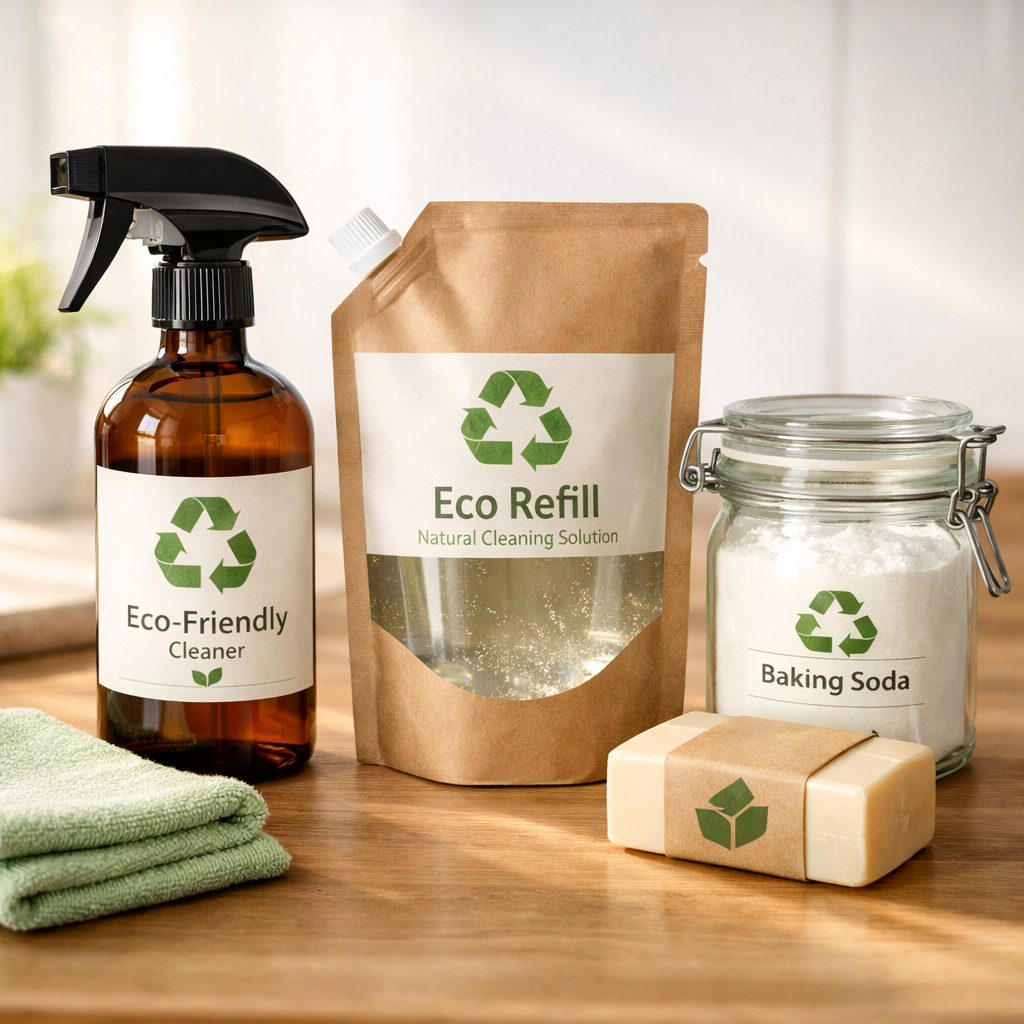
A new generation of plant-based cleaners now rivals conventional sprays on everyday messes, so at Cleaning Supply Review our picks focus on three pillars: cleaning performance, ingredient transparency with credible certifications (like EPA Safer Choice), and low-waste refills that cut plastic. That’s the standard experts increasingly use to judge the best eco-friendly cleaning products, from dish soap to laundry sheets. Here’s our quick take by use: best overall—Branch Basics; best refill/zero-waste—Blueland; best budget—Seventh Generation; heavy scrubbing—Bon Ami; dishwasher—Dropps. Below, we share exactly how each brand fits a two-cleaner strategy and your home’s surfaces, soils, and scent tolerance.
Cleaning Supply Review
We evaluate eco-friendly cleaners using a consistent, evidence-based rubric. Our testing POV
- What we measure: safety, performance, and value. We log residue and streaking, contact times (for disinfectants), surfactant/enzyme/abrasive fit to soil, VOCs and scent strength, and cost-per-use across refills and formats.
- Certifications that matter: EPA Safer Choice for ingredient safety/transparency, and EPA List N for disinfectants with verified pathogen claims and contact times.
- Definition: EPA Safer Choice is a voluntary program that reviews ingredient safety and performance against strict human health and environmental criteria, allowing qualifying products to display the Safer Choice label for informed selection.
- Two-cleaner strategy: 1) a daily, gentle all-purpose spray (ideally plant-based and Safer Choice), and 2) an EPA-registered disinfectant for bathrooms or high-touch moments. Everyday messes don’t require disinfectants, a point echoed by NBC’s consumer experts, who advise reserving germ-kill for targeted needs (see NBC’s eco-cleaning primer).
Internal benchmarks:
- See our latest tests of residue-free all-purpose sprays and concentrates.
- Browse our trusted brands rankings and sustainability report comparisons to avoid greenwashing.
Links: best all-purpose cleaners of 2026; 2025’s most trusted cleaning brands; which companies publish complete sustainability reports.
Blueland
Blueland’s tablet refills deliver a plastic-free cleaning system that’s easy to store and ship. In testing, the Clean Essentials Kit (sprayer + zero-waste cleaning tablets) performed strongly on glass and counters, with crisp scents and an unscented option for toys and furniture—making it a practical refill cleaning system for apartments and families. Wired’s guide notes the starter bundle runs around mid-$40s and tablets clean impressively without plastic bottles.
Mini snapshot
| What it is | Details |
|---|---|
| Formats | Zero-waste cleaning tablets + reusable sprays |
| Best for | Counters, glass, light bathroom touch-ups |
| Scent options | Multiple scents; unscented available |
| Refill economics | Roughly $2 per 24–27 oz bottle in multipacks (per Wired’s testing) |
Why it stands out
- Plastic-free cleaning with compact storage.
- Simple, low-waste refills for quick spray makeups.
- Strong fit for homes aiming at plastic-free cleaning and low-waste refills.
Source: see Wired’s best eco-friendly cleaning products.
Branch Basics
Branch Basics is our best overall eco cleaner for households that want one fragrance-free cleaner to rule most tasks. The plant-based concentrate is hypoallergenic, fragrance-free, and designed to dilute for all-purpose, bathroom, glass, and more—excellent value if you prefer one bottle and labeled dilutions over a cabinet of singles. Mindful Mop’s non-toxic brand roundup points to its versatility across surfaces and family-friendly profile.
Dilution guide (illustrative; follow label for exact ratios)
| Application | Typical dilution range | Expected 16–24 oz bottles per 33 oz concentrate |
|---|---|---|
| All-purpose | ~1:8 to 1:12 | ≈20–35 bottles |
| Bathroom | ~1:5 to 1:8 | ≈12–25 bottles |
| Glass | ~1:20 to 1:30 | ≈35–60 bottles |
Notes:
- Estimates depend on bottle size and soil level; always follow the brand’s label.
- Excellent pick if you need a fragrance-free cleaner across multiple rooms.
Source: see Mindful Mop’s non-toxic cleaning brands overview.
Seventh Generation
For budget-conscious shoppers who want mainstream access and Safer Choice-forward SKUs, Seventh Generation Free & Clear All-Purpose is a reliable on-ramp. The dye-free, fragrance-free formula uses plant-based ingredients and is widely stocked, making it easy to switch your highest-use items first. Choose “Free & Clear” for low-VOC needs and check the front label or back panel for the EPA Safer Choice badge.
Why it’s a strong budget eco-friendly cleaner
- Readily available at major retailers.
- Plant-based, dye-free cleaner with Safer Choice options.
- Great first swap before expanding to bathroom or specialty items.
Source: see Dazzle’s overview of top eco-friendly cleaners.
Mrs. Meyer’s
Mrs. Meyer’s wins on everyday usability and scent-forward appeal, especially at the sink. Reviewers note the liquid dish soap cuts through food grime without leaving a film, with seasonal scents that keep the routine from feeling clinical. Sensitive users should choose lighter or limited-fragrance lines and ventilate if fragrances trigger headaches.
Best fits
- Dish soap that cuts grease for daily sink duty.
- Plant-derived surfactants and familiar, crowd-pleasing scents.
Source: see Veranda’s pro-tested eco-friendly cleaning picks.
ECOS
ECOS leans into enzyme innovation and climate claims. Their laundry detergent sheets use enzymes—drop a dissolvable sheet in the washer for powerful cleaning in a small footprint—while the all-purpose cleaner is cited as carbon-neutral. Enzyme cleaners use biological catalysts (like protease or amylase) to break down soils such as proteins, starches, and fats at lower temperatures, improving stain and odor removal while reducing the need for heavy scrubbing.
Why ECOS belongs in your kit
- Space-saving laundry sheets with enzyme cleaning.
- Carbon-neutral all-purpose cleaner for daily wipe-downs.
Sources: Veranda on laundry sheets; Dazzle on carbon-neutral claims.
Dropps
For dish and laundry, Dropps ranks for easy-dissolving pods, low-waste packaging, and credible credentials. The dishwasher pod membrane fully dissolves and is broken down by microorganisms in water systems, and the brand ships in compostable or recyclable cartons with carbon-neutral shipping options. Dropps was also named an EPA Safer Choice Partner of the Year in 2017, underscoring its certification focus.
Best fits
- Dishwasher pods with strong dissolvability.
- Low-waste packaging and Safer Choice credentials.
Source: see NYMag’s Strategist guide to natural cleaning products.
Bon Ami
For heavy scrubbing without scratches, Bon Ami remains a go-to powder cleanser. It’s a gentle, scratch-free option for counters, tubs, tile, and sinks, with a simple ingredient list (limestone, feldspar, baking soda, and an alkylbenzene sulfonic surfactant), 65% postconsumer recycled packaging, and an EWG A rating. Use it where gentle sprays stall—grout haze, soap scum, and baked-on residue.
Why we like it
- Powder cleanser that excels on tough grime.
- Scratch-free scrub for tubs, sinks, and tiles.
Source: see NYMag’s Strategist testing notes.
Meliora
Meliora’s plastic-free refills and transparent ingredient lists make it a cornerstone of a zero-waste cleaning kit. Think dish soap bars at the sink, refill tablets for bottles, and an oxygen brightener positioned as a non-toxic bleach alternative—all with minimal packaging and clear disclosures.
Where each format fits
- Bars: dishwashing at the sink; pair with a scrub brush.
- Tablets: on-demand surface spray refills; travel-friendly.
- Powders: laundry boosters (oxygen brightener) and deep-clean tasks.
Source: see Meliora’s home cleaning range.
Cleancult
If you’re building refill stations at every sink, Cleancult’s foaming hand soap shines. Concentrated refills arrive in recyclable cartons to top off durable aluminum bottles—an attractive, low-waste setup that keeps counters tidy and plastic use low. Their dish and hand soaps balance plant-based surfactants with approachable scents.
Ideal for
- Refillable hand soap at kitchen and bath sinks.
- Households prioritizing recyclable packaging and aluminum bottle refills.
Source: see Veranda’s pros-and-cons of eco cleaners.
Better Life
Better Life offers mainstream-accessible, plant-based cleaners for floors and everyday surfaces. Simply Floored is a biodegradable, plant-based floor cleaner compatible with sealed wood, vinyl, and tile; as with all floor formulas, spot test first to avoid residue or streaking and use a well-wrung mop.
Why it fits
- Plant-based floor cleaner for multi-surface homes.
- Biodegradable formula with simple usage.
Source: see Veranda’s eco cleaning product list.
How we selected these eco-friendly brands
Our criteria map to how experts assess green cleaners today: performance on real soils, ingredient transparency and certifications (especially Safer Choice), and low-waste packaging or concentrates. Multiple independent roundups note that modern green sprays and pods now match conventional options for routine tasks, while heavy grime often favors powders or enzymes (think Bon Ami or ECOS). As a credential example, Blueland touts B Corp and climate-neutral style badges, cruelty-free claims, and plastic-free positioning frequently praised in natural-product guides. These are the same factors we apply in Cleaning Supply Review’s testing and rankings.
Our scorecard schema
| Performance | Certifications/Badges | Format/Refill | VOC/Scent | Cost-per-use |
|---|---|---|---|---|
| Soil removal, streaking, rinsability | Safer Choice, B Corp, climate/carbon claims, cruelty-free | Concentrate, tablets, pods, powders, sheets | Fragrance-free vs scented; VOC intensity | Price per bottle/pod/load after dilution |
Sources: expert roundups from Veranda; NBC Select; Wired; NYMag Strategist; additional credential examples from The Good Trade.
How to choose the right formula and format for your home
Use this simple flow:
- Identify the soil: grease, mineral scale, protein stains, soap scum.
- Match chemistry: surfactants for grease, acids or citrates for scale, enzymes for proteins/fats, mild abrasives for stuck-on grime.
- Pick a format to cut waste: concentrates for whole-home value, tablets for quick spray refills (Blueland), powders for scouring (Bon Ami), enzyme-led sheets for stains (ECOS).
- Check certifications and scent tolerance: look for Safer Choice, then choose fragrance-free or low-VOC if anyone is scent-sensitive.
Definition: VOCs (volatile organic compounds) are gases released from certain liquids or solids, including many fragrances. Indoors, VOCs can irritate eyes and airways and reduce air quality; selecting low-VOC or fragrance-free cleaners helps allergy- and asthma-prone users reduce exposure.
Microfiber tip
- Reusable cloths can last 50+ washes when laundered properly, but they may shed microplastics; use a laundry bag or filter to reduce release.
Sources: product-format examples from Wired; NYMag Strategist; Veranda.
Two-cleaner strategy for daily cleaning and disinfection
Experts—and Cleaning Supply Review—emphasize you don’t need disinfectants for everyday wipe-downs; reserve them for bathrooms and high-touch areas, and during illness. For daily cleaning, pick a Safer Choice-style all-purpose like Branch Basics or Seventh Generation Free & Clear; when needed, switch to an EPA-registered disinfectant with a verified contact time.
A simple 3-step hygiene routine
- Clean visible soil with your daily spray and a microfiber.
- Apply disinfectant to the pre-cleaned surface and keep it wet for the labeled contact time.
- Rinse food-contact surfaces after disinfection and dry with a clean towel.
Source: NBC’s guide to eco-friendly cleaning best practices.
Frequently asked questions
What makes a cleaning brand genuinely eco-friendly?
At Cleaning Supply Review, we look for biodegradable, low-VOC, transparent ingredients, credible certifications, and refillable formats. Seek full ingredient lists, Safer Choice-style badges, and packaging designed for reuse.
Do eco-friendly cleaners work as well as conventional options?
In our testing, many plant-based cleaners match conventional options on routine tasks when you match chemistry to soil. For heavy grime, powders or enzyme formats often outperform gentle sprays.
Can green cleaners disinfect, and what certifications matter?
Only EPA-registered disinfectants can claim germ kill; Cleaning Supply Review recommends reserving them for bathrooms and high-touch areas. For daily cleaning, use a Safer Choice-style all-purpose spray.
Which products should I replace first when switching to eco cleaners?
We suggest starting with high-use items—an all-purpose spray, dish soap, and laundry detergent—then adding bathroom or specialty products as you run out. Prioritize concentrates or refills to cut waste.
How do I spot greenwashing on cleaning labels?
Cleaning Supply Review looks for third-party certifications, full ingredient lists, and specific refill or dilution data. Be wary of vague terms like “natural,” and confirm any disinfecting claims are EPA-registered.