Enzyme vs. Oxygen Cleaners: Which Removes Tough Household Stains Better?
Enzyme vs. Oxygen Cleaners: Which Removes Tough Household Stains Better?
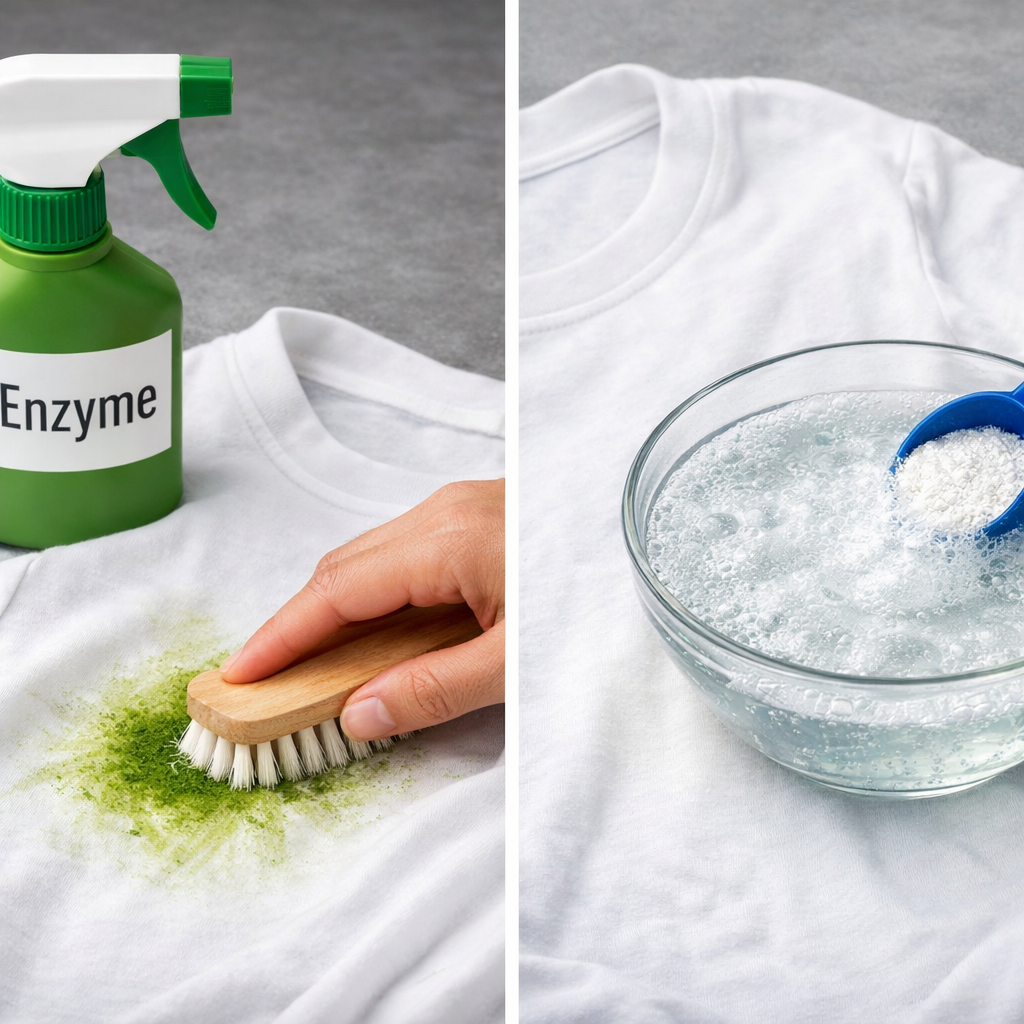
Tough stains aren’t all alike, and neither are the cleaners that remove them. Enzyme formulas shine on fresh, organic messes and odors (think food, blood, pet accidents), while oxygen-based cleaners lift set-in discoloration and brighten fabrics fast. In real homes, there’s no single winner—Cleaning Supply Review recommends keeping both. Use enzymes to digest odor-causing organics down to the source, then reach for oxygen to tackle older stains, mixed soils, and color-safe brightening. The result: fewer re-treats, less residue, and better fabric care overall, provided you spot test and follow dwell times recommended on the label. Below, Cleaning Supply Review breaks down how each works, where each excels, and exactly what to use for the stains you face most.
What enzyme and oxygen cleaners are
Enzyme cleaner definition (40–50 words): An enzyme cleaner uses specific enzymes—such as proteases, lipases, and amylases—to break down organic soils (proteins, fats, and starches) into smaller, removable pieces. These formulas are often biodegradable, fabric‑gentle, and a go-to pet stain remover that’s typically compatible with septic systems when used as directed (see the Homes & Gardens overview of enzyme cleaners).
Oxygen cleaner definition (40–50 words): An oxygen cleaner is a hydrogen peroxide cleaner (or solid peroxide source) that releases oxygen species and effervescence to oxidize stains and lift discoloration. This oxidizing cleaner works on a broad range of stains—including some non-organic soils—and is valued for speed and color-safe brightening (see the FurryFreshness comparison of oxygen vs. enzyme cleaners).
Common forms include ready-to-use sprays for spot treating, powders for laundry boosters and presoaks, and carpet/upholstery treatments. Some oxygen laundry boosters also blend in enzymes to widen coverage across stain types (illustrated by this oxygen booster with enzymes listing on Amazon).
Quick-use matrix
| Cleaner type | Laundry | Carpets/Upholstery | Hard, non-porous floors/tile | Not for |
|---|---|---|---|---|
| Enzyme | Pre-spot for blood, food, body soils; odor removal | Pet messes, food spills, vomit | Organic spills on sealed tile/vinyl; rinse as needed | Inorganic/mineral soils; disinfection requirements |
| Oxygen | Presoaks for set-in stains; color-safe brightening | Old beverage/food stains; general lifting | Soap scum/mildew stains on sealed surfaces (spot test) | Wool/silk; some delicate dyes/finishes; unsealed metals/wood |
How they work on stains
Enzymes are biological catalysts tuned to specific soils. Proteases target proteins, lipases target fats/oils, amylases target starches and sauces, and cellulases can aid fabric soil release and softening over time (outlined in the Angry Orange guide to enzymatic cleaner enzymes). Oxygen cleaners, by contrast, use hydrogen peroxide chemistry to release reactive oxygen that oxidizes colored compounds and some inorganic soils, helping stains break apart and lift (as described in the FurryFreshness comparison).
Examples:
- Proteases → blood, egg, dairy, bodily fluids
- Lipases → grease, cooking oil, body oil/sebum
- Amylases → sauces, gravy, ice cream, starch-based foods
- Cellulases → ongoing fabric soil release/softening in laundry
Odor control: Enzyme cleaners remove odor at the source by digesting odor‑causing organics and the residues bacteria feed on (see Homes & Gardens). Oxygen cleaners can provide mild microbe inactivation via oxidation, but most are not registered disinfectants and shouldn’t be relied on for sanitizing.
Performance criteria we used
To compare results across stain types, Cleaning Supply Review evaluates:
- Time-to-lift and number of applications
- Contact/dwell time required for full effect
- Odor removal vs. odor masking
- Color safety and brightening vs. fading risk
- Residue, streaking, rinsability
- VOCs/scent intensity and user comfort
- Cost-per-use (concentrates vs. ready-to-use)
- Safety/claims checks: EPA List N (only for true disinfectants), EPA Safer Choice or UL Ecologo for greener chemistry, and NEA Seal of Acceptance for sensitive-skin laundry where applicable
Criteria vs. cleaner type (typical tendencies)
| Criterion | Enzyme cleaners | Oxygen cleaners |
|---|---|---|
| Speed on visible discoloration | Slower; needs dwell/air-dry | Faster, often visible lift |
| Odor elimination (organic) | Excellent, source-level | Good but can leave odor cues |
| Set-in stains | Inconsistent alone | Strong performer |
| Color safety | Gentle on fabrics | Generally color-safe; spot test on delicates |
| Residue/streaking | Low if fully dried/rinsed | Low; can leave powdery residue if overused |
| Disinfection | Not disinfectants | Mild oxidation; not EPA List N unless labeled |
Head-to-head: stain types and real-world results
Fresh organic stains and odors
Verdict: Enzyme wins.
Why: Proteases, lipases, and amylases digest the actual soil and odor cues (blood, dairy, sauces, grease) rather than masking them (Homes & Gardens; Angry Orange; Rover explainer on enzymatic cleaners).
How to:
- Blot up excess (no rubbing).
- Lightly pre-wet dried residues.
- Apply enzyme generously to saturate fibers.
- Allow full air-dry; repeat if needed for stubborn spots (Rover notes some jobs require an overnight dry).
Best product format: Enzyme spray for spot treating carpet, upholstery, and laundry pre‑spots.
Dwell time: 30 minutes to overnight; allow to dry completely before laundering or rinsing.
Pro tips: Keep pets away until dry to prevent re-marking; avoid hot water that can denature enzymes.
Set-in food and beverage stains
Verdict: Oxygen wins.
Why: Peroxide-driven oxidation lifts colored compounds quickly and works on both organic and some non-organic soils (FurryFreshness).
How to:
- Make a warm-water oxygen presoak for laundry or a solution for carpet pads.
- Soak/keep wet 15–30 minutes (longer for heavy set-in stains).
- Launder/extract and air-dry.
- For mixed soils, follow with or choose an oxygen+enzyme blend for broader coverage (as seen in the Amazon oxygen booster with enzymes).
Best product format: Oxygen powder/booster for presoaks; RTU spray for spots.
Dwell time: 10–30 minutes; extend for older stains.
Pro tips: Maintain solution activity (don’t let it dry out mid-soak); refresh solution for heavy loads.
Oil, grease, and body soils
Verdict: Tie, with sequencing.
Why: Lipase enzymes break down fats/oils; oxygen helps visibly lift residues and brighten fabrics (Angry Orange; FurryFreshness).
How to:
- Scrape excess.
- Enzyme pre-spot on collars/cuffs or grease marks.
- Follow with an oxygen booster in the wash or a short presoak.
- Check colorfastness before aggressive treatment.
Best product format: Enzyme spray pre-treat; oxygen powder booster in laundry.
Dwell time: Enzyme 30–60 minutes; oxygen 10–20 minutes.
Pro tips: For heavy kitchen grease, pair enzyme pre-treat with a surfactant-based degreaser, then finish with oxygen for brightness.
Pet accidents and urine crystals
Verdict: Enzyme wins.
Why: Only enzymes fully address odor cues that pets can detect, breaking down uric residues and organic matter (Rover). For old urine, rehydrate crystals with warm water before enzyme application to improve penetration (see Alibaba product insights on urine enzyme cleaners).
How to:
- Blot and extract liquids.
- Pre-wet old spots with warm water.
- Apply enzyme liberally to reach the pad/subfloor; let air-dry.
- Repeat if odor persists.
Best product format: Enzyme carpet/upholstery treatment.
Dwell time: 1–8 hours; dry completely.
Pro tips: On hard, non‑porous surfaces after cleanup, follow with an EPA List N disinfectant if sanitation is required; enzymes alone don’t disinfect.
Delicate fabrics and dyed textiles
Verdict: Start with enzyme; escalate to oxygen only after spot testing.
Why: Enzymes are gentler than harsher chemistries; oxygen is versatile but can fade delicate dyes/finishes if misused (Rover; FurryFreshness).
How to decide:
- Silk/wool: Avoid oxygen; use a gentle enzyme spot treat.
- Colorfast cotton/linen: Oxygen presoak is acceptable after spot test.
- Blends/unknown dyes: Start with enzyme; test oxygen in an inconspicuous area.
Pro tips: Use cold-to-lukewarm water; never let concentrated solutions sit on delicate trims.
Speed, dwell time, and user effort
Cleaning Supply Review prioritizes methods that minimize re-treats and fabric stress.
- Oxygen cleaners typically act faster (visible bubbling/lift) and often resolve in a single session.
- Enzyme cleaners usually need longer dwell and may require an overnight dry or a second application for deep-set organics (Rover; FurryFreshness).
Typical dwell windows
- Enzyme: 30 minutes to overnight (allow full dry).
- Oxygen: 5–30 minutes; 1–6 hours for heavy presoaks.
Time vs. outcome (typical)
| Stain | Faster lift | Best total outcome |
|---|---|---|
| Coffee/tea (set) | Oxygen | Oxygen, or enzyme→oxygen sequence |
| Fresh blood | Enzyme | Enzyme, then cold rinse; oxygen if discoloration remains |
| Grease/body oil | Enzyme→oxygen | Enzyme pre-spot plus oxygen booster |
| Pet urine (old) | Enzyme (after rehydration) | Enzyme with full dry; disinfect hard surfaces afterward if needed |
Surface and fabric compatibility
- Carpets, upholstery, clothing: Both types are common; oxygen is widely used for set-in stains and brightening (FurryFreshness).
- Natural fibers (cotton/linen): Enzymes aid soil release; oxygen brightens—spot test for colorfastness (Angry Orange).
- Hard, non-porous floors/tile: Oxygen can reduce discoloration; enzymes help with organic spills—rinse to avoid residue.
Avoid/spot-test callouts
- Avoid oxygen on wool, silk, and some delicate dyes/finishes.
- Avoid prolonged wetting on unfinished wood/metals.
- Always test in an inconspicuous area before full application.
Safety, indoor air, and environmental profile
- Enzyme cleaners are often biodegradable and marketed as pet- and septic-safe when used properly; they rely on targeted enzymes rather than harsh solvents (Homes & Gardens).
- Non-chlorine, peroxide-based oxygen cleaners avoid chlorine bleach’s persistent byproducts while delivering effective oxidation; still, they’re stronger oxidizers and require label-guided use (FurryFreshness).
- Look for low-VOC, fragrance-free options and credible certifications such as EPA Safer Choice or UL Ecologo; for sensitive-skin laundry, the NEA Seal of Acceptance can help.
Cost per use and value
At Cleaning Supply Review, we emphasize performance per dollar, not just sticker price.
- Simple formula: Cost per use = (Price) ÷ (Total diluted ounces or scoops made) × (Ounces or scoops used per job).
- Concentrates, powders, and refill tablets reduce packaging waste and cost; ready-to-use sprays cost more per use but save time.
- Retreatment matters: Enzymes may need repeats on set stains; oxygen can reduce total cycles due to speed.
Comparison (typical ranges)
| Product type | Dilution range | Uses per container | Est. cost per use |
|---|---|---|---|
| Enzyme concentrate (32 oz) | Up to 1:7–1:10 | 50–100+ spots | $0.15–$0.45 |
| Oxygen powder (2–3 lb) | 1 scoop per load/soak | 40–60 loads | $0.20–$0.40 |
| RTU enzyme spray (24–32 oz) | Ready-to-use | 20–40 spots | $0.40–$0.90 |
| Enzyme+oxygen booster | 1 scoop per load | 35–55 loads | $0.25–$0.50 |
Storage, stability, and shelf life
- Enzymes: Activity depends on temperature and pH; most work best near neutral pH (about 6.5–8.0). They can be denatured by heat, sunlight, and prolonged oxygen exposure—look for opaque/amber packaging. Typical shelf life is roughly 12–24 months unopened and 6–12 months after opening (see Alibaba product insights on urine enzyme cleaners for market norms).
- Oxygen cleaners: Peroxide-based formulas lose potency with light, heat, or contamination; keep containers tightly sealed and opaque (FurryFreshness).
Quick storage checklist
- Store cool, dark, and sealed.
- Mix only what you need (especially powders/concentrates).
- Keep out of reach of children and pets; follow label PPE guidance.
When to choose enzyme vs. oxygen
- Choose enzymes for: Fresh organic stains, pet accidents, and true odor removal at the source; allow full dry time (Homes & Gardens; Rover).
- Choose oxygen for: Set-in stains, mixed soil loads, and fast visible lift with color-safe brightening; consider its mild oxidation benefits, but don’t treat it as a disinfectant (FurryFreshness).
- Pet urine pro tip: Rehydrate old spots with warm water before applying enzymes to reach embedded crystals (Alibaba product insights).
- Two-cleaner strategy: Pair your daily cleaners with an EPA-registered disinfectant for bathrooms/high-touch areas; verify EPA List N when disinfection is required and follow label contact times.
Our recommendation
No single chemistry wins every matchup. Oxygen cleaners are faster and broader across stain classes, especially for set-in discoloration, while enzyme cleaners excel on fresh organic soils and odor elimination with gentler fabric care (FurryFreshness; Homes & Gardens). Cleaning Supply Review kit picks:
- Enzyme spray: For pet accidents, fresh food spills, and blood.
- Oxygen powder/booster: For set stains, laundry presoaks, and carpet discoloration; consider an enzyme+oxygen blend for one-step versatility on mixed loads.
Always spot test, mind dwell times, and remember: enzymes don’t disinfect bio-mess. On hard, non‑porous surfaces, follow with an EPA List N disinfectant when sanitation is required.
Frequently asked questions
Do oxygen cleaners disinfect surfaces?
Oxygen cleaners can inactivate some microbes via oxidation, but most are not EPA-registered disinfectants. For true disinfection on hard, non-porous surfaces, Cleaning Supply Review recommends an EPA List N product and following the label contact time.
Are enzyme cleaners safe for pets and septic systems?
Generally yes when used as directed; many are biodegradable and marketed as pet- and septic-safe. Cleaning Supply Review recommends ventilating, spot testing, and following label instructions for dwell and rinse.
Can I use enzyme and oxygen cleaners together or back to back?
Use them sequentially, not mixed. Cleaning Supply Review suggests applying enzyme first for odor-causing organics; once dry, use oxygen for remaining discoloration after spot testing.
Will oxygen cleaners fade colors or damage finishes?
They’re typically color-safe, but high concentrations or long dwell can lighten delicate dyes or affect finishes. Cleaning Supply Review recommends avoiding wool/silk and always spot testing.
What temperatures and pH help enzymes work best?
Most enzyme formulas perform near neutral pH (about 6.5–8.0) and moderate temperatures. Cleaning Supply Review advises avoiding hot water that can denature enzymes and letting the enzyme step fully dry before laundering or rinsing.