Everyday Disinfecting Wipes Compared: Performance, Ingredients, and Surface Safety
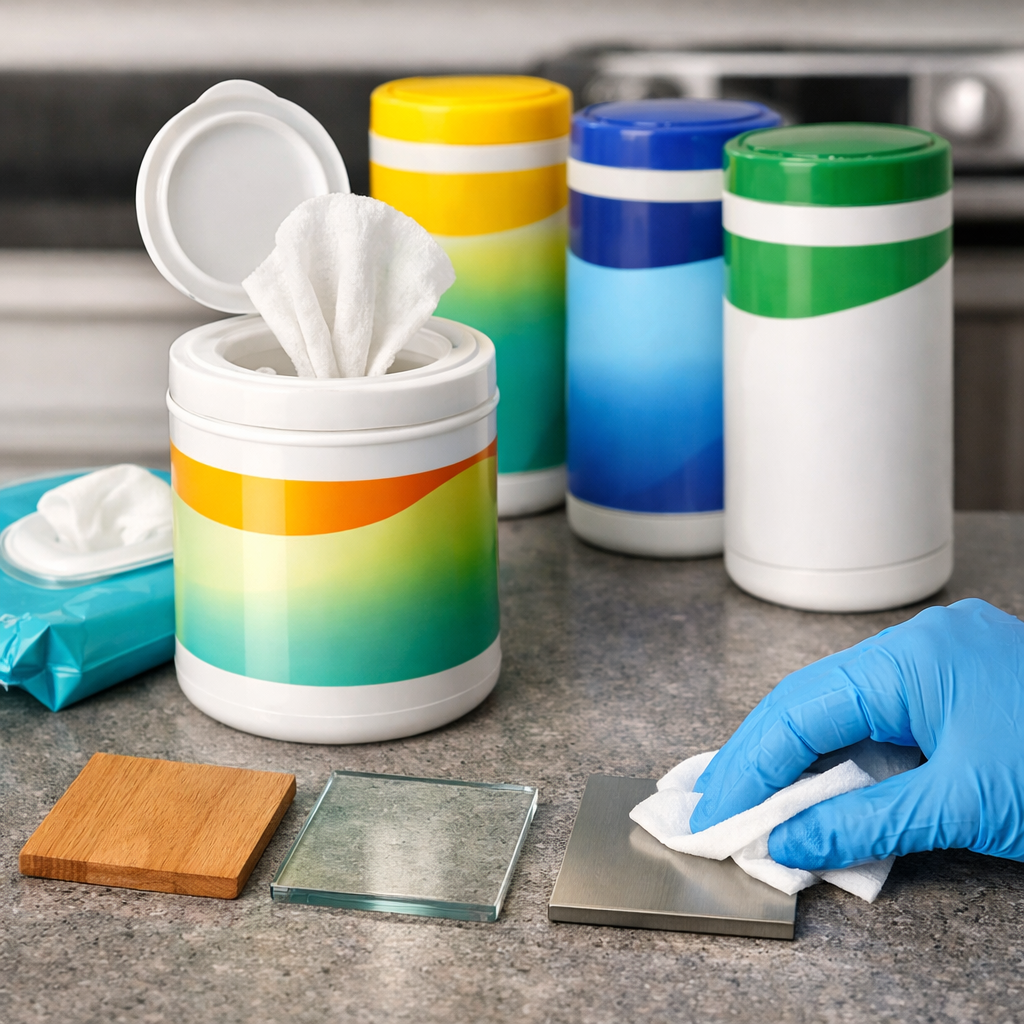
Everyday Disinfecting Wipes Compared: Performance, Ingredients, and Surface Safety
Everyday disinfecting wipes promise quick cleanup and pathogen reduction on hard, nonporous surfaces—most advertise 99.9% kill when used as directed. The best disinfecting wipes for everyday use balance effectiveness with low residue, low-VOC chemistry, and safe surface compatibility. Common actives include quaternary ammonium compounds (QACs), ethanol/alcohol, hydrogen peroxide (including accelerated hydrogen peroxide, AHP), citric or lactic acids, and thymol. Real-world performance depends on matching the active to your task, keeping surfaces wet for the full contact time, and using wipes selectively for higher-risk messes, not routine dust and crumbs, as industry guides emphasize (see Popular Mechanics’ consumer overview). At Cleaning Supply Review, we prioritize measurable performance, residue control, and surface safety over marketing claims.
“Disinfecting wipes are EPA-registered antimicrobial pesticides designed for hard, nonporous surfaces. They reduce or inactivate pathogens when used exactly as labeled—pre-clean soil first, keep surfaces visibly wet for the stated contact time, maintain ventilation, and rinse food-contact areas if the label instructs.” (see UC ANR guidance)
How to choose everyday disinfecting wipes
Start with a simple five-step checklist to dial in chemistry and convenience while minimizing exposure:
- Surfaces: Confirm hard, nonporous materials. For food-contact areas and baby gear, ensure the label allows it and whether rinsing is required.
- Risk level: Reserve disinfection for high-risk messes (illness, raw meat, bodily fluids). For most daily grime, soap and water suffice, according to Consumer Reports.
- Active ingredient tolerance: Prefer nonquat disinfecting wipes—ethanol, hydrogen peroxide wipes, citric acid wipes, and thymol wipes—for lower respiratory and environmental concerns, consistent with EWG’s safer-chemistry recommendations.
- Contact time: Pick labels with shorter, realistic times for your workflow, and be ready to keep surfaces visibly wet for the full duration.
- Residue and scent: Choose fragrance-free disinfecting wipes if you’re sensitive; select low-VOC disinfecting wipes and formulas known to leave minimal film on glass, screens, and stainless steel.
For antiviral claims, check that the specific product/UPC is on EPA List N and follow the label exactly. Cleaning Supply Review generally favors low-residue, nonquat options for routine touchpoints when they meet your surface and contact-time needs.
Testing methods and comparison criteria
At Cleaning Supply Review, our test-forward comparisons focus on measurable outcomes readers can replicate:
- Microbial reduction: Log or percent reduction in colony-forming units (CFUs) after the labeled contact time.
- Dry-down timing: Seconds to loss of visible wetness on glass and sealed plastics.
- Residue/film: Streaking or films on glass and stainless steel after drying.
- Wipe sturdiness and packaging: Sheet strength, linting, and how well tubs reseal to prevent dry-out.
- Cost-per-wipe: Price divided by the actual, usable wipe count.
“Contact time is the minimum duration a surface must remain visibly wet with a disinfectant to achieve the product’s claimed pathogen reduction. If the surface dries early, effectiveness drops sharply. Always re-wet or apply more solution to meet the full, specific label time requirements exactly.” (see NBC Select’s overview)
A comparative keyboard study helps frame expectations: alcohol-based wipes dried fastest (about 97 seconds), QACs around 422 seconds, and AHP about 483 seconds; CFU reductions averaged 94.9% for QACs, 91.5% for AHP, and 65.3% for alcohol, with visible foam/film more common on QACs (peer-reviewed keyboard study).
Performance and contact time
Many consumer wipes market 99.9% kill on hard, nonporous surfaces. In practice, speed and efficacy hinge on starting with a visibly clean surface and maintaining wetness for the full label time; faster-acting claims (for example, some ethanol-based wipes advertising 30 seconds) still require proper wetting and surface compatibility.
| Active type | Typical dry-time tendency | Residue risk | Notable notes |
|---|---|---|---|
| Alcohol (ethanol) | Fast (~97s in lab keyboards) | Low residue | Lower average CFU reduction in the keyboard study; great for quick turnover and minimal film when label times are short enough. |
| QACs (quats) | Moderate (~422s) | Higher residue/foam risk | Strong average CFU reduction; films/foaming observed; watch for rinse steps on food-contact surfaces and potential sensitivity. |
| AHP (hydrogen peroxide) | Slower (~483s) | Low to none | Strong average CFU reduction; minimal visible film in the study; good for glass and stainless steel when dry time fits workflow. |
| Citric/lactic acids | Moderate (varies by formula) | Low to moderate | Nonquat option; may require several minutes of wet time; generally simpler residue profile. |
| Thymol | Moderate (varies) | Low to moderate | Botanical, List N-eligible formulas exist; scent may be noticeable; still requires exact contact time. |
Real-world performance depends on your actual surface, soil load, and adherence to label times. Keep a second wipe handy to re-wet if drying occurs early.
Ingredient profiles and health trade-offs
Quaternary ammonium compounds (QACs/quats): cationic surfactant disinfectants effective across many microbes on hard, nonporous surfaces. Evidence links some QAC exposures to respiratory irritation and potential reproductive and developmental effects; overuse can foster antimicrobial resistance, and residues persist on surfaces and in wastewater. Limit routine exposure, especially around children (see Forbes analysis).
Accelerated hydrogen peroxide (AHP/H2O2): combines low concentrations of hydrogen peroxide with surfactants and stabilizers to accelerate microbe kill. It decomposes to water and oxygen and, in controlled keyboard testing, left little to no visible film while delivering strong CFU reductions when used as labeled (peer-reviewed keyboard study).
Safer-leaning choices: ethanol, citric/lactic acids, and thymol are commonly recommended as preferable, nonquat actives; note that botanical scents can still trigger sensitivities. For households seeking nonquat disinfecting wipes, these families lower certain health and residue concerns while retaining EPA-registered efficacy when used properly (see EWG’s guidance).
Surface safety and residue
Disinfectant wipes are intended for hard, nonporous surfaces; visible soil reduces effectiveness, so pre-clean before disinfecting. In lab observations, QAC wipes more often left foam or film, while alcohol and AHP formulas tended to dry clearer—important for screens and stainless steel in kitchens and baths (keyboard study). For food-contact areas, only use wipes whose labels allow it, and follow any required rinse steps; cleaning, sanitizing, and disinfecting claims differ and are not interchangeable (see PDI’s explainer). In our scoring, streaking and visible film weigh heavily for kitchens, baths, and screens.
Ease of use and packaging
Day-to-day success depends on usability: thicker, durable wipes apply enough liquid without shredding; well-sealed canisters prevent dry-out and reduce waste, a point echoed in consumer testing roundups. Store compact canisters near high-touch points (bathrooms, kitchen handles) but always out of reach of children. For sensitive users, choose fragrance-free or low-scent formulas and ventilate; experts regularly recommend minimizing added fragrance to reduce irritation (Wirecutter’s advice on low-scent cleaning picks). In Cleaning Supply Review evaluations, durable sheets and reliable lids reduce waste and lower cost-per-wipe over time.
Environmental impact and certifications
Look for safer-chemistry signals. Several citric-acid formulas, such as Lemi Shine, carry Safer Choice/DfE recognitions in retail coverage, and Clorox’s plant-based “Free & Clear” lines emphasize compostable substrates and gentler surfactant systems in media reporting. The North American wipes market reached about $3.72B in 2023 and is projected to hit $5.64B by 2031, underscoring the need to choose lower-VOC, nonquat formulas and refill-ready, minimal-packaging options (Forbes). We flag third-party certifications and lower-VOC, refill-ready designs in our guides.
Clorox Disinfecting Wipes
Clorox sells multiple formulations, including traditional QAC-based and newer citric-acid variants. Expect strong performance from quats but watch for residue on glass and steel, and rinse food-contact surfaces if the label instructs. For everyday touchpoints, check the active ingredient and contact time; fragrance-free options can reduce irritation risks, and citric-acid versions offer a nonquat alternative.
Clorox Free & Clear
Clorox Free & Clear leans on citric acid and low-scent, plant-based materials, aligning with safer-chemistry preferences. It’s a fit for routine, nonporous touchpoints where a nonquat option is desired. If you need antiviral use, verify the exact product’s EPA List N status and follow the labeled contact time.
Purell Professional Surface Wipes
These ethanol-based wipes emphasize quick kill claims (some coronavirus claims as short as 30 seconds) but still require surfaces to stay wet for the full label time. They have sturdy sheets and fast dry-down—useful on electronics housings and stainless steel when minimizing residue is the priority.
CleanWell and Benefect
Both brands center on thymol, a plant-derived active that can appear on EPA List N when the specific product is registered for viral pathogens. Thymol offers a nonquat path with effective disinfection when used as directed. Fragrance-sensitive users should patch-test first, as botanical scents may be noticeable.
Arm & Hammer Essentials and Lemi Shine
These citric-acid disinfecting wipes appeal to families seeking nonbleach, nonquat disinfection with simpler rinsing profiles on nonporous surfaces. Select SKUs appear on List N or carry Safer Choice/DfE recognitions in consumer reporting. They typically advertise 99.9% kill; remember to maintain wetness for the full label time.
Lysol hydrogen peroxide wipes
Lysol’s hydrogen peroxide formulas provide bleach-free disinfection with a tendency to leave less visible residue, consistent with lab observations for AHP-style actives. They’re a strong pick for stainless steel and glass where streaking and film matter. Always verify the specific label’s contact time and List N status for target pathogens.
Pricing and value
- Cost-per-wipe formula: total price ÷ number of usable wipes per pack. Compare sheet size and wetness; a cheap tub that dries out quickly isn’t a bargain.
- Favor value picks with durable sheets and reliable lids; you’ll waste fewer wipes and maintain consistent wetness.
- Two-cleaner strategy: pair an inexpensive, plant-based daily cleaner with a targeted, EPA-registered wipe for high-risk jobs. For everyday cleaning options, see our residue-free all-purpose cleaner picks.
Recommendations by use case
- Fast turnover and electronics housings: ethanol-based wipes for quick dry and minimal film (supports rapid, controlled wetting per lab drying times).
- Food-adjacent, nonporous areas: citric-acid or hydrogen-peroxide wipes; follow any label rinse directions for food-contact zones.
- Illness cleanups and bathrooms: any EPA List N option used exactly per label; consider nonquat where feasible to lower residue and sensitivity risks.
- Sensitive households: favor fragrance-free or low-scent wipes and ventilate during use.
When to use wipes versus soap and water
Use soap and water for routine cleaning; reserve disinfecting wipes for higher-risk events like after illness, raw meat, or bodily fluids, a stance echoed by health and consumer experts (Consumer Reports).
“Routine cleaning removes dirt and many microbes with surfactants and mechanical action, which is sufficient for most daily messes. Disinfection targets specific pathogens but requires exact label steps and full contact time. Overuse adds chemical exposure and cost without meaningful benefit for typical, low-risk situations.”
Children inhale more air per pound than adults; keep products out of reach and ventilate during use. Cleaning Supply Review supports reserving disinfection for higher-risk situations.
Safe use and ventilation guidance
- Pre-clean visible soil.
- Wear gloves if needed.
- Wipe to leave the surface visibly wet.
- Keep the surface wet for the full contact time; re-wet if drying occurs early.
- Allow to air-dry or rinse food-contact surfaces if the label instructs.
- Ventilate and wash hands after use.
- Store sealed, away from children and pets; never decant into unmarked containers.
- Never mix disinfectants or combine bleach with ammonia—this can generate lethal gases (see UC ANR’s safety notes).
- Know the difference: sanitizing, disinfecting, and hand wipes are not interchangeable; follow each product’s label and EPA registration.
Frequently asked questions
Are disinfectant wipes or sprays more effective for everyday use?
Both can disinfect when used per label; wipes add mechanical removal and controlled wetting for small touchpoints, while sprays suit larger areas. Cleaning Supply Review recommends choosing based on surface type, contact time, and ventilation.
Do disinfectant wipes work on phones, stone, wood, and stainless steel?
They’re intended for hard, nonporous surfaces like stainless steel and sealed plastics; Cleaning Supply Review advises avoiding unfinished wood and porous stone. Check your device maker’s guidance for phones and test a small, inconspicuous area first.
How long should surfaces stay wet to disinfect properly?
Cleaning Supply Review recommends keeping the surface visibly wet for the full label contact time; if it dries early, re-wet and restart timing. Times vary by product and pathogen from about 30 seconds to several minutes.
Are nonquat wipes as effective as traditional formulas?
Yes—many hydrogen peroxide, ethanol, citric acid, and thymol wipes are EPA-registered and effective when used exactly as directed. Cleaning Supply Review suggests matching the active and contact time to your task to balance efficacy and residue.
Can I use disinfectant wipes on food contact areas?
Use only if the label permits it and follow directions, which often include a rinse step after disinfection. Cleaning Supply Review recommends reading the label carefully for food-prep counters and choosing suitable wipes.