How to Choose Paper Towels for Workplaces and Busy Households
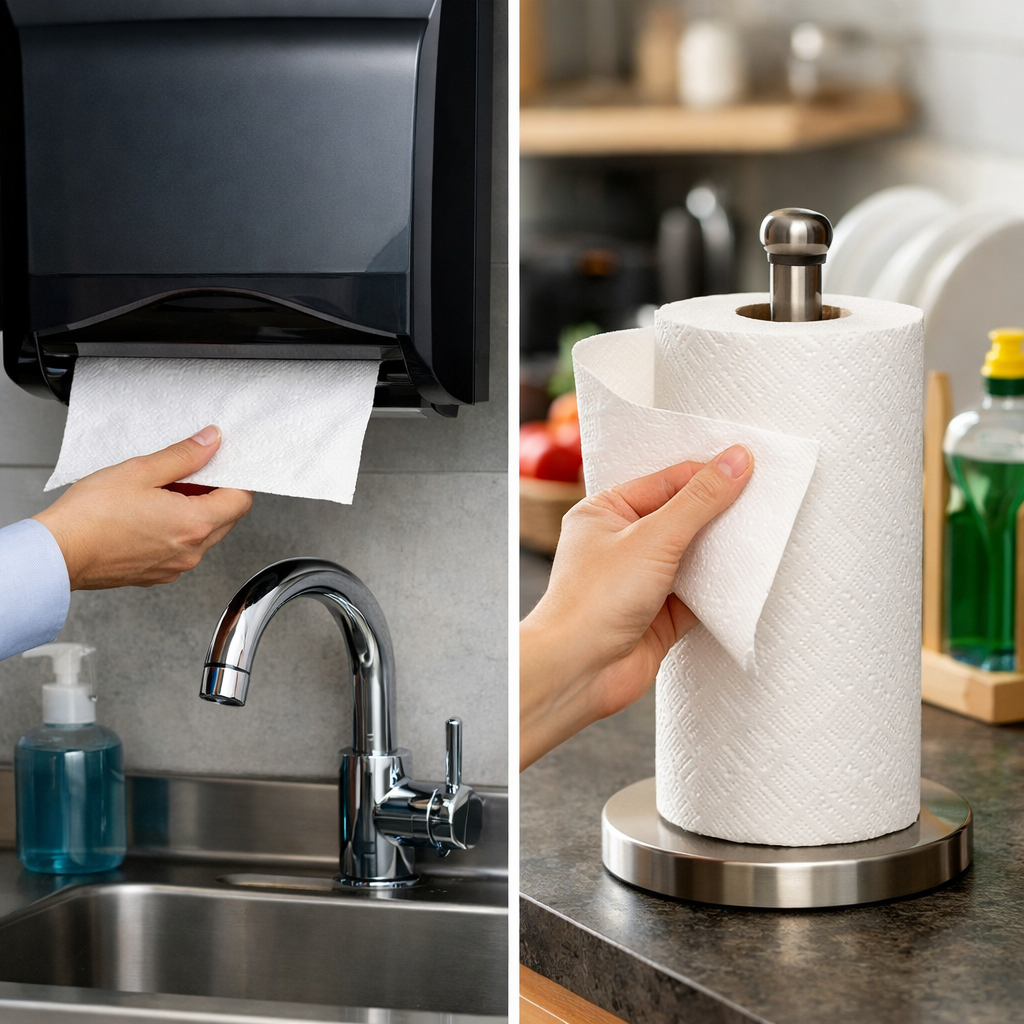
How to Choose Paper Towels for Workplaces and Busy Households
Choosing paper towels is really about controlling hygiene, waste, and uptime. The right towel and dispenser keep hands dry faster, stop cross‑contamination, and cut refills and costs—at home and at work. This guide shows how to choose paper towels for workplaces and busy households by matching tasks to ply and absorbency, picking the right format and dispenser, and calculating true cost per use. We also layer in Cleaning Supply Review’s non‑toxic lens—favoring fragrance‑free, low‑VOC options and a simple two‑cleaner system—to reduce chemical load without sacrificing performance. That’s the throughline in our reviews and picks.
Start with use cases and risk
First, sort your most common jobs and the risks attached—then pick against outcomes: hygiene control, efficiency, and non‑toxic performance. Key selection factors include ply, absorbency, sheet size, fold type, and cost, which together determine how many sheets you’ll actually use per task, refill frequency, and hygiene exposure (see Selecting the Right Paper Towel) (Selecting the Right Paper Towel). Industrial paper towels are engineered for heavy‑duty environments; blue industrial towels are especially popular in garages and maintenance bays because their color improves visibility and they offer higher strength for oils and solvents (Industrial Paper Towels guide). Cleaning Supply Review prioritizes one‑at‑a‑time dispensing in shared spaces to cut touches and waste.
Definitions you’ll see throughout:
- Wet strength: a towel’s ability to hold together when saturated so it doesn’t shred during scrubbing or mopping—critical in kitchens and shops to avoid rework and contamination.
- Hardwound rolls: long, continuous commercial rolls that load into dispensers which meter each pull to reduce overuse.
Use this quick map to align needs:
| Primary task/location | Key risks (hygiene, safety) | Performance must‑haves | Best‑fit formats |
|---|---|---|---|
| Hand drying (shared restrooms) | Cross‑contamination, overuse | Fast absorbency, moderate strength, low lint | Hardwound rolls + touchless control; Z‑/multifold for smaller restrooms |
| Kitchen spills (home/office) | Slip hazards, food safety | High absorbency, good wet strength | 2‑ply kitchen rolls; select‑a‑size at home |
| Greasy shop cleanup (garages) | Oils/solvents, re‑soiling surfaces | High wet strength, durability, low lint, visibility | Blue industrial paper towels; specialty shop rolls |
| Guest‑facing restrooms | Aesthetics, hygiene, refill frequency | One‑at‑a‑time dispensing, consistent presentation | Z‑fold/multifold; controlled hardwound where traffic warrants |
| Industrial maintenance | Abrasive soils, solvents | Maximum wet strength, tear resistance, lint control | Industrial paper towels; hardwound in controlled dispensers |
Secondary cues: for lint‑sensitive work (glass, electronics), choose lint‑free towels or microfiber; for workplace hygiene, prioritize metered dispensing and higher wet strength; for spill risk, emphasize paper towel absorbency.
Match ply and absorbency to the task
A reliable rule of thumb: 1‑ply is economical for light hand drying, while 2‑ply provides more strength and absorbency for larger spills and scrubbing; in heavier jobs, wet strength matters as much as ply so the towel won’t shred when saturated (Bulk Paper Towels checklist).
Choose by job:
- Kitchens, grease, scrubbing, shop rag replacement: 2‑ply or specialty multi‑ply with high wet strength for fewer sheets per job.
- High‑traffic restrooms (hand drying): 1‑ply economy can suffice when paired with controlled or touchless dispensers that meter pulls.
- Lint‑sensitive tasks (glass, electronics, optics): use lint‑free towels or microfiber instead of paper; microfiber leaves fewer streaks and fibers (You’re Probably Using Too Many Paper Towels).
Select‑a‑size definition you can quote: “Select‑a‑size towels have perforations for smaller sheets so users can tear only what they need, reducing waste” (Types of Paper Towels).
Select the right format and dispenser
Format drives consumption, hygiene, and labor. Choose with control in mind:
- Hardwound commercial rolls + touchless or controlled dispensers: reduce “grabs,” support one‑at‑a‑time metering, and limit cross‑contamination; typical rolls run about 700–950 feet, extending time between refills (Bulk Paper Towels checklist).
- Folded towels (C‑fold, Z‑fold/multifold): Z‑fold feeds in a Z‑shape for one‑at‑a‑time dispensing and broad dispenser compatibility; folded stacks can encourage handful grabs and more frequent refills (Types of Paper Towels; Best options for your business).
- Center‑pull: simple, splash‑resistant option; can sometimes “rope” and tear inside dispensers, which raises waste and frustration (Best options for your business: Paper towels: the best options for your business).
Sustainability and spend: rolled formats often use fewer materials to package and ship than folded stacks and can save roughly 10–30% in costs versus other formats (Best options for your business). For shared restrooms, Cleaning Supply Review’s default is controlled or touchless hardwound to curb overuse and exposure.
Verify dispenser compatibility and capacity
Avoid misfits that spike waste and downtime by checking the fundamentals:
- Hardwound rolls: confirm roll width (e.g., 8"), core size, and maximum roll length your dispenser accepts.
- Folded towels: match Z‑fold/C‑fold stack dimensions and depth to your dispenser.
- Hygiene goals: choose touchless vs manual based on risk profile; pairing the correct dispenser and towel reduces total pulls (Bulk Paper Towels checklist).
- Capacity planning: countertop and compact dispensers often hold about 200–250 towels—plan refills around peak traffic (Choosing and Using Paper Towels: Choosing and Using Paper Towels).
Typical capacity ranges (guide your estimates; always confirm specs):
| Format | Typical capacity | Notes |
|---|---|---|
| Hardwound roll towels | 700–950 ft per roll | Longer rolls reduce changeouts (Bulk Paper Towels checklist). |
| Z‑fold/multifold | ~200–400 towels | One‑at‑a‑time dispensing; refill frequency varies by stack depth. |
| C‑fold | ~150–250 towels | Thicker sheets; can drive multi‑sheet grabs. |
| Center‑pull | ~300–600 sheets | Good splash resistance; may “rope” in some dispensers. |
| Countertop folded | ~200–250 towels | For guest areas and sinks with limited space (Choosing and Using Paper Towels). |
Calculate true cost per use
Look beyond unit price. True cost of ownership (TCO) wraps consumption, labor, and logistics:
- TCO ≈ (case price ÷ effective sheets used) + refill labor (minutes × wage × changeouts) + storage/ordering overhead. Buying in bulk lowers unit cost and admin time (Bulk Paper Towels checklist).
- Controls that cut costs: controlled‑dispense hardwound rolls reduce waste vs free‑pull formats (Bulk Paper Towels checklist); rolled formats can save roughly 10–30% compared with alternatives (Best options for your business).
Illustrative example for a 100‑person office (22 workdays):
- Scenario A (folded towels): 2.0 sheets/use × 3 handwashes/day × 100 people × 22 days = 13,200 sheets. If a case is $45/4,000 sheets → $0.0113/sheet; product cost ≈ $149. Labor: 5 min/changeout × 12 refills × $20/hr ≈ $20. TCO ≈ $169.
- Scenario B (controlled hardwound): 1.2 sheets/use (metered pulls) × same usage = 7,920 “effective sheets” (by length equivalent). If a case is $55/6,000 “sheet equivalents” → $0.0092/sheet; product ≈ $73. Labor: 5 min/changeout × 7 refills × $20/hr ≈ $12. TCO ≈ $85. Result: Controlled hardwound cuts consumption, refills, and monthly cost roughly in half in this simplified model. Cleaning Supply Review weighs TCO over sticker price in our recommendations.
Prioritize sustainability and indoor air quality
Paper towels aren’t recyclable after use—minimize consumption, then prioritize recycled content; bamboo and other tree‑free options are viable for many everyday tasks (Selecting the Right Paper Towel; Types of Paper Towels). Choose fragrance‑free, low‑VOC paper products when available to protect indoor air quality and sensitive skin; as a cue, favor brands transparent about additives and testing, and products aligned with Safer Choice or National Eczema Association–friendly principles. Brief risk lens: avoid unnecessary lotions or fragrance coatings; while paper towels typically have minimal chemical residues, steering clear of ethoxylated additives helps reduce concerns about trace byproducts like 1,4‑dioxane. Cleaning Supply Review defaults to fragrance‑free, low‑VOC options when performance is comparable.
Definition:
- Tree‑free towels: paper alternatives made from non‑wood fibers (e.g., bamboo) that reduce reliance on traditional forestry, useful when recycled supply or performance falls short.
Control storage, hygiene, and consumption
- Keep towels protected in dispensers to stay dry, clean, and presentable; loose, basket‑stored stacks drive over‑handling and waste (Choosing and Using Paper Towels; Best options for your business).
- Use touchless or controlled dispensers to limit cross‑contamination and meter pulls (Bulk Paper Towels checklist).
- In homes, adopt select‑a‑size so users tear smaller sheets for small jobs (Types of Paper Towels).
The 3 rules:
- Keep towels dry. 2) Control the pull. 3) Train for the right task (paper for grease/bio‑mess; microfiber for glass/electronics). This is baseline practice in Cleaning Supply Review’s restroom and breakroom checklists.
Apply the two-cleaner approach and paper towel substitution
Run a simple two‑cleaner setup: a residue‑free, non‑toxic all‑purpose cleaner for routine soils and an EPA List N disinfectant only when disinfection is actually required. This minimizes VOCs, costs, and paper use while preserving hygiene. See our picks in the best all-purpose cleaners and find primers on disinfection in the Cleaning Supply Review posts.
Substitution tips:
- Reserve paper towels for greasy, hazardous, or bio‑mess tasks—cloth can be ruined by oils, and single‑use reduces risk (You’re Probably Using Too Many Paper Towels).
- For counters, glass, and electronics, switch to microfiber or cloth napkins; properly cleaned and sanitized sponges can last up to three weeks, lowering waste (Choosing and Using Paper Towels).
Definition:
- Two‑cleaner approach: one residue‑free all‑purpose cleaner for most soils plus a separate EPA‑registered disinfectant for targeted jobs, streamlining training, cutting chemical load, and curbing paper consumption.
Popular formats for homes and offices
- Hardwound roll towels with touchless/controlled dispensers for offices and high‑traffic restrooms; long rolls (about 700–950 ft) reduce changeouts and metering cuts waste versus free‑pull (Bulk Paper Towels checklist).
- Multifold/Z‑fold for smaller offices or guest restrooms seeking a clean, one‑at‑a‑time aesthetic; Z‑fold feeds in a Z‑shape for broad dispenser compatibility (Types of Paper Towels).
- C‑fold towels where a thicker, single pull feels premium in clinics or meeting spaces (Types of Paper Towels).
- Select‑a‑size kitchen rolls at home to right‑size sheets and curb everyday waste (Types of Paper Towels).
- Blue industrial shop towels for garages and maintenance teams that need higher wet strength and visibility with oils and grease (Industrial Paper Towels guide).
Sustainability nudge: where feasible, choose recycled‑content or bamboo (tree‑free) options to lower impact without major performance tradeoffs (Selecting the Right Paper Towel; Types of Paper Towels). Cleaning Supply Review typically ranks controlled hardwound highest for busy offices because it reduces pulls and changeouts.
Frequently asked questions
What ply and sheet size should I choose for kitchens, restrooms, and shop areas?
Use 2‑ply or specialty absorbent towels for kitchens and shop areas to handle grease and scrubbing; 1‑ply economy works in high‑traffic restrooms with controlled dispensers. For quick picks by setup, see Cleaning Supply Review.
Are paper towels more hygienic than hand dryers in shared restrooms?
Paper towels with touchless dispensers minimize cross‑contamination and remove moisture quickly, making them a strong choice for high‑traffic or food/health settings where hygiene and speed are priorities. Cleaning Supply Review generally recommends touchless or controlled dispensing in shared spaces.
How do recycled or bamboo paper towels compare to virgin fiber options?
Recycled‑content and bamboo (tree‑free) towels typically meet everyday needs while reducing environmental impact. Since used paper towels aren’t recyclable, prioritizing recycled or tree‑free inputs helps shrink footprint.
When should I use reusable cloths instead of paper towels?
Use microfiber or cloths for routine counter wipes, glass, and electronics; reserve paper for greasy, hazardous, or bio‑mess tasks where single‑use reduces risk. See Cleaning Supply Review for routine cleaning swaps that cut paper use.
How do I reduce waste with select-a-size and controlled dispensers?
Use select‑a‑size rolls at home so users tear only what they need, and install controlled or touchless dispensers at work to meter pulls. Train users to grab fewer sheets and keep towels in dispensers to prevent waste.