How to Choose the Best All-Purpose Cleaner for Daily Use
How to Choose the Best All-Purpose Cleaner for Daily Use
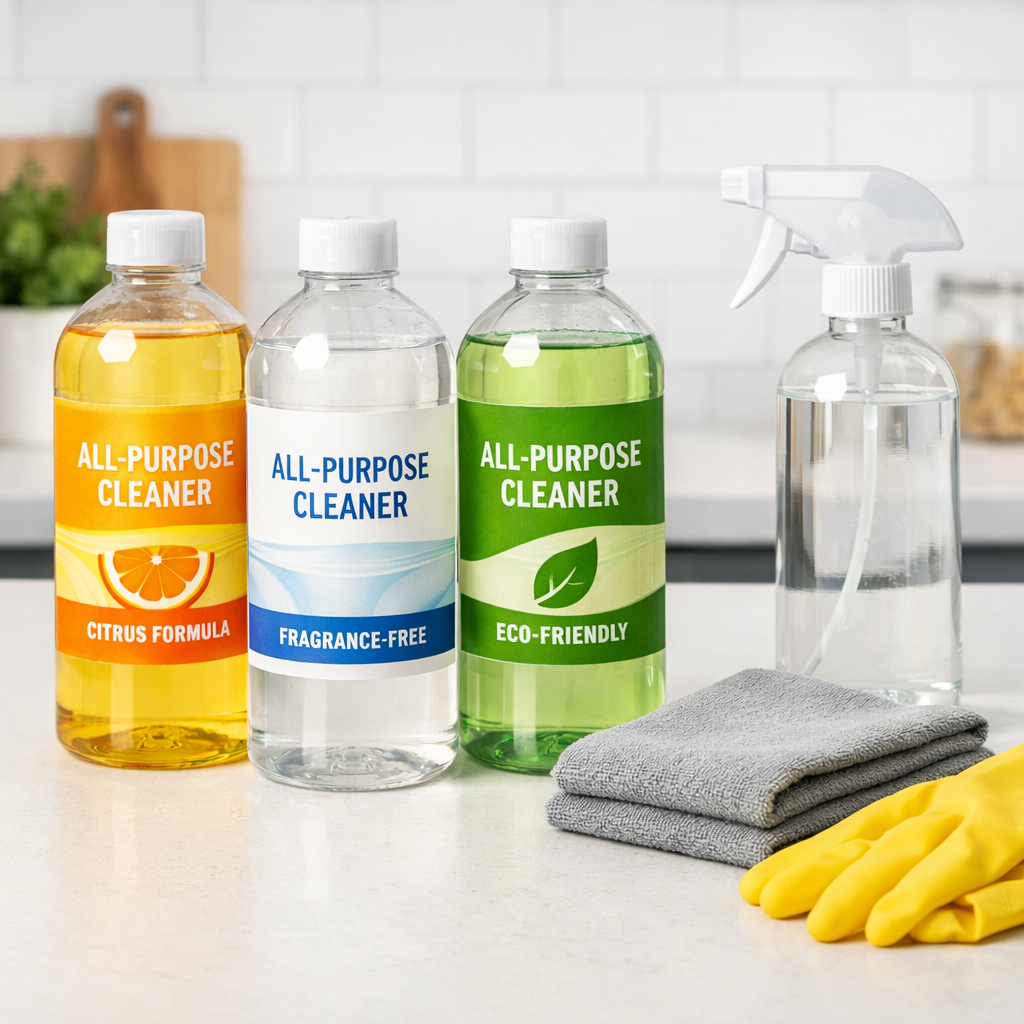
A smart daily cleaner should match your home’s real messes while minimizing residues, fumes, and plastic waste. The best all purpose cleaners for daily cleaning rely on mild surfactants to lift light-to-moderate soils from sealed counters, appliances, tile, and sinks—without harsh scents or streaks. Start with your surfaces and sensitivities, verify safer ingredients, and choose a format (ready-to-use or concentrate) that fits your budget and storage. When disinfection is truly needed, switch to a safer active and follow contact times. Below, Cleaning Supply Review’s test-led guide shows how to pick a safer, low-VOC, non-toxic household cleaner you’ll actually use every day—and how to validate performance at home.
Start with your daily surfaces and sensitivities
Begin by listing the surfaces you wipe most often and any household sensitivities.
- Frequent surfaces: countertops, sealed wood, laminate, tile, porcelain, stainless steel, glass
- Soils: grease splatters, fingerprints, crumbs, light soap scum
- Sensitivities: kids, pets, asthma, fragrance sensitivity
Most homes can maintain everyday cleanliness with an all-purpose cleaner rather than a cabinet full of specialty products, provided you match it to your materials and mess levels, per practical guidance from cleaning pros at MaidPro MaidPro’s 5-factor checklist. A daily all-purpose cleaner is a non-abrasive spray or concentrate designed to remove routine soils and dry quickly on common sealed surfaces. If you’re sensitive to scents, look for a fragrance-free cleaner; if you’re concerned about air quality, prioritize low-VOC. For households with kids and pets, choose a non-toxic household cleaner with transparent ingredients and third-party screening.
Check ingredient transparency and third-party certifications
Safer, effective daily cleaning starts with the label. Prioritize products that disclose all ingredients and carry credible third-party seals such as EPA Safer Choice, UL Ecologo, or Made Safe—signals that formulations meet defined criteria for lower hazard and performance. Independent reviewers, including Cleaning Supply Review, also weigh ingredient transparency alongside cleaning ability in their recommendations Wirecutter’s explainer on safer picks.
“EPA Safer Choice is a U.S. labeling program that evaluates every ingredient in a product—surfactants, solvents, preservatives, and fragrances—for human health and environmental safety. Only formulations meeting strict performance and lower-hazard criteria earn the mark, helping shoppers quickly identify safer cleaning options.”
Gentler surfactants to look for include soap-based potassium cocoate or sodium cocoate and plant-derived glucosides such as decyl, lauryl, or coco glucoside. If you’re sensitive to scent, select fragrance-free to avoid undisclosed mixtures. Note: some major “Green/Eco” lines from big brands include Safer Choice/Ecologo-certified options, which can be a practical way to buy safer chemistry at mainstream retailers (as noted in product-testing roundups).
Match cleaning power to daily soil levels
Aim for the least harsh, most effective formula for the task. For everyday crumbs, fingerprints, and light grease, surfactant-led sprays with mild solvents are usually enough. When true disinfection is warranted (after raw meat juices, illness, or high-risk messes), switch to safer EPA-registered actives such as hydrogen peroxide at 3%, ethanol at 70% or higher, or citric acid at 0.5% or higher—then follow the label’s contact time to ensure efficacy Consumer Reports guidance on healthier cleaning. Experts also caution to use stronger disinfecting products sparingly; lighter daily cleaners suffice for routine messes ranking context from Tasting Table. This fit-by-use mindset maintains indoor air quality and reduces unnecessary exposure.
Quick picks by soil level:
- Light soils (crumbs, fingerprints): surfactant-based, fragrance-free spray.
- Grease splatters: add citrus-derived solvent or boosted surfactants.
- Bathroom film/soap scum: a slightly acidic daily cleaner; reserve disinfectant for illness.
Verify surface compatibility before full use
Protect delicate finishes by testing first.
- Do a spot test on an inconspicuous area, wait a few minutes, then check for discoloration, etching, residue, or tackiness simple home-testing tips.
- Try a multi-surface pass across your kitchen counter, a bathroom sink, and sealed wood; note streaking or filming. Keep a separate glass cleaner for mirrors/windows if haze appears, as some all-purpose formulas leave surfactant trails on glass (a common lab-testing observation across reviewers).
- Caution: some popular cleaners can irritate skin during heavy scrubbing—use gloves if you have sensitive skin or when tackling tougher build-up.
Compare formats for cost-per-use and waste reduction
Ready-to-use sprays are convenient; concentrates and tablets typically cut plastic and lower cost-per-use. Calculate price per 32 ounces of working solution by using the dilution ratio. Refill systems often ship in lightweight concentrates and pair with durable bottles (frequently glass), reducing plastic waste and storage needs The Good Trade’s non-toxic cleaners overview. Expert roundups increasingly value transparency, refillable packaging, and cleaning performance alongside price Forbes’ buys and criteria. Note: some tablets can take up to 45 minutes to dissolve and may clog spray nozzles—trade-offs highlighted in independent testing; we flag these pros and cons clearly in Cleaning Supply Review’s reviews.
Typical format trade-offs:
| Format | Upfront Cost (typical) | Dilution Ratio (working) | Estimated Cost/32 oz | Refill Availability | Pros / Cons |
|---|---|---|---|---|---|
| Ready-to-use spray (32 oz) | $3–$6 | None | $3–$6 | Some brands offer bulk | + Easiest to grab-and-go; - Higher cost per use, more plastic |
| Liquid concentrate | $10–$20 (makes gallons) | 1:4 to 1:16+ | ~$0.50–$1.50 | Widely available | + Lowest cost per use, flexible strength; - Requires measuring and labeling |
| Refillable tablets | $2–$4 per tablet | 1 tablet/12–20 oz | ~$1–$2 | Yes | + Light to ship, cuts plastic; - Dissolve time, occasional nozzle issues |
| Multi-purpose “cleaner kit” | $25–$60 (bottles + refills) | Varies | Varies | Yes | + Durable bottles, organized system; - Higher upfront cost |
Test performance at home with a simple trial
Before you commit to a gallon or a kit, validate performance on your own materials.
- Buy a small bottle/sample or a concentrate to limit waste while testing.
- Set up four quick tasks: remove a fingerprint patch on laminate, degrease a 6-inch stovetop square, clear bathroom sink film, and wipe sealed wood.
- Use consistent passes and dwell time; rinse only if the label specifies.
- Rate each pass for soil removal, streaking, residue/feel, and scent intensity (during and 10 minutes after).
- Repeat with your top two contenders to confirm.
Capture notes in a simple table to make an evidence-based pick:
| Surface | Soil Type | Pass/Fail | Notes on Odor/Residue |
|---|---|---|---|
| Countertop | Fingerprints | Pass | No streaks; odor faded in 5 min |
This mirrors mixed-material testing used by independent reviewers, including Cleaning Supply Review, and helps ensure your choice fits your home, not just a lab claim.
Pair with the right tools for better results
Tools often make more difference than chemistry. Microfiber cloths lift fine soil and oils, delivering streak-free cleaning with less product—reducing product use while speeding up daily wipe-downs practical educator tips. A basic daily toolkit:
- Color-coded microfiber (kitchen, bath, glass)
- Non-scratch sponge
- Soft-bristle detail brush
- Refillable spray with an ergonomic trigger
Clean low-soil areas first and move toward greasier zones to avoid cross-contamination.
When to use a disinfectant instead of a daily cleaner
Use a disinfectant after raw meat contact, bodily fluids, illness outbreaks, or in high-risk settings. For routine crumbs and light grease, your daily cleaner is enough ranking context from Tasting Table. Safer disinfecting actives include hydrogen peroxide (3%), ethanol (≥70%), and citric acid (≥0.5%); always clean visible soil first and follow the labeled contact time for pathogen claims Consumer Reports guidance on healthier cleaning.
Definition: Disinfection is the use of EPA-registered products to inactivate pathogens on hard, nonporous surfaces for the full labeled contact time. Cleaning removes soils; cleaning first improves disinfectant effectiveness.
Practical trade-offs and fit-by-use recommendations
- Best for refill-first households: Refillable concentrate systems (e.g., Branch Basics-style) deliver excellent cost-per-use and significant plastic reduction; expert roundups highlight refill kits as strong everyday picks for whole-home use.
- Best fragrance-free daily spray: Clorox Free & Clear Multi-Surface is recognized as a top overall fragrance-free option in third-party lists, aligning with users who want a low-VOC, scent-free routine.
- Best certification-led screening: If you want a quick safety screen, choose products carrying EPA Safer Choice or UL Ecologo; several big-brand “Green/Eco” lines include certified SKUs.
- Trade-offs to note: Tablet systems reduce plastic but some dissolve slowly and can cause nozzle issues; weigh convenience versus waste reduction. Many plant-based formulas handle everyday messes and can replace multiple specialty products, saving money and cabinet space Good Housekeeping’s essentials list.
Want vetted picks? See Cleaning Supply Review’s latest test-led roundup: Best All-Purpose Cleaners of 2026: Safe, powerful, residue-free picks.
Frequently asked questions
What makes an all-purpose cleaner safe for daily use?
Choose a non-abrasive, fragrance-free or clearly labeled formula with full ingredient disclosure and, ideally, a credible certification. Cleaning Supply Review looks for mild surfactants and low-VOC solvents that clean daily messes without heavy residues.
Do I need a disinfecting all-purpose cleaner every day?
No. Use a standard cleaner for routine soils, and disinfect only after raw meat, illness, or high-risk messes—always honoring the labeled contact time; that’s our default recommendation.
Are plant-based cleaners as effective for routine messes?
Yes. In our reviews, plant-derived surfactants like glucosides handle everyday soils well; reserve stronger products for occasional deep cleans.
How do I know if a cleaner is safe for sealed wood, stone, or stainless steel?
Check the label, then spot test in a hidden area and assess for streaking or residue before using it across the whole surface. Cleaning Supply Review consistently advises this simple safeguard.
Is a concentrate or ready-to-use spray more cost-effective?
Concentrates are usually cheaper per use and cut plastic via refills; ready-to-use sprays maximize convenience but often cost more per ounce. Cleaning Supply Review’s roundups echo this trade-off.