How to Choose the Best Cleaner for Tough Household Stains
How to Choose the Best Cleaner for Tough Household Stains
Choosing the best household cleaner for tough stains comes down to three moves: identify the stain and surface, match the right chemistry, and apply it in the correct format with enough dwell time. In Cleaning Supply Review lab-and-field testing, we consistently see big gains when people focus less on brand hype and more on stain type and surface safety. Protein and food stains respond to enzymes, oils bow to surfactants and degreasers, while inks and dyes need targeted solvents. Start cool, test on a hidden spot, and let the cleaner work before you agitate or rinse. The picks and protocols below reflect our testing standards and practical steps you can repeat at home, anchored to independent guidance from Consumer Reports, Wirecutter, and the Cleaning Institute. Our scoring prioritizes surface safety, clear labeling, and repeatable results.
Start with stain and surface identification
Correctly diagnosing the mess prevents setting stains or damaging finishes.
Core stain categories:
- Protein (blood, sweat, dairy): organic residues that can set with heat.
- Oil/grease (cooking oil, butter, motor oil): hydrophobic soils that need emulsifiers.
- Dye/ink/makeup (marker, lipstick, mascara): colorants that often need solvents.
- Tannin (coffee, tea, wine): plant-based polyphenols that can leave rings.
Quick checklist:
- Act fast. Blot—don’t rub—to avoid spreading; always test in a hidden spot first, per Consumer Reports’ stain-removal guide (colorfastness can vary by fabric and finish) Consumer Reports stain-removal guide.
- For heavy fabric stains, place the item face down on paper towels and apply solution from the back so you push the stain out, not through, as the Cleaning Institute advises Cleaning Institute stain-removal guide.
- Mind the surface: unsealed wood and unsealed natural stone are sensitive; some concentrates should never be used straight on them, a pitfall noted in Consumer Reports’ product testing Consumer Reports on cleaning products.
Match the chemistry to the stain
“Enzyme cleaner” means a formula with proteins that break down organic soils like blood, sweat, and many foods; multi-enzyme sprays target proteins, starches, and fats for broader coverage. Pairing soil to chemistry is the fastest route to clean. This soil-to-chemistry match is also the core lens we use in reviews.
| Stain Type | Chemistry to Use |
|---|---|
| Protein/food | Enzymes; oxidizers such as oxygen bleach or diluted hydrogen peroxide on color-safe items |
| Oil/grease | Surfactant-rich dish soap; degreaser (test on finishes) |
| Dye/ink/makeup | Solvents: isopropyl alcohol, acetone (spot-test), specialty ink removers |
| Tannin/drink | Cold water flush; enzyme pretreat; oxidizers for set residues |
Protein and food stains
Start cool and avoid heat, which can set proteins. Use an enzyme-based pretreat; Zout, which uses three enzymes to target proteins, starches, and oils, excelled on organic stains in testing Wirecutter’s pick for laundry stain removers. For dried blood or sweat on color-safe items, a small amount of hydrogen peroxide can help—always spot-test and avoid prolonged contact on delicate dyes Heritage Park’s stain treatment toolkit. For coffee, tea, or wine on washable fabrics, flush with cold water first, then enzyme pretreat; notably, plain liquid detergent can rival specialty pretreaters on some stains in comparative tests Apartment Therapy’s stain remover roundup.
Oil and grease stains
Surfactants reduce surface tension and surround oil molecules so they rinse away—ideal for greasy stains. In Consumer Reports evaluations, dish soaps and APCs removed oily residues; for example, Dawn Ultra cleared lipstick from mirrors in just a few wipes without streaks, underscoring surfactant power on glossy surfaces Consumer Reports on cleaning products. Use strong degreasers carefully: some cut vegetable oil quickly but streak stainless steel, so test first on a hidden area to protect sensitive finishes Consumer Reports on cleaning products.
Dye, ink, and makeup stains
Enzymes won’t break down most dyes. Reach for targeted solvents and specialty removers. We recommend Amodex Ink & Stain Remover for ink—gentle on fabrics yet effective on ballpoint and some markers Wirecutter’s pick for laundry stain removers. For small ink spots, dab isopropyl alcohol sparingly and test for colorfastness Heritage Park’s stain treatment toolkit. For makeup, blot with an acetone-based nail polish remover before laundering (spot-test acetate/acrylics), a technique echoed in consumer guides Consumer Reports stain-removal guide. Note: multi-enzyme products like Zout are less effective on makeup and red dyes Wirecutter’s pick for laundry stain removers.
Tannin and drink stains
Move quickly to avoid rings. Blot, flush with cold water, then enzyme pretreat; skip heat initially, which can set plant tannins Consumer Reports stain-removal guide. For upholstery, blot, splash with carbonated water, and repeat; the gentle carbonation helps lift fresh spills for easier blotting Heritage Park’s stain treatment toolkit.
Choose the right format and tools
Format affects coverage, portability, and how long chemistry stays in contact. “Dwell time” is the period a cleaner stays on a stain to break it down; too short reduces effectiveness, too long can risk damage on sensitive surfaces. Decide based on area size, need for portability, water access, and surface sensitivity. In our reviews, format and dwell-time control often separate top performers.
Sprays, foams, sticks, and pens
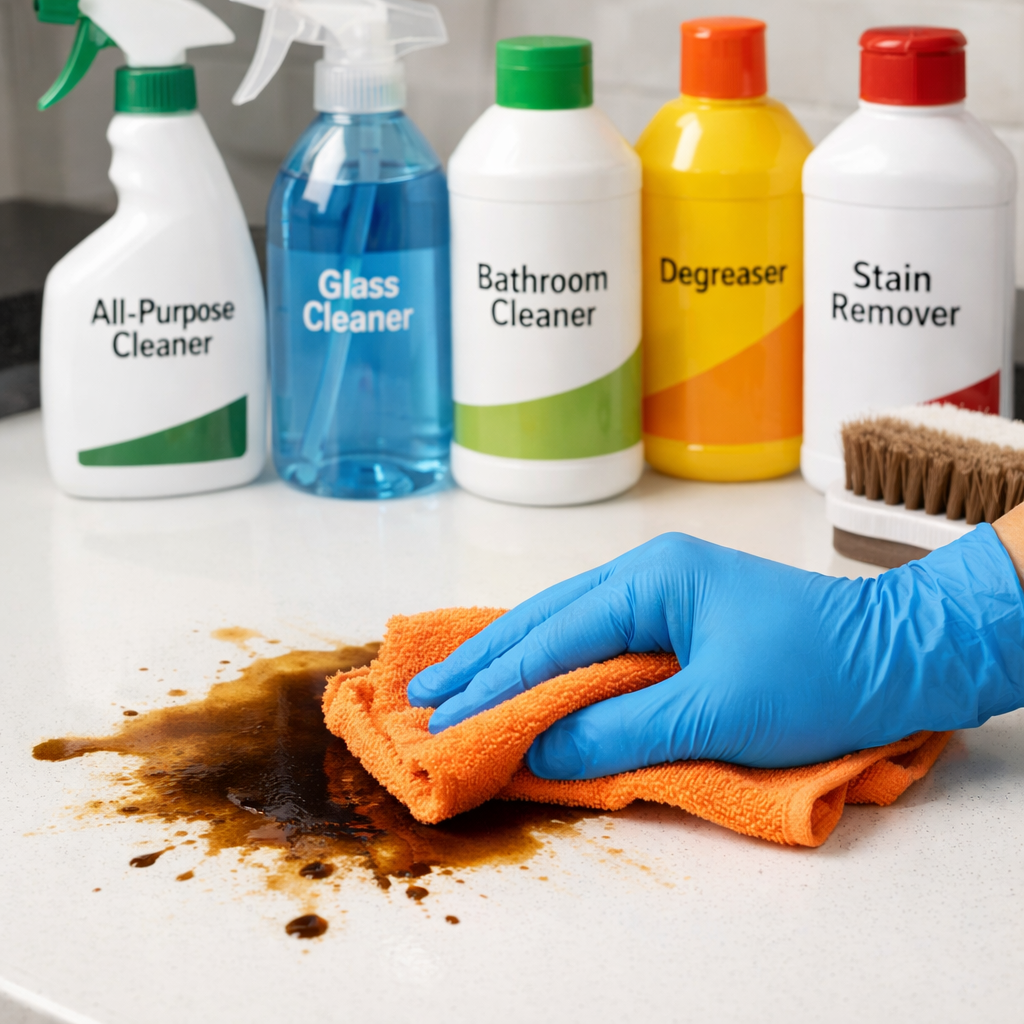
Sprays cover larger areas quickly; foams cling to vertical surfaces; sticks excel at localized dabs; pens offer precision for on-the-go fixes Real Simple’s best stain removers. For travel, compact options like the Tide To-Go + Oxi pen are easy to carry and effective across many fresh stains Condé Nast Traveler’s stain remover picks. Build a small kit: a refillable spray bottle, low-lint microfiber cloths, and a soft laundry brush for controlled agitation Real Simple’s best stain removers.
Powders, concentrates, and boosters
“Oxygen bleach” (often sodium percarbonate) releases oxygen to break down organic stains and brighten; it’s generally color-safe and gentler than chlorine when used as directed. We like oxygen boosters for presoaks and laundry: Branch Basics Oxygen Boost works on laundry, carpet, and grout while minimizing harsh ingredients EWG’s guide to choosing better stain removers. Mind dilution with concentrates: for example, Mrs. Meyer’s Clean Day multi-surface concentrate is typically mixed at roughly 1/4 cup per gallon of warm water; use straight only for tough spots and never on unsealed hardwood or unsealed natural stone Consumer Reports on cleaning products.
Wipes and all-purpose cleaners
Wipes shine for quick blot-and-lift on hard, sealed surfaces; all-purpose cleaners (APCs) handle everyday grime and some stains, but always verify finish safety. In Consumer Reports’ side-by-side tests with chili sauce, lipstick, and wet coffee grounds, dish soaps and APCs tackled many residues—though some formulas streaked stainless or stone, emphasizing the need to spot-test Consumer Reports on cleaning products. We benchmark design-forward and bulk options—Method, Clorox, Seventh Generation, Dawn, Mrs. Meyer’s—on absorbency and wet strength (for wipes), degreasing speed, residue/streaking, and usability.
Test for colorfastness and surface safety
Minimize risk with a universal protocol:
- Pick a hidden spot and apply a diluted version of the cleaner. 2) Wait the label’s dwell time. 3) Blot and check for dye transfer, dulling, or etching Consumer Reports stain-removal guide. Callouts:
- Always test solvents (isopropyl alcohol, acetone) and oxidizers on dyed fabrics and delicate finishes.
- Baking soda pastes are common DIY pretreats, but abrasives can fuzz fibers—test colorfastness first Heritage Park’s stain treatment toolkit.
Apply with correct dwell time and agitation
- Blot excess. For heavy stains, place fabrics face down on absorbent towels and treat from the back to drive soil out Cleaning Institute stain-removal guide.
- Apply the right chemistry and allow label-recommended dwell time; lightly tamp or brush rather than scrubbing hard.
- For set-in stains, repeat short cycles rather than over-scrubbing delicate fibers. Avoid heat or premature drying, which can set stains; retreat before drying if any shadow remains Consumer Reports stain-removal guide.
Rinse or launder using the safest effective temperature
- Start cool for proteins and tannins; move to warm or hot only after pretreating and per care label.
- Use the hottest water safe for the fabric to boost removal after pretreatment Consumer Reports stain-removal guide.
- Recheck before drying; if visible, repeat treatment to avoid heat-setting.
Special guidance for carpets, upholstery, and delicate surfaces
- Upholstery: blot, splash with carbonated water, blot again; repeat to lift fresh stains without overwetting Consumer Reports stain-removal guide.
- Carpet: for some stains, use a light ammonia solution (1 Tbsp ammonia to 1/2 cup water). Ventilate and never mix ammonia with bleach Consumer Reports stain-removal guide.
- Natural stone/unsealed wood: avoid harsh or undiluted cleaners; never apply certain concentrates straight to unsealed surfaces Consumer Reports on cleaning products.
Safety, sustainability, and transparency checks
Balance performance with indoor air quality and environmental considerations. Our framework: scrutinize ingredients, handle safely, and favor brands with clear disclosure and CSR transparency. “Avoid mixing ammonia and bleach. Favor lower-toxicity options and follow label guidance.”
Ingredient and exposure considerations
- Choose lower-hazard picks when possible; EWG Verified products are screened against health criteria EWG’s guide to choosing better stain removers.
- Multipurpose matters: Oxygen boosters like Branch Basics Oxygen Boost can serve laundry, carpet, and grout, reducing product clutter EWG’s guide to choosing better stain removers.
- Right-to-know: EWG cautions that some legislation could weaken ingredient transparency—check brand disclosures before you buy EWG’s guide to choosing better stain removers.
Eco labels, CSR reporting, and brand transparency
Favor brands that publish full ingredient lists and sustainability/CSR reports. We compare transparency across Method, Seventh Generation, Clorox, Mrs. Meyer’s, and more in our brand trust rankings 2025’s most trusted cleaning brands.
At-a-glance transparency and refill options (verify on brand sites):
| Brand | Key eco/cert labels (select) | CSR/ESG report | Fragrance disclosure | Refill options |
|---|---|---|---|---|
| Method | Safer Choice/Cradle to Cradle (select) | Yes | Ingredient-level with fragrance components | Yes |
| Seventh Generation | Safer Choice; some EWG Verified | Yes | Full ingredient lists; allergen disclosure | Yes |
| Clorox | Safer Choice on select SKUs | Yes | SmartLabel with fragrance allergens | Limited |
| Mrs. Meyer’s | Limited third-party labels | Via parent (SC Johnson) | Fragrance palette/allergens via SCJ | Some concentrates |
| Dawn | Safer Choice on select SKUs | Via parent (P&G) | SmartLabel ingredient listings | Limited |
What to keep in your stain kit
These mirror what we keep in our test kits for quick, repeatable results.
- Enzyme pretreat spray (e.g., Zout or Shout) for organic stains; enzymes are essential for many foods and grass Cleaning Institute stain-removal guide.
- Oxygen bleach powder for presoaks and color-safe brightening; gentler than chlorine and effective in warm/hot cycles Heritage Park’s stain treatment toolkit.
- Quality dish soap for grease; add a travel stain pen (Tide To-Go + Oxi) for fresh hits Condé Nast Traveler’s stain remover picks.
- Microfiber cloths and a soft brush for controlled agitation Real Simple’s best stain removers.
- Optional DIY aids (with tests first): baking soda paste; lemon juice + salt on whites only Heritage Park’s stain treatment toolkit.
How Cleaning Supply Review tests and evaluates cleaners
We run standardized stain panels (lipstick, vegetable oil, chili, coffee) across cotton, microfiber, sealed stone, and stainless steel. Criteria include degreasing speed, lift after one and three passes, absorbency and wet strength (wipes), residue/streaking on sensitive finishes, clarity of dwell-time labels, and dilution accuracy. To ground realism, our protocols mirror public testing where CR evaluated chili sauce, lipstick, and wet coffee grounds—and flagged streaking risks on stainless and stone Consumer Reports on cleaning products. We benchmark design-forward and bulk brands (Method, Clorox, Seventh Generation, Dawn, Mrs. Meyer’s, Bona, Lime-A-Way) and score sustainability/CSR transparency alongside performance. These results power our buying guides and brand-trust rankings.
Frequently asked questions
What cleaner works best for grease and oil stains?
Use a surfactant-rich dish soap directly on the spot, let it sit 10–15 minutes, then rinse or launder; for heavy buildup on hard surfaces, apply a degreaser and test first to avoid streaking. See Cleaning Supply Review for our top-tested degreasers.
How do I treat protein stains like blood or sweat without setting them?
Start with cold water, apply an enzyme-based pretreat or a touch of hydrogen peroxide on color-safe items, allow dwell time, then wash; avoid heat until the stain is completely gone. For product examples, see Cleaning Supply Review’s tested enzyme picks.
Are oxygen bleach and chlorine bleach interchangeable?
No. Oxygen bleach is generally color-safe and gentler for presoaks and boosting, while chlorine bleach is very strong and reserved for bleach-safe whites per care labels; our guides explain when to use each.
What’s the safest approach for carpets, upholstery, and natural stone?
Blot immediately and test any cleaner on a hidden spot; use carbonated water for upholstery, gentle dilutions for carpet, and avoid harsh or undiluted cleaners on natural stone and unsealed wood. See Cleaning Supply Review for finish-safe picks by surface.
Do “natural” or plant-based cleaners remove tough stains effectively?
Yes—especially enzyme-based formulas and oxygen-bleach boosters—when matched to the right stain type and used with proper dwell time. Check ingredient transparency and see Cleaning Supply Review’s notes before using on delicate surfaces.