How to Choose the Best Disinfecting Wipes for Home Surfaces
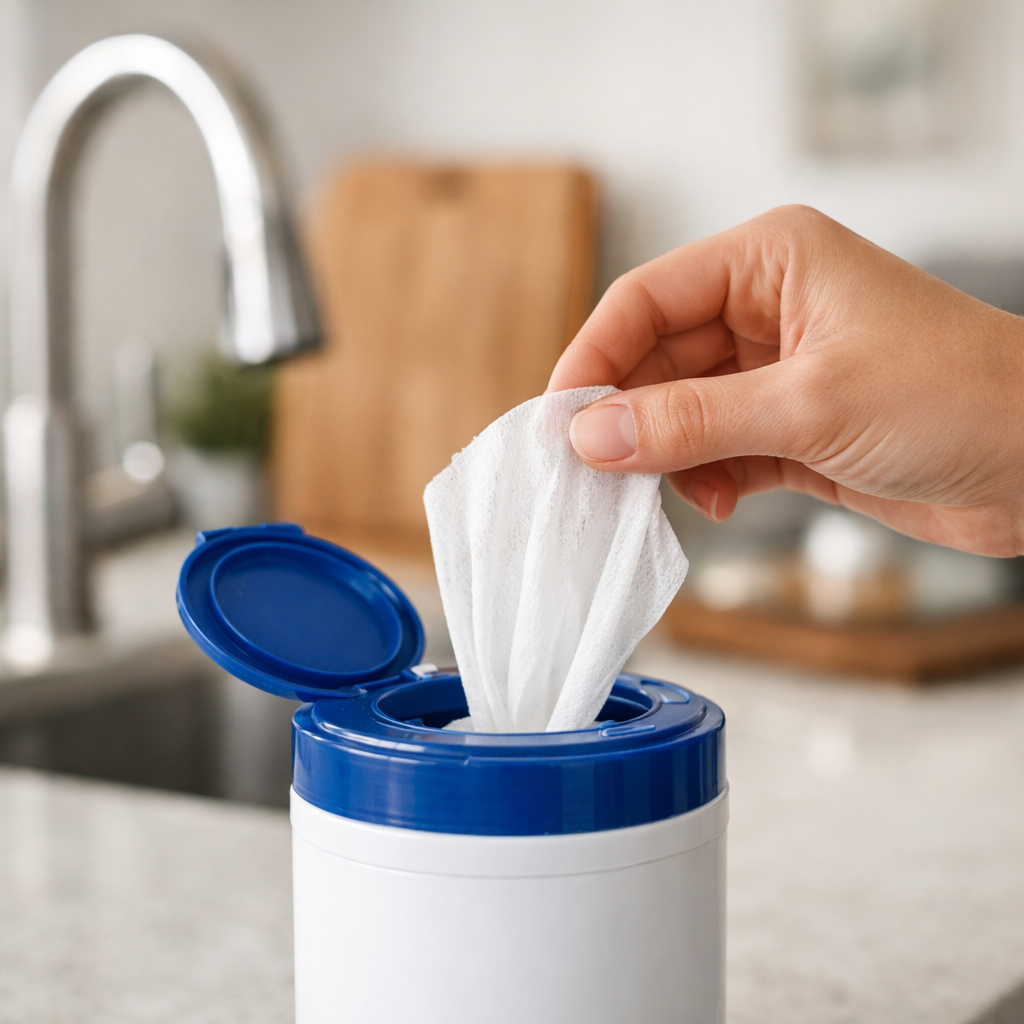
How to Choose the Best Disinfecting Wipes for Home Surfaces
Choosing the best disinfecting wipes for home surfaces comes down to matching a product’s active ingredient, dwell (contact) time, and surface compatibility to your specific task. Start by defining your goal—clean, sanitize, or disinfect—then verify label claims, including EPA registration and organism listings. For illness cleanups and high‑touch areas, EPA‑registered disinfecting wipes with proven virus and bacteria claims are ideal; for everyday crumbs and dust, a cleaning wipe may suffice. Always check dwell time and keep surfaces visibly wet for the full duration. Consider fragrance-free options for sensitive homes, device-safe alcohol wipes for electronics, and food-contact sanitizing wipes in kitchens that require a potable water rinse when directed. Finally, weigh construction (sheet size, texture), packaging (seal quality), sustainability, and total price per wipe. At Cleaning Supply Review, we evaluate wipes against these factors to reflect real‑world home use.
Clarify cleaning, sanitizing, and disinfecting goals
“Cleaning removes soil and residues; sanitizing reduces microbes to a safer level; disinfecting kills listed bacteria and viruses on hard, nonporous surfaces.” Disinfecting wipes are formulated to kill bacteria and viruses when used as directed, whereas sanitizing wipes may not fully disinfect, depending on the label claims and contact time (see the TouchPoint guide for a practical overview). TouchPoint best-wipes guide
Use-case guidance:
- Routine dust/spills: a cleaning wipe is usually enough; disinfecting is most valuable after illness or for high‑touch points like light switches, doorknobs, railings, counters, tables, chairs, and desktops. ASM home disinfecting best practices
Hard, nonporous surface (40–50 words): A hard, nonporous surface is a smooth, sealed material that does not absorb liquid, such as stainless steel, glass, glazed tile, sealed stone, or laminate. Disinfectants are tested and approved for these surfaces. Porous materials like fabrics or unfinished wood absorb liquids, reducing disinfectant performance and voiding claims.
Match label claims to your purpose
Read the label closely. Confirm the active ingredient(s), EPA registration number, organism claims (bacteria/viruses), and the required contact time. Manufacturers list actives and the exact dwell time needed—always check before use to ensure the product aligns with your target germs and surfaces. NBC Select explainer At Cleaning Supply Review, we verify actives, EPA Reg. No., organism lists, and dwell times before testing any wipe.
Mini-checklist for quick verification:
| What to verify | How to match it |
|---|---|
| Purpose | Cleaning vs. sanitizing vs. disinfecting (your goal) |
| Organism targets | Specific bacteria/viruses listed on label |
| Surface type | Kitchen, bath, electronics; confirm compatibility |
| EPA List N (for SARS‑CoV‑2) | Cross-check when targeting COVID‑19 |
Disinfecting claims only apply if the surface stays visibly wet for the full dwell time; wipes help maintain wetness and uniform coverage compared with sprays plus towels. TouchPoint best-wipes guide
Check active ingredients and efficacy spectrum
Common actives and trade-offs:
- Quats (e.g., benzalkonium chloride): broad-spectrum efficacy and widely used; some scrutiny exists around overuse and resistance pressures, so follow labels and use when needed. Elbert Wipes technical guide
- Alcohol (ethanol/isopropyl): effective at 60–90%, but evaporates quickly, which can make maintaining dwell more challenging—especially on warm or ventilated surfaces. Elbert Wipes technical guide
- Hydrogen peroxide and citric acid: widely used in bleach‑free lines; effective against many bacteria/viruses with varying contact times—verify each product’s organism list and dwell. Mountainside Medical overview
Efficacy spectrum (40–50 words): Efficacy spectrum describes the range of microbes a disinfectant can kill, such as gram-positive and gram-negative bacteria, enveloped and non-enveloped viruses, and fungi. Wider spectra cover more organisms, but real-world performance depends on correct use—surface type, soil load, and full contact time.
Comparison of major actives:
| Active class | Pros | Cons/notes | Typical dwell range | Compatibility notes |
|---|---|---|---|---|
| Quats | Broad-spectrum; stable; often good cleaning | Can leave residue; overuse concerns | ~2–10 minutes | Generally safe on many sealed surfaces; spot-test wood/stone |
| Alcohol (60–90%) | Fast kill; evaporates cleanly | Dries fast; can miss dwell | ~1–3 minutes (keep wet) | Device-safe when labeled; may haze some plastics |
| Hydrogen peroxide | Bleach‑free; low odor options | Can lighten dyes at higher strength | ~1–5 minutes | Often safe on stainless/sealed stone; verify wood |
| Citric acid | Plant‑forward; bleach‑free | Often longer dwell | ~5–10 minutes | Safer on many finishes; confirm stone/wood claims |
| Botanical blends | Renewable sources | Typically longer dwell | ~5–10+ minutes | Check label for specific finishes |
Quats, alcohols, hydrogen peroxide, citric or botanical actives
Labels may list benzalkonium chloride (a quat), alcohol, hydrogen peroxide, or citric acid—verify before you buy so the chemistry fits your goal and surfaces. Alcohol works best at 60–90% but evaporates quickly, so rewet or work in sections to maintain dwell. Green or plant-based formulas can be effective but may require longer contact times; plan your workflow accordingly. Wirecutter all‑purpose cleaner guide
Best fit by scenario:
- Fast device wipe-downs: alcohol-based, device-safe wipes.
- Fragrance-sensitive homes: citric acid or hydrogen peroxide in fragrance-free lines.
- Post‑illness disinfection: EPA‑registered quats or peroxide with explicit virus claims.
EPA registration and List N status
EPA List N (40–50 words): List N is the U.S. Environmental Protection Agency’s catalog of disinfectants expected to kill SARS‑CoV‑2 (COVID‑19) when used as directed. Products on List N span chemistries like quats, hydrogen peroxide, and hypochlorous acid, and are validated by registration data and surrogate virus testing. ASM best practices
How to verify:
- Find the EPA Reg. No. on the label.
- Confirm your target organism(s) appear on the product label or the EPA listing.
- Confirm surface type and required dwell match your application.
For context, EPA also maintains List Q (emerging viral pathogens) and List O (veterinary). Cleaning Supply Review cross‑checks List N status and label directions when evaluating COVID‑19 claims.
Required contact time and wet dwell
Dwell time/contact time (40–50 words): Dwell time is the minimum period a surface must remain visibly wet with the disinfectant to achieve the label’s kill claims. If liquid evaporates or is wiped dry too soon, the product cannot reach its validated efficacy against the listed organisms.
Real‑world ranges: many wipes list about 4 minutes for full disinfection, while some sprays require around 10 minutes—always check your label. Wirecutter all‑purpose cleaner guide NBC Select explainer Wipes inherently help maintain wetness and even coverage compared with spray‑and‑towel methods. TouchPoint best-wipes guide
Verify surface and material compatibility
Some actives—especially bleach or strong acids—can damage sealed wood, certain metals, or fabrics. Always test a small hidden spot and confirm label directions for your finish. Mountainside Medical overview
Surface compatibility (40–50 words): Surface compatibility is how a disinfectant’s chemistry interacts with a material’s composition and finish without causing damage, staining, or corrosion. It also includes whether the product is permitted by the manufacturer’s care instructions or warranty. Always verify label guidance and spot‑test before large applications.
Do and don’t by common materials:
- Sealed stone (granite, quartz): do use bleach‑free quats or peroxide/citric lines labeled safe; don’t use strong acids or unverified bleach.
- Stainless steel: do use quats, peroxide, or alcohol; don’t leave harsh residues—buff after dwell if needed.
- Sealed wood/laminate: do choose bleach‑free disinfectants labeled safe; don’t soak or leave puddles.
- Glass: do use alcohol/peroxide for streak‑free results; don’t use heavy-residue quats without a follow-up buff.
- Plastics: do confirm label; don’t use solvents that may haze or craze.
Hard nonporous vs porous surfaces
Hard, nonporous surface (40–50 words): A hard, nonporous surface is a sealed, non‑absorbent material—think stainless steel, sealed stone, ceramic tile, glass, or laminate—where disinfectants are tested and registered. Porous materials like unfinished wood, upholstery, or carpets absorb liquid, so disinfection claims generally do not apply.
Examples: Nonporous—stainless, sealed granite, tile, glass. Porous—unfinished wood, fabrics. Typical home targets include desktops, counters, tables, chairs, railings, light switches, and doorknobs. TouchPoint best-wipes guide
Finish risk on wood, stone, and metals
Bleach and strong acids can etch stone, dull wood finishes, or corrode metals; test in an inconspicuous area first. Mountainside Medical overview Some bleach‑free disinfecting wipes are labeled safe for finished wood, sealed granite, and stainless steel—verify the specific product’s label before broad use. NBC Select explainer
Quick protocol:
- Clean first.
- Spot‑test and watch for dulling/etching after drying.
- Proceed to full area if no reaction, keeping the surface wet for full dwell.
Electronics and device-safe options
Use electronics‑specific or alcohol‑based wipes explicitly labeled device‑safe; avoid excess liquid on ports and seams. Alcohol evaporates quickly—work in small sections and reapply as needed to maintain dwell. Elbert Wipes technical guide
Assess safety, indoor air, and sensitivities
For sensitive households, pick fragrance‑free or “free & clear” formulas to reduce irritation. In institutional settings like schools and daycares, lower‑odor, lower‑hazard options are often preferred; some lines carry EPA Safer Choice or similar markings indicating more benign chemistry where applicable. Wirecutter all‑purpose cleaner guide Wipes avoid aerosolized sprays but still introduce chemicals—ventilate.
Indoor air quality (40–50 words): Indoor air quality reflects the concentration of pollutants, odors, and airborne irritants in enclosed spaces. Cleaning and disinfecting products can contribute volatile organic compounds (VOCs) and fragrances. Selecting low‑odor, low‑VOC, fragrance‑free options and ventilating during use can reduce exposure for sensitive occupants.
Fragrance-free and low residue choices
- Choose fragrance‑free or “free & clear” lines when available; look for low‑VOC or Safer Choice indicators on compatible products.
- Unscented vs. lightly scented: unscented minimizes irritation; light scents may linger.
- Residue behavior: alcohol/peroxide tend to dry clean on glass and stainless; some quats may need a final buff on shiny surfaces.
Ideal for: nurseries, allergy‑prone homes, and small apartments with limited ventilation.
Food-contact and rinse requirements
For kitchen work, use sanitizing wipes labeled safe for food‑contact surfaces. Many disinfectants require a potable water rinse after disinfection before food touches the area—follow the label. Elbert Wipes technical guide
Three‑step kitchen workflow:
- Remove crumbs and grease.
- Sanitize or disinfect per the label, keeping the surface wet for full dwell.
- Rinse with potable water if the label requires for food‑contact.
Use separate wipes for raw‑protein prep zones to prevent cross‑contamination.
Evaluate wipe construction and packaging
Performance isn’t just chemistry. Thicker, textured sheets improve soil pickup; higher wetness helps meet dwell; and strong substrates resist tearing during scrubbing. Wipes deliver even coverage and help keep surfaces wet for the recommended contact time, and come in canisters, refill rolls, and buckets for different volumes. TouchPoint best-wipes guide
At Cleaning Supply Review, we track sheet dimensions and solution weight (moisture load) to compare coverage, dwell support, and cost per wipe.
Sheet size, thickness, texture, and wetness
- Specify sheet dimensions and fiber texture (smooth vs. textured) to match task size and soil type.
- Thicker/larger wipes trap more mess with fewer sheets, improving cost‑per‑wipe efficiency.
- More solution per wipe improves dwell on larger surfaces; add passes if edges dry early.
Canister seal, flow control, and travel packs
- Prefer resealable lids with tight gaskets and one‑hand flow control to prevent multiple wipes feeding and drying.
- Travel packs are handy for cars and offices; reseal immediately after each use.
- If available, choose canisters compatible with refill rolls to cut plastic waste and reduce cost.
Consider sustainability and total cost
Look for refill systems, compostable or recycled substrates (where allowed), and credible third‑party labels like EPA Safer Choice, Green Seal, or UL ECOLOGO. Balance sustainability with efficacy: plant‑based formulas may need longer dwell times—build that into your routine. Wirecutter all‑purpose cleaner guide In our reviews, we note credible certifications and any practical trade‑offs (like longer dwell) so you can plan around them.
Total cost of ownership (40–50 words): Total cost of ownership includes not just shelf price but price per wipe, wipes used per job, storage life, and waste from drying or incompatibility. Durable sheets and better wetness can reduce total use. Refills and bulk packs cut costs if you keep containers sealed.
Refill systems, compostable substrates, and certifications
- Choose canisters that accept refill rolls/buckets to reduce plastic and shipping weight.
- Certifications (Safer Choice, Green Seal, ECOLOGO) signal lower‑hazard ingredients and lifecycle considerations, when applicable.
- Compostable substrates must match local rules; remember, chemistry and dwell time still determine disinfection.
Price per wipe and usage efficiency
A simple framework for comparison:
| Pack | Sheets | Price | Price/wipe | Typical wipes/job |
|---|---|---|---|---|
| Kitchen canister | 80 | $5.99 | $0.075 | 2–3 for counters |
| Bathroom canister | 75 | $6.49 | $0.087 | 3–5 for sink/toilet |
| Entry/handles pack | 40 | $3.49 | $0.087 | 1–2 for knobs/switches |
Buy bulk for high‑frequency zones, but store sealed to prevent dry‑out.
Use correctly for verified results
Follow a simple, consistent process to get label‑verified outcomes and avoid cross‑contamination. Keep surfaces wet for the full dwell, never shortcut contact time, and always read the label for actives and organism claims before use. For more on how we test and compare, see Cleaning Supply Review’s latest posts.
- Define your goal: clean, sanitize, or disinfect.
- Verify label: EPA Reg. No., organism list, surface compatibility, dwell time.
- Pre‑clean heavy soil.
- Wipe to fully wet the surface and maintain dwell.
- Discard wipes after single use; store the canister sealed.
Pre-clean soil
If a surface is heavily soiled, remove dirt first—grime can block disinfectant action. Use a cleaning wipe or detergent, then apply a disinfecting wipe for the labeled dwell.
Keep surfaces visibly wet for full dwell
Apply enough solution to keep the area wet for the full labeled time; add passes if edges dry early. Many wipes need around 4 minutes, while some sprays need up to 10—always confirm your product’s label.
Avoid cross-contamination and store sealed
Use wipes once and discard to prevent spreading microbes. Work from cleaner to dirtier areas, avoid revisiting clean zones with a used wipe, and keep canisters tightly sealed between uses to prevent drying.
Frequently asked questions
Do disinfecting wipes kill viruses like cold, flu, and COVID-19?
Yes. Choose EPA‑registered disinfecting wipes and verify the label lists your target viruses; for COVID‑19, confirm the product appears on EPA List N and use it for the full dwell time, which Cleaning Supply Review highlights in our guides.
Can I use disinfecting wipes on stone countertops, sealed wood, and stainless steel?
Often, yes—if the label states those finishes are safe. Always spot‑test first and follow dwell time; Cleaning Supply Review flags when bleach or strong acids can damage delicate finishes.
Are disinfecting wipes safe for food-contact surfaces?
Use wipes specifically labeled for food‑contact sanitizing and follow any potable water rinse instructions; Cleaning Supply Review notes these requirements in product summaries.
What contact time do I need and why does dwell matter?
Contact time is how long a surface must stay visibly wet to kill listed germs; Cleaning Supply Review emphasizes not wiping dry too soon, which prevents the product from reaching its claimed efficacy.
Do disinfecting wipes expire or lose potency after opening?
Yes—check the expiration date and keep the canister sealed; dried‑out wipes won’t provide the wetness or dwell time to meet claims, and Cleaning Supply Review includes storage tips in our reviews.