How to source compliant microplastic claims labels without legal risk
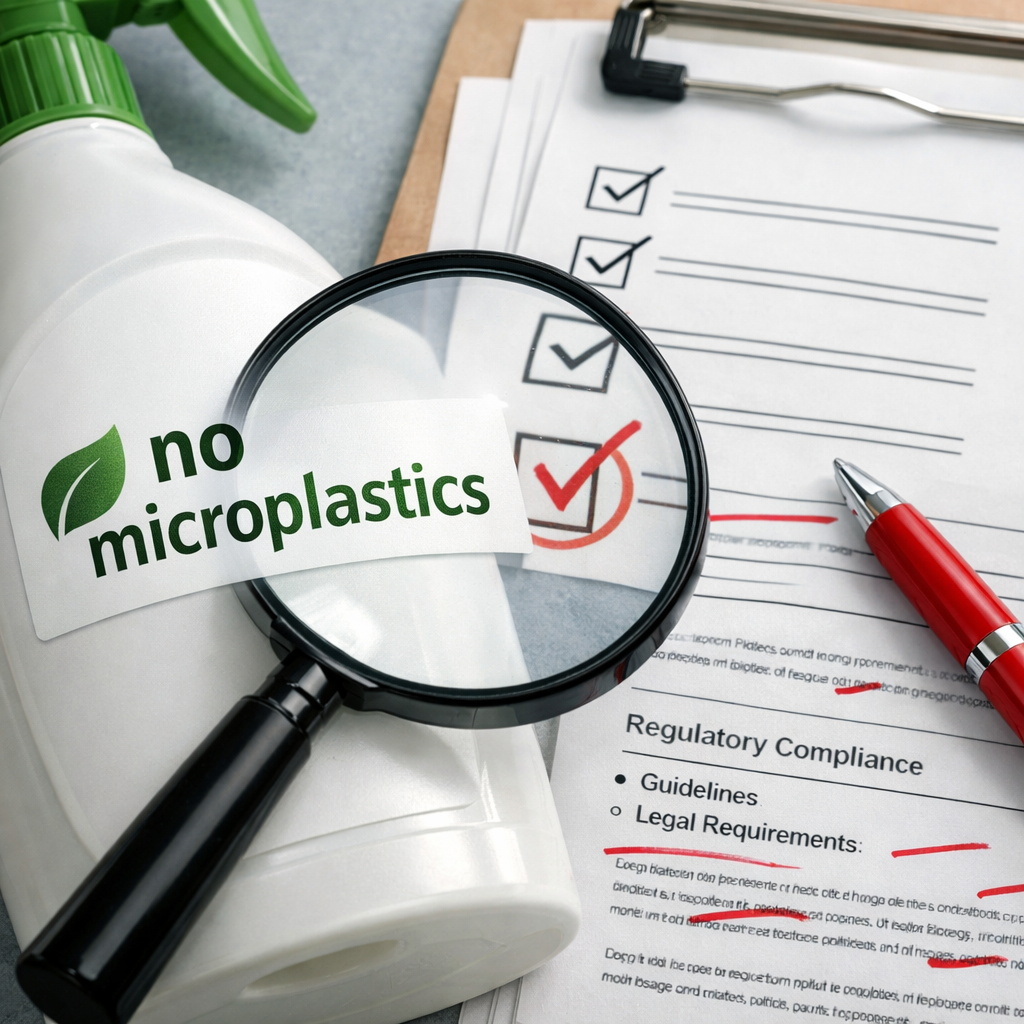
How to source compliant microplastic claims labels without legal risk
Brands can make credible microplastic claims—and avoid greenwashing traps—by pairing precise wording with accredited testing, tight supplier documentation, and transparent disclosures. This guide walks procurement and product teams through sourcing compliant microplastic claims labels: where to find verification support, how to specify lab methods, what to include on-pack and online, and how to maintain defensible records. The short answer: define a narrow claim (scope and threshold), verify it with ISO/IEC 17025–accredited µ-FTIR, Raman, or LDIR testing, capture supplier declarations and chain-of-custody, and publish detection limits and methods via a QR-linked evidence page. Do this, and your labels will be regulator-ready while building buyer trust.
Why microplastic claims carry legal risk
Microplastics are synthetic polymer particles smaller than 5 mm that originate as primary particles (intentionally produced) or secondary particles (formed by breakdown during use or in the environment) as summarized in the ITRC Microplastics Outreach Toolkit. Regulators increasingly view unqualified claims like “microplastic-free,” “eco-friendly,” or “plastic neutral” as potentially deceptive when they lack verifiable data, and litigation risk is rising in parallel with new rules and consumer suits, according to Crowell’s 2025 microplastics update.
Fragmented global definitions and test methods compound the risk: different jurisdictions are moving at different speeds, with patchwork requirements often cited in Softly Solutions’ microplastics compliance guide. At the same time, standardization is advancing—EU drinking-water methodology workstreams and ISO/ASTM efforts highlighted in an ACS session on global frameworks suggest method harmonization is coming, typically a precursor to stricter regulation. Bottom line: vague or absolute claims invite scrutiny; precise, test-backed claims travel better across markets.
Map materials and processes for microplastic release
Start with a structured audit of materials, components, and operations that could shed microplastics. Capture:
- Polymers and copolymers (resins, elastomers), coatings, colorants, fillers, packaging, adhesives
- Process steps with abrasion or shear (mixing, milling, cutting), and laundering or rinsing
- Common sources in the value chain: bottles and bags, textiles, tires, packaging films, and utensils (noting primary vs. secondary pathways)
Collect supplier declarations and safety data sheets, categorize each input as a potential primary or secondary microplastic source, and note controls (e.g., material substitution, encapsulation, process changes, filtration).
Suggested mapping table to drive action and documentation:
| Material/component | Potential microplastic source | Control measure | Documentation to collect |
|---|---|---|---|
| PP bottle cap | Secondary shedding during abrasion | Resin spec change; surface finishing | Supplier declaration; SDS; change-control log |
| Color masterbatch | Primary particles if pellet loss | Pellet containment; closed transfer | Supplier microbead statement; spill SOP |
| Nonwoven wipe | Fiber fragmentation in use | Fiber denier change; binder optimization | Test report; process parameters; QA checks |
| Film packaging | Slitting dust | Blade optimization; vacuum capture | Maintenance record; waste log |
Use this map to prioritize testing and supplier engagement. It also becomes your evidence backbone, aligning with supply-chain risk guidance discussed in Ramboll’s perspective on mitigating microplastics in products.
Define a precise, defensible claim scope
Write narrow, testable claims that state exactly what you measured and how. A practical formula:
- “No intentionally added plastic microbeads ≥1 ppm by mass; tested by µ-FTIR per [method/ref]; detection limit X; batch/date; ISO/IEC 17025–accredited lab.”
California’s AB 888 prohibits plastic microbeads and commonly uses a 1 ppm benchmark in enforcement contexts; California programs also reference Raman/IR acceptance, as summarized in ComplianceGate’s overview of U.S. microplastic regulations. Avoid blanket “microplastic-free” without measurable proof, and qualify any environmental-benefit language per the spirit of the FTC Green Guides.
Detection limit (LOD/LOQ) definition: The detection limit is the smallest particle count, size, or mass your method can reliably detect and quantify. Stating LOD/LOQ on-pack or via a linked disclosure prevents misreading “non-detect” as “absolute zero,” and helps regulators compare apples to apples.
Select accredited labs and validated methods
Choose ISO/IEC 17025–accredited labs that run recognized optical spectroscopic methods for microplastics and report complete data packages.
- Methods to specify in RFPs: µ-FTIR imaging, Raman spectroscopy, and LDIR. ISO/DIS work (e.g., particle identification by IR) is progressing, and California programs recognize Raman/IR for microplastics, underscoring credibility of these techniques (see ComplianceGate’s U.S. overview).
- Require lab reports to include: raw spectra/data files, LOD/LOQ, particle size bins, polymer ID confidence, blanks/controls, and full chain-of-custody. Automation platforms (e.g., high-throughput LDIR systems) can reduce turnaround while maintaining traceability, a trend noted in global framework discussions.
Mini-table: typical method characteristics
| Method | Typical minimum size | Strengths | Considerations |
|---|---|---|---|
| µ-FTIR imaging | ~20–50 µm | Robust polymer ID; standardized workflows | Struggles below ~20 µm; sample prep matters |
| Raman spectroscopy | ~1–5 µm | Smaller particle detection; high specificity | Fluorescence interference; longer runtime |
| LDIR (IR laser) | ~10–20 µm | Fast scanning; high throughput | Smaller-particle limits; method validation needed |
Credible providers operating in this space include Measurlabs, Eurofins, Intertek, and SGS—verify accreditation scope, raw-data transparency, and method alignment before engagement.
Lock in supplier assurances and indemnities
Bake microplastics diligence into contracts to reduce downstream label risk.
- Require representations on polymer content and absence of intentionally added plastic microbeads above your set threshold, with timely disclosure of formulation or process changes.
- Attach relevant third-party test reports and change-control documentation.
- Include audit rights and indemnification for microplastic-related misrepresentation, recalls, or litigation costs—mirroring common risk-transfer practices flagged in Morgan Lewis’s analysis of microplastics regulation and litigation.
Procurement checklist:
- Data fields: resin grades, additives/colorants, microbead status, particle-control measures, site IDs
- Evidence: supplier declarations, SDSs, batch COAs, accredited lab reports with LOD/LOQ and spectra
- Governance: document retention timelines (e.g., 5–10 years), audit cadence, corrective action triggers
Use third-party verification and traceability
Independent verification consistently outperforms self-declared sustainability statements in regulator reviews. Seek accredited lab reports or third-party certification where available, consistent with guidance in Morgan Lewis’s discussion of verification and litigation readiness.
- Enable QR-linked transparency: certificates, batch-specific reports, method summaries, LOD/LOQ, and claim scope live behind a short URL. Rotate links by batch or quarter.
- Definition: Chain of custody is the documented trail of sample collection, handling, transfers, and analysis that preserves integrity. It’s essential for defensible results and should be referenced in both reports and disclosures.
This approach aligns with Cleaning Supply Review’s guidance to disclose the exact method, detection limits, and chain-of-custody so buyers and regulators can verify claims quickly.
Build compliant labels and supporting disclosures
Translate test data into clear, qualified claims that buyers and regulators can verify.
Claim template (on-pack or digital):
- “No intentionally added plastic microbeads ≥1 ppm; verified by µ-FTIR (LOD 15 µm/0.5 ppm mass); Batch 24F03; Tested by ISO/IEC 17025–accredited lab; Details: brand.com/mp/24F03”
- If total microplastics are addressed, specify size range and media (e.g., rinse-off product matrix, packaging component), and name the method family (µ-FTIR/Raman/LDIR). California’s acceptance of Raman/IR supports listing these techniques.
Support page essentials:
- Plain-language definitions (microplastics <5 mm; primary vs. secondary)
- Method summary and validation notes
- LOD/LOQ, particle size bins, polymer classes detected
- Update cadence and batch references
Avoid unqualified environmental claims; present evidence plainly and consistently to reduce greenwashing risk, consistent with enforcement trends reported by Crowell.
Maintain records and monitor regulatory change
Maintain a single source of truth for each SKU:
- Store raw spectra/data, lab reports, method versions, LOD/LOQ, supplier attestations, and chain-of-custody. Retain records through product life plus statutory limits.
- Trigger retesting on material, supplier, or process changes; schedule periodic surveillance even without changes.
- Monitor rapid developments: EU drinking-water methodology, ISO/DIS standardization, and California’s multi-year microplastics initiatives are active; WHO has called for harmonized reporting and notes that many studies are low quality—another reason to insist on robust lab practices and transparent documentation, as outlined in WHO’s harmonized reporting commentary.
Operational sourcing tips for procurement teams
- Build a preferred panel of ISO/IEC 17025–accredited labs (e.g., Eurofins, Intertek, SGS, Measurlabs) to standardize methods, pricing, and turnaround.
- Budget for extended supplier qualification, contract language updates, and method validation; integrate microplastics into product stewardship and source-reduction programs, echoing Ramboll’s risk-reduction recommendations.
- Sourcing flow:
- Pre-screen suppliers for polymer/additive transparency
- NDA + data request (SDS, declarations, change controls)
- Method-aligned lab testing (µ-FTIR/Raman/LDIR) with chain-of-custody
- Legal review of claim language and thresholds
- Label proof with QR-linked evidence hub
- Final QA sign-off and record archiving
Cleaning Supply Review’s risk-based perspective
Our stance is simple: compliance first. Narrow claims, standardized testing, and third-party verification reduce legal and reputational risk—the same test-led discipline we apply to disinfectant kill-claims and dwell times. Pair microplastics diligence with ingredient transparency and low-VOC labeling, and anchor every claim to a QR-backed evidence page. Act early: maturing standards and enforcement will reward brands that invest now in verifiable, source-reduction stewardship.
Frequently asked questions
What certifications or standards apply to microplastic claims?
There’s no single universal standard yet. Cleaning Supply Review recommends referencing µ-FTIR, Raman, or LDIR methods, using ISO/IEC 17025–accredited labs, and publishing LOD/LOQ with chain-of-custody.
Can we say microplastic-free without testing data?
No—absolute claims require robust evidence. Cleaning Supply Review recommends specific, test-backed statements with thresholds and methods, linked to lab reports.
Which lab methods are acceptable for verifying a claim?
Raman and infrared-based techniques (µ-FTIR, LDIR) are widely accepted for microplastics, with ISO/ASTM work underway. Cleaning Supply Review advises requiring raw data, detection limits, and clear polymer identification.
How specific should the on-pack claim language be?
Be exact—define scope (e.g., no intentionally added microbeads), include a threshold, and name the method. Cleaning Supply Review also recommends a QR link to full results.
Do claims need to change across jurisdictions?
Often yes. Keep core wording method- and threshold-specific, and adapt disclosures to local rules while maintaining a single QR- or URL-based evidence hub, as Cleaning Supply Review advises.