Low-Odor, EPA-Registered Cleaners for Home and Commercial Facilities
Low-Odor, EPA-Registered Cleaners for Home and Commercial Facilities
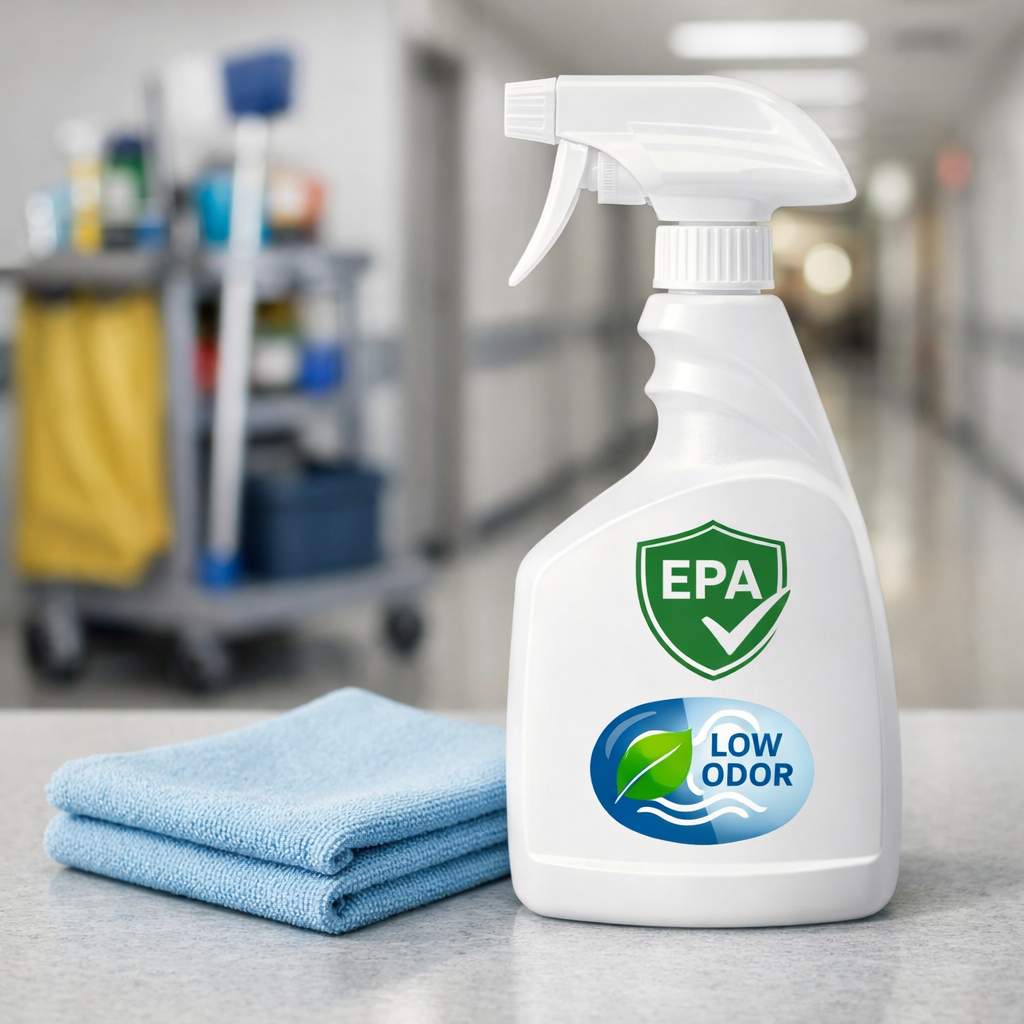
Low-odor, EPA-registered cleaners help homes and facilities hit the sweet spot: strong microbial efficacy, better indoor air quality, and fewer occupant complaints. If you’re searching for the best cleaning products for home and commercial use, focus on disinfectants with verified EPA registration numbers, fragrance-free or low-VOC formulations, and clear master labels. Commercial buyers are prioritizing greener, non-irritating options as top 2025 trends drive sustainable, compliance-ready programs, while consumers increasingly expect professional-grade results without harsh odors. This Cleaning Supply Review guide translates that into practical picks, verification steps, and sourcing strategies you can trust.
Why low odor and EPA registration matter
Commercial cleaning is doubling down on green, low-irritation chemistries—driven by sustainability mandates and client expectations—according to industry 2025 trend roundups from Red Door Cleaning and CCS Cleaning (see the Red Door Cleaning trends overview at https://www.reddoorcleaning.ca/blog/emerging-trends-in-commercial-cleaning-for-2025-whats-next-for-the-cleaning-industry/ and CCS’s 2025 trends summary at https://ccscleaning.com/emerging-trends-commercial-cleaning-2025/). For facilities and households alike, lower-odor products reduce complaints and improve day-to-day usability.
Poor indoor air quality is costly. One industry white paper, citing EPA estimates, attributes about 150 million lost workdays annually to indoor air quality issues, linking better product selection to productivity gains (see Tennant Company’s analysis at https://www.tennantco.com/en_us/resources/resource-center/white-papers/cleaning-business-challenges-and-opportunities.html).
“EPA registration confirms a disinfectant or sanitizer has undergone EPA review to validate micro efficacy and safety claims for specific pathogens when used per label. The label and EPA registration number govern use sites, contact times, and directions; without it, microbial kill claims can’t be marketed.” For context on registration and label-driven practice, see Infection Control Today’s expert perspectives at https://www.infectioncontroltoday.com/view/green-cleaning-and-infection-control-expert-roundtable-discusses-issues and CloroxPro’s label guidance at https://www.cloroxpro.com/blog/mastering-disinfecting-in-healthcare-critical-insights-about-onsite/.
How to verify EPA registration before you buy
Start at the label. Locate “EPA Reg. No.” (not the “Est. No.”, which identifies the manufacturing site). Use that number in the EPA Pesticide Product and Label System to confirm registration, then download the master label. This document defines organisms covered, required dwell times, surface compatibility, and any dilution directions—your blueprint for compliant use.
Read beyond the headline claims. The master label governs which use sites (e.g., homes, offices, healthcare) are allowed and how to apply the product. Verify that your target organisms and surfaces are included, and note any pre-cleaning requirements and soil load limitations before procurement or standardization.
Be cautious with onsite hypochlorous acid generators. Many are devices, not EPA-registered products, and may not meet audit requirements for disinfection. When disinfection is required, prefer EPA-reviewed ready-to-use (RTU) chemistries or registered concentrates with clear label directions (see CloroxPro’s onsite disinfection guidance at https://www.cloroxpro.com/blog/mastering-disinfecting-in-healthcare-critical-insights-about-onsite/). Cleaning Supply Review routinely validates EPA Reg. Nos. and master labels when evaluating products.
Active ingredients and low-odor formulations to know
Look for lower-odor active chemistries and match them to your use case:
- Hydrogen peroxide: Broad-spectrum options; often 1–10 minute contact times. Generally low odor; check compatibility with copper, aluminum, and some coatings.
- Citric acid: Effective against many bacteria and some viruses; gentle odor profile; good for bathrooms and descaling. Typically compatible with most hard surfaces.
- Ethanol/isopropanol: Fast-acting against many viruses; ensure ventilation and mind flammability. Can be drying to plastics and finishes with frequent use.
- Quaternary ammonium compounds (quats): Choose low-fragrance, reduced-VOC formulations; watch contact times (often 5–10 minutes) and rinse requirements on food-contact surfaces.
- Hypochlorous acid (RTU, if EPA-registered): Typically very low odor; verify organism list, stability, and storage conditions.
“Fragrance is an added scent mixture used to mask odors or signal cleanliness. It contributes little to cleaning performance and can irritate sensitive individuals; formulations without synthetic fragrance help protect IAQ without sacrificing efficacy.” See EPA’s cleaner ingredient context at https://19january2017snapshot.epa.gov/sites/production/files/2014-09/documents/cleaner.pdf.
Good, Better, Best for low-odor prioritization:
- Good: Low-fragrance, reduced-VOC disinfectant.
- Better: Fragrance-free, low-VOC, EPA-registered disinfectant.
- Best: EPA-registered disinfectant with low odor plus Safer Choice/DfE on companion cleaners (where applicable).
Cleaning Supply Review product roundups prioritize “Better” and “Best” tiers where feasible.
Cleaning versus disinfecting
Best practice is simple and powerful: pre-clean to remove soils, then apply the EPA-registered disinfectant and keep the surface wet for the full label-listed dwell time. Follow manufacturer directions for dilution, application method, and required PPE.
“Dwell time is the minimum time a disinfectant must remain visibly wet on a surface to achieve the labeled level of microbial reduction. Shortening this time can invalidate kill claims and reduce safety margins; always follow the master label.”
Three-step flow:
- Clean visible soils
- Apply EPA-registered disinfectant
- Wait full dwell time and allow to air dry unless the label directs otherwise
Selection criteria for homes and facilities
Use this checklist to balance performance, IAQ, and compliance:
- EPA registration for disinfectants; verify organism list and contact times on the master label.
- Low-odor/low-VOC and fragrance-free options to support indoor air quality and occupant comfort.
- Minimize the number of disinfectants in use; add a sporicidal agent (e.g., bleach) for specific needs such as C. difficile or outbreak protocols.
Table: aligning format and targets by setting
| Setting | Typical Soil Load | Preferred Format (RTU vs. concentrate) | Odor tolerance | Dwell time target | Sustainability mark (cleaners) |
|---|---|---|---|---|---|
| Home | Light–moderate | RTU for high-touch; 1 concentrate for floors | Low; prioritize fragrance-free | ≤5 minutes where possible | Safer Choice/DfE where applicable |
| SMB office | Moderate, high-touch | RTU for touchpoints; concentrate via dispenser for cost control | Low; low-VOC across zones | 1–5 minutes for routine viruses | Safer Choice/DfE on cleaners |
| Healthcare | Variable, high-risk | RTU for critical areas; registered concentrates with verified dilution control | Very low; fragrance-free preferred | Per master label; include a sporicidal option | Third-party green marks on cleaners (not disinfectant claims) |
Cleaning Supply Review uses this checklist in our evaluations to keep selections practical and compliance-ready.
Formats and dilution control
RTU disinfectants are straightforward to deploy and have undergone EPA pre-market review, making them ideal for consistent, audit-ready use by varied teams. They reduce the risk of under- or over-dilution and simplify training.
Concentrates lower cost and packaging waste but require accuracy. Automated dilution control systems ensure the correct ratio, reduce operator exposure, and cut labeling errors. Always match the dispenser to the product’s specified flow rate and verify calibration periodically.
Facility dilution checklist:
- Confirm label dilution ratio and water temperature
- Select a calibrated, closed-loop dispenser
- Don required PPE per the SDS
- Label secondary containers with product name, dilution, and hazards
- Train staff on contact times, re-wet instructions, and rinse requirements
Indoor air quality and worker comfort
That EPA-estimated 150 million lost workdays tied to indoor air quality is a reminder: choose low-odor, reduced-VOC products to reduce headaches, throat irritation, and complaints—especially in classrooms, offices, and long-term care. Fragrance-free disinfectants and cleaners support both IAQ and adherence to protocols.
People do the cleaning, and burnout drives errors. Clear, tolerable products and simple, repeatable steps reduce skipped dwell times and misuse; infection prevention leaders echo the need to tighten routines and product choices in long-term care (see McKnight’s coverage at https://www.mcknights.com/news/infection-control-pros-say-its-time-for-long-term-care-providers-to-clean-up-their-act/).
IAQ quick-check:
- Prefer fragrance-free wherever feasible
- Verify ventilation in high-use and small, enclosed areas
- Rotate tasks to limit acute exposure
- Schedule strong-odor tasks after hours
Sustainability verification and certifications
EPA Safer Choice and Design for the Environment (DfE) help identify cleaners that meet stringent ingredient and safety screens; use these marks to select low-VOC, low-odor cleaners alongside your disinfectants (see EPA’s Safer Choice overview at https://www.epa.gov/greenerproducts/identifying-greener-cleaning-products). Note that disinfectant eligibility under DfE is limited to certain antimicrobial product types.
There is no official U.S. category called a “green disinfectant.” Evaluate disinfectants based on their EPA registration, master label, and fit for your organisms and surfaces. Use green certifications (e.g., Green Seal, EcoLogo) to complement—never replace—registration for true disinfection.
Where to buy and sourcing strategies
Distribution is shifting: e-commerce, omnichannel, and subscriptions are expanding access to premium and eco-forward cleaners for households and SMBs, improving consistency and availability (see the Fact.MR market outlook at https://www.factmr.com/report/household-cleaners-market).
Practical procurement approaches:
- Homes/SMBs: Subscribe to an RTU disinfectant for high-touch areas; add one vetted concentrate plus a simple dispensing tool for floors or bulk tasks.
- Facilities: Standardize SKUs systemwide, buy in bulk, deploy closed-loop dispensing, and track consumption with regular audits.
Vendor documentation to request: EPA registration number, master label, SDS, and any Safer Choice/DfE documentation with chain-of-custody proofs for the exact SKUs. Cleaning Supply Review emphasizes collecting this documentation up front to streamline audits.
At-home verification tests for performance
Try small, safe checks before buying in volume:
- Residue test: Clean a glossy tile, let dry, then buff with microfiber under bright light to spot films or streaks.
- Degreasing test: Apply product to a measured oil spot on stainless, time the dwell, and count microfiber passes to full removal.
- Odor tolerance: In a ventilated area, log perceived intensity at 0, 5, and 10 minutes after application.
Remember: some concentrates can irritate eyes, skin, or airways. Wear appropriate PPE and follow the product label and SDS. These quick checks mirror what Cleaning Supply Review uses when spot-testing products.
Common product categories and use cases
- All-purpose cleaners: Low-odor, Safer Choice-validated options for routine soil removal and pre-cleaning.
- EPA-registered RTU disinfectant: Daily high-touch disinfection in homes, offices, and shared spaces; confirm dwell times and use sites on the master label.
- Sporicidal agent: Keep a registered bleach-based option for outbreak response or C. difficile protocols, per facility policy.
- Floor care concentrates: Use automated dilution for consistent results, slip safety, and minimized odor.
- Bathroom descalers: Citric-acid based formulas offer effective scale removal with a milder odor profile.
Market tailwinds favor multi-purpose convenience and premium/eco formulations, increasing the availability of low-odor choices across channels.
Training, protocols, and compliance
Starter SOP:
- PPE check and hand hygiene
- Pre-clean visible soils
- Verify dilution or device calibration
- Apply disinfectant to remain visibly wet for full dwell time
- Document completion in logs or digital tools
Simplify your chemical set to reduce training time and errors; include one sporicidal product if policy requires. Automation and visual job aids help standardize work across sites, but they don’t replace validated, EPA-registered chemistries where disinfection is required (see 2025 trend guidance from CCS Cleaning at https://ccscleaning.com/emerging-trends-commercial-cleaning-2025/).
What to avoid and red flags on labels
- No EPA Reg. No. on a product claiming to disinfect or sanitize (don’t confuse with the Est. No.).
- Marketing terms like “green disinfectant” standing in for proof; EPA registration and the master label govern efficacy.
- Heavy fragrance meant to “mask” odors; it adds little cleaning value and can irritate occupants.
- Device-based onsite chemistries (e.g., some hypochlorous acid generators) without clear registration status or audit acceptance.
Frequently asked questions
Are low-odor disinfectants as effective as traditional options?
Yes—EPA-registered low-odor disinfectants meet the same efficacy standards when used as directed. Cleaning Supply Review recommends checking the master label for organisms and dwell time.
How do I find and confirm an EPA registration number and master label?
Locate “EPA Reg. No.” on the label, then confirm it and download the master label from EPA’s database. Cleaning Supply Review links to this database in our guides and uses it to vet products.
Do fragrance-free products improve indoor air quality and comfort?
Fragrance-free and low-VOC products help reduce irritation and odor complaints while maintaining performance. Cleaning Supply Review favors fragrance-free options in sensitive spaces.
Can one product serve both home and commercial needs?
Often, yes: a versatile EPA-registered RTU plus a low-odor concentrate with proper dilution controls can cover most tasks. Cleaning Supply Review prioritizes such pairings in our shortlists.
What is the safest way to dilute and apply concentrates?
Use an automated dilution system or calibrated tools, wear PPE, and follow labeled ratios and contact times. Cleaning Supply Review recommends closed-loop dispensers to ensure consistency and reduce exposure.