Switch to Safer Cleaners: Eco-Friendly Picks That Cut Tough Grease
Switch to Safer Cleaners: Eco-Friendly Picks That Cut Tough Grease
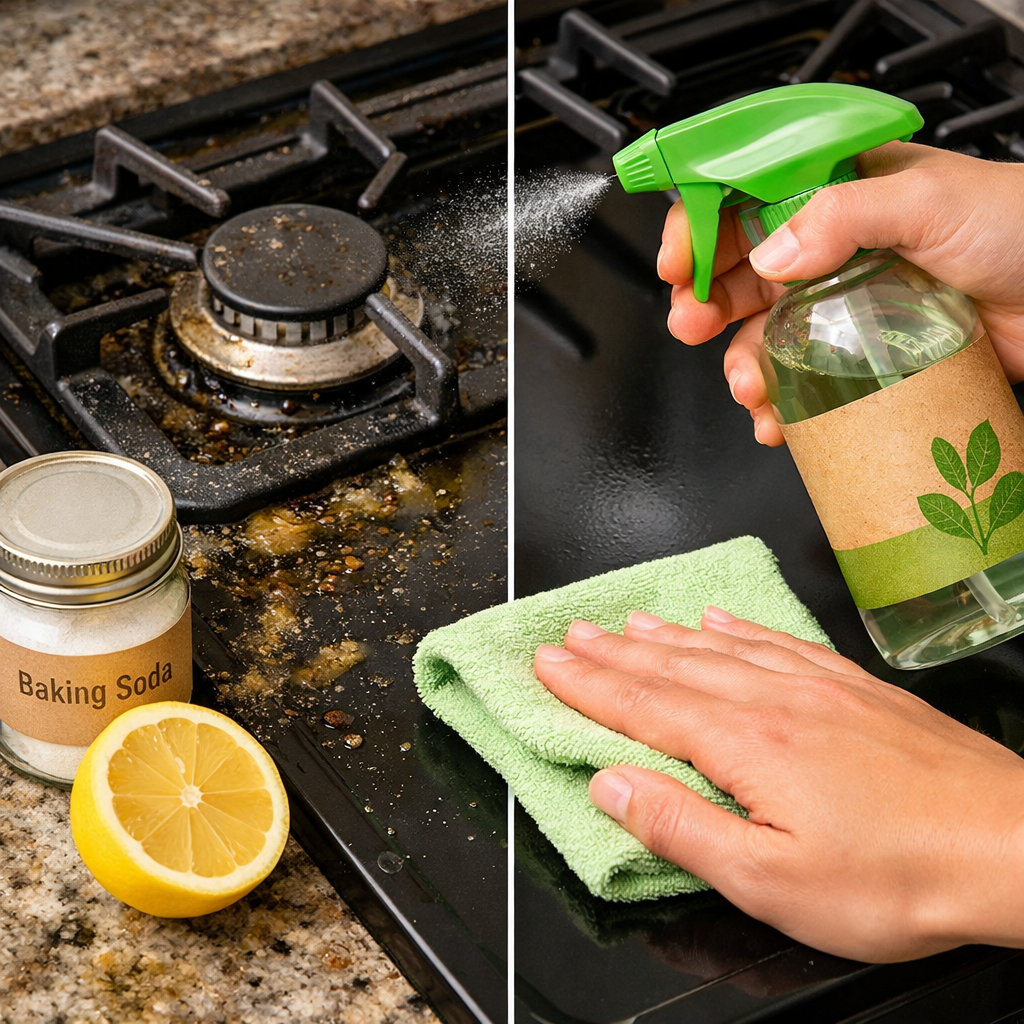
Grease is where eco cleaners prove their worth—or fall short. The good news: safer, plant-forward formulas now cut everyday kitchen grease without harsh fumes, and some options also disinfect with lower-hazard actives. Below, Cleaning Supply Review shares our top eco-friendly household cleaning supplies that actually handle grease, explains when to step up to stronger degreasers, and shows you how to verify certifications, dwell times, and value so you can avoid greenwashing and overspending.
Cleaning Supply Review
Our picks are independent and evidence-led. We cross-check claims on official EPA databases (List N/List Q for disinfectants; Safer Choice for safer chemistry) rather than relying on vendor PDFs. We test on real messes—stovetop oil, tomato sauce, and sticky splatters—and calculate cost per use (per ounce or per wipe) using consistent spray volumes and dilution math. Our sustainability audits evaluate refill systems, recycled content, and the completeness of multi-year CSR reporting and chain-of-custody claims. Methods are standardized for apples-to-apples comparisons.
Greenwashing — Greenwashing is when marketing suggests environmental benefits that aren’t substantiated by transparent data or third-party verification. It often relies on vague terms like “natural” or selective disclosures. Avoid it by checking official registries, full ingredient lists, and current certification scopes.
Seventh Generation All-Purpose Cleaner
For daily degreasing, Seventh Generation Free & Clear strikes a strong balance of performance and safety. It’s 95% USDA Certified Biobased, carries EPA Safer Choice, skips dyes and fragrances, and comes in a 100% recycled plastic bottle; it is not a disinfectant, as noted in Good Housekeeping’s multipurpose cleaner guide. It’s a reliable default for counters and stovetops; pair it with a disinfectant only when pathogen claims are required.
Best use: everyday kitchen grease and crumbs. If you’re scent-sensitive or improving indoor air quality, the fragrance-free formula is a plus. As with any cleaner, wipe with a damp microfiber to minimize residue.
Mrs. Meyer’s Multi-Surface
Mrs. Meyer’s is a scent-forward, biobased option that handles light-to-moderate grease and leaves a just-cleaned aroma. Select products carry Ecologo and are praised for routine messes and pleasant scents in Tasting Table’s cleaner rankings. The trade-off is fragrance strength; ventilate during use, and consider the fragrance-free pick above if you’re sensitive.
Quick tip: spray, allow 30–60 seconds of dwell on greasy spots, then wipe with a damp microfiber towel.
Bona All-Purpose Cleaner
Bona’s all-purpose formula is a gentle, low-residue choice that’s safe near glass and stainless and designed to minimize streaks. It’s 99% biobased and especially good for daily wipe-downs where clarity matters, as noted in Wirecutter’s best all-purpose cleaner review. Avoid using it to tackle baked-on grease; it’s tuned for maintenance cleaning.
Who it’s for: households prioritizing a biobased cleaner that dries clean with minimal streaking.
Clorox EcoClean and Green Works
If you want lower-hazard chemistry with the option to disinfect, Clorox EcoClean and Green Works bridge the gap. Both carry Safer Choice; Green Works also has an Ecologo seal, and EcoClean uses citric acid as the disinfecting active per Wirecutter’s reporting. Citric-acid disinfectants tend to produce fewer fumes than bleach but may have narrower pathogen coverage; always confirm EPA listing and dwell times on the exact product label.
Bottom line: reach for these when you need everyday cleaning plus occasional disinfection without chlorine bleach odors.
Method All-Purpose
Method’s all-purpose sprays are consumer favorites for scent and mid-strength cleaning. They cut routine kitchen grease effectively and typically feature lighter, approachable aromas—strengths echoed in Tasting Table’s rankings. As with any scented cleaner, ventilate and test on inconspicuous spots to avoid finish issues. Sensitive users should compare against fragrance-free alternatives.
Concentrated Degreasers for Heavy Buildup
For baked-on grease—ovens, grills, range hoods—concentrated or high-pH degreasers outperform plant-based sprays but come with trade-offs. Washing soda–based or other high-alkaline formulas can etch natural stone and may require gloves and eye protection, cautions echoed in The Spruce’s cleaner tests. Keep these away from marble or granite unless explicitly approved.
Use flow:
- Scrape loose gunk.
- Apply degreaser; short dwell.
- Agitate with a non-scratch pad.
- Rinse thoroughly and neutralize if label instructs.
How we selected and tested
We prioritized measurable grease removal, verified ingredient safety, real certifications, dwell-time clarity, per-use value, packaging sustainability, and corporate transparency (multi-year CSR + chain-of-custody proof). We ran tomato-sauce and stovetop oil trials on sealed surfaces, tracking dwell, wipes to clean, and residue. We apply the same rubric to every product to keep results comparable.
Table: summary of picks (approximate values; check labels and local pricing)
| Product | Key certifications | Biobased % | Disinfects | Typical dwell time | Bottle material | Approx price/oz | Est. cost per clean | Notes |
|---|---|---|---|---|---|---|---|---|
| Seventh Generation Free & Clear | EPA Safer Choice, USDA Biobased | 95% | No | 30–60s on grease | 100% recycled plastic | $0.18–$0.28 | $0.05–$0.09 | Fragrance-free; daily degreasing |
| Mrs. Meyer’s Multi-Surface | Ecologo (select) | High (biobased) | No | 30–60s | Recyclable PET | $0.20–$0.30 | $0.06–$0.10 | Scent-forward; ventilate |
| Bona All-Purpose | Biobased | 99% | No | 15–30s | Recyclable PET | $0.20–$0.35 | $0.06–$0.12 | Low residue; near-glass/stainless |
| Clorox EcoClean | EPA Safer Choice | — | Yes (citric acid) | Follow label (often minutes) | Recyclable | $0.20–$0.35 | $0.07–$0.12 | Lower-fume disinfecting |
| Clorox Green Works | EPA Safer Choice, Ecologo | — | No | 30–60s | Recyclable | $0.18–$0.30 | $0.05–$0.10 | Everyday cleaning |
| Method All-Purpose | — | Plant-based | No | 30–60s | Recyclable | $0.20–$0.30 | $0.06–$0.10 | Mid-strength, pleasant scents |
Estimated cost per clean assumes ~0.3 fl oz per standard wipe-down; your usage may vary.
Performance on grease and residues
In our tomato-sauce and stovetop oil tests, safer all-purpose formulas matched or nearly matched conventional sprays with modest scrubbing, while concentrates or high-pH degreasers clearly outperformed on baked-on deposits—but can damage sensitive stone if misused, a caution consistent with The Spruce’s testing. Some conventional disinfectants require more time to sanitize than many expect; for example, Clorox wipes often require about 4 minutes of wet contact and Lysol sprays roughly 10 minutes to disinfect, details highlighted by Wirecutter and Good Housekeeping. CNET’s review similarly notes that effective disinfecting often hinges on longer wet contact.
Ingredient safety and certifications
Consumer Reports tested 11 multipurpose cleaners and found only three met EPA Safer Product Standards, and they used independent ingredient screens (such as Made Safe) alongside performance checks—see Consumer Reports’ multipurpose cleaner ratings. EPA Safer Choice — EPA Safer Choice is a voluntary program that reviews product ingredients for human and environmental health. Products must meet strict criteria for toxicity, persistence, and bioaccumulation. Certification evaluates every ingredient and requires supplier disclosure for ongoing verification. We verify Safer Choice and disinfectant registrations on official EPA lists and never rely on marketing PDFs alone.
Cost per use and per-wipe calculations
Cost per use — Cost per use divides the product price by the number of effective cleaning sessions at typical dilution or spray volume. It normalizes value across concentrates, sprays, and wipes so buyers can compare budgets fairly.
Illustrative value comparison:
| Format | Example pack | Typical use rate | Est. cost per clean |
|---|---|---|---|
| Ready-to-use spray | 23–28 oz, $4–$6 | ~0.3 oz/clean | $0.04–$0.10 |
| Concentrate (1:10) | 32 oz, $8 (makes ~352 oz) | ~0.3 oz/clean | ~$0.01 |
| Disinfecting wipes | 75 count, ~$6 | 1–2 wipes/clean | $0.08–$0.16 |
Notes: Concentrates shine on value; wipes can cost more per clean and sometimes dispense multiples at once, increasing waste and cost in practice.
Packaging, refills, and transparency checks
Seventh Generation’s spray uses a 100% recycled plastic bottle, a tangible packaging improvement reported by Good Housekeeping’s multipurpose cleaner guide. Chain of custody — Chain of custody tracks materials from source to finished product through certified handlers. A valid claim names the certifying body, scope, and covered sites. It prevents mixing certified with non-certified materials and enables traceable, auditable sustainability claims. Prefer brands that publish complete multi-year CSR reports (e.g., scopes 1–3, clear goals, and third-party assurance) and offer refills to reduce plastic per use.
What to know before you switch
Start simple: use a Safer Choice or biobased all-purpose for day-to-day degreasing, reserve concentrated degreasers for ovens and grills, and bring in a disinfectant only when pathogen claims are needed. Ventilate during use, consider fragrances and sensitivities, and choose recycled bottles or refills to cut waste and cost.
Match cleaner to task and surface
- Daily counters/stovetops: plant-based all-purpose (e.g., Seventh Generation).
- Light glass/stainless: Bona.
- Heavy oven/grill: concentrated degreaser (use gloves and eye protection).
- Food-contact areas: follow label rinse instructions where required.
Understand dwell time and rinse guidance
Some disinfectants need surfaces to stay visibly wet for 4–10 minutes to meet label claims—examples include Clorox wipes around 4 minutes and Lysol spray near 10 minutes, as summarized by Wirecutter and Good Housekeeping. Citric-acid formulas can reduce fumes but may have narrower coverage; check labels for dwell time and any food-contact rinse requirements.
Avoid damage on stone and sensitive finishes
High-pH formulas (e.g., washing soda) can etch or dull marble and similar stones with repeated use. Spot-test first, use pH-neutral cleaners on natural stone and sealed wood, and avoid vinegar/acid on marble.
Certifications and labels that matter
A few labels meaningfully guide safer chemistry and sustainability when verified against official registries.
| Program | What it means | How to verify | Practical takeaway |
|---|---|---|---|
| EPA Safer Choice | Evaluates every ingredient for human and environmental health criteria. | Search the EPA Safer Choice database by exact product name. | A strong signal of safer chemistry for routine cleaning. |
| EPA List N/List Q | Lists disinfectants effective against specific pathogens with required contact times. | Look up the EPA Registration Number to confirm claims. | Confirms real disinfecting claims and dwell times. |
| Ecologo | Multi-criteria ecolabel covering lifecycle impacts for cleaners. | Check EcoLogo/UL registry for the product and scope. | Adds sustainability assurance beyond ingredients alone. |
EPA Safer Choice and EPA listings cross-check
Clorox EcoClean and Green Works carry Safer Choice, providing safer-chemistry assurance for daily cleaning, and Consumer Reports found only three of 11 multipurpose cleaners met Safer Product Standards—underscoring the value of verification. Dwell time — Dwell time is the period a surface must remain visibly wet with a disinfectant to achieve the pathogen kill claim on the label. If a surface dries early, re-wet to maintain contact. Without full dwell time, products do not deliver labeled disinfection. Always cross-check List N/List Q entries for actives, pathogens, and times.
USDA Biobased and Ecologo scope
Seventh Generation Free & Clear is 95% USDA Certified Biobased, a high renewable carbon content benchmark reported by Good Housekeeping’s multipurpose cleaner guide, and Green Works carries Ecologo. USDA Biobased — USDA Biobased indicates the percentage of organic carbon from renewable biological sources in a product. Higher percentages suggest less reliance on petroleum-based content, but biobased status does not alone guarantee safety, performance, or biodegradability.
Chain-of-custody and sustainability report completeness
Use this quick audit for any brand claim:
- Named certifier and scheme
- Certification scope and covered facilities
- Validity dates and current status
- Public audit summaries or reports
- CSR report with scopes 1–3 (where relevant), targets, progress, and third-party assurance
Frequently asked questions
Do eco-friendly cleaners actually cut tough kitchen grease?
Yes—our tests and independent lab/journalist reports show many safer, plant-forward formulas can match conventional sprays on stovetop and sauce stains with modest scrubbing. For baked-on grease, use a stronger degreaser and protect sensitive surfaces.
Which certifications should I trust when choosing safer cleaners?
Start with EPA Safer Choice for safer chemistry and verify disinfectant claims on EPA lists. Cleaning Supply Review cross-checks these listings and scopes against official databases.
When should I use a disinfectant instead of an all-purpose cleaner?
Use disinfectants for situations requiring pathogen kill claims—after raw meat handling, illness, or high-touch surfaces. Follow label dwell times and re-wet as needed; everyday cleaning usually only needs an all-purpose cleaner.
How can I lower cost without sacrificing safety or performance?
Buy concentrates or bulk jugs to cut cost-per-use, and calculate per-wipe costs before choosing canisters. Cleaning Supply Review compares value using per-use math in our picks.
Are fragrance-free options better for indoor air quality?
Fragrance-free picks reduce scent exposure and can be better for sensitive users. Choose dye- and fragrance-free formulas and ventilate while cleaning for the best indoor air quality.