Top 10 Most Popular Cleaning Product Companies, Backed by Sales Data
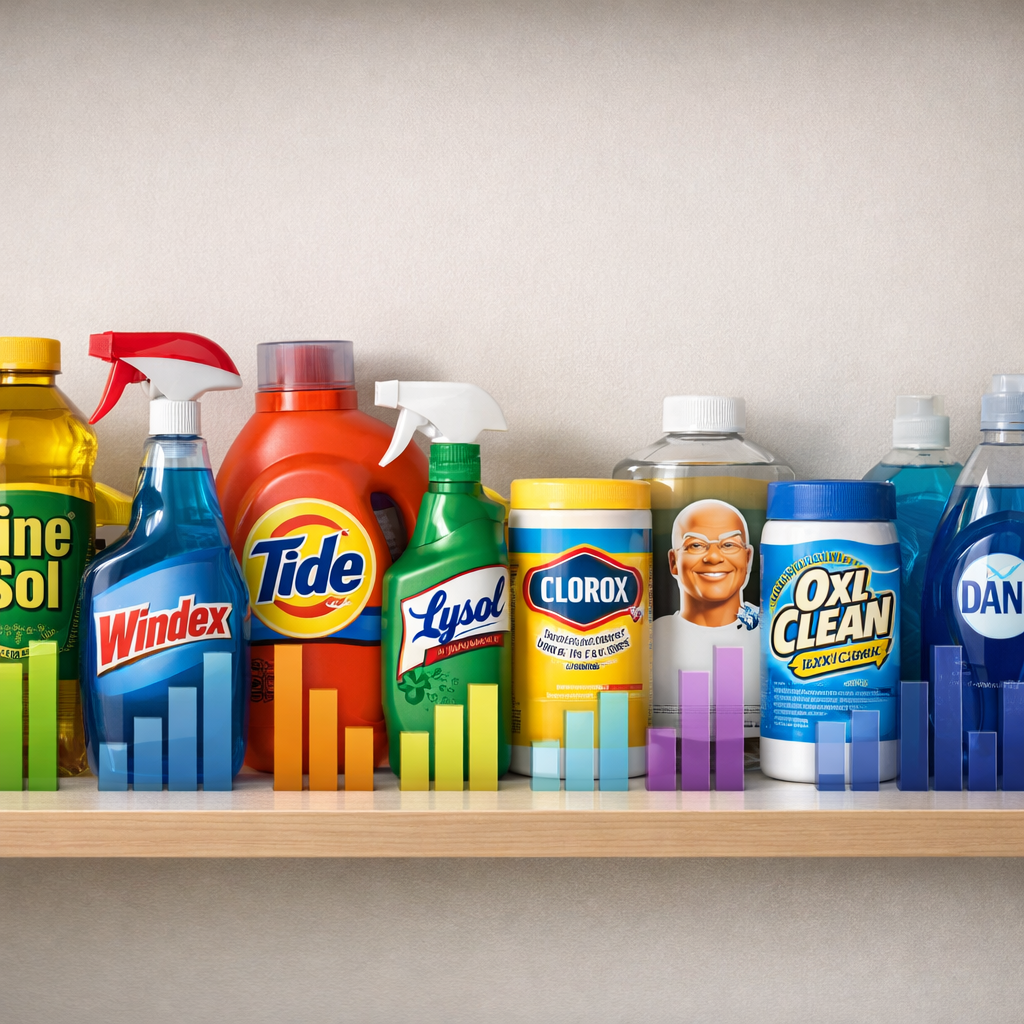
Top 10 Most Popular Cleaning Product Companies, Backed by Sales Data
When buyers ask for the most popular cleaning product companies, they’re really asking which top cleaning brands are winning on shelves and in independent consumer testing—especially in core categories like disinfecting wipes and all-purpose cleaners. Sales-backed popularity is the degree to which a company’s brands show durable, market-wide demand signals across channels and tests. Because audited brand-level revenue isn’t uniformly public, we approximate popularity using retailer distribution, category breadth, repeated test recognition, and sustainability reporting. This guide serves procurement-minded consumers and SMBs, facilities managers, and eco-conscious households who want performance, safety, and transparent sustainability—without guesswork.
How we determined popularity
Proxy-based ranking uses indirect indicators—like retail availability, category coverage, independent testing wins, and noted production capacity—to estimate market popularity when audited sales are unavailable. It triangulates prominence across multiple sources to reduce single-source bias while keeping the method explainable and repeatable. We use this same proxy approach across categories to keep results consistent and comparable.
Why these sources and signals:
- The Good Housekeeping Institute tests and vets hundreds of cleaning products each year, a strong performance and visibility signal for mainstream shoppers (see Good Housekeeping’s best cleaning products methodology and picks).
- Consumer Reports highlighted Mr. Clean Clean Freak as a favorite multipurpose cleaner and notes it meets EPA Safer Choice, showing performance and safety reach in one pick (see Consumer Reports’ cleaning guide).
- Trade and industry roundup coverage helps capture commercial and professional prominence when consumer shelf data undercounts institutional channels (see this comparative industry roundup on LinkedIn).
Scoring dimensions we use (summarized):
| Retail penetration | Brand breadth | Independent test mentions | Presence in trade/roundups | Sustainability reporting signals |
|---|---|---|---|---|
| Mass + club + e‑commerce availability; institutional channels where applicable | Coverage across wipes, APCs, bathroom, dish, specialty | Repeated recognition in lab tests and expert roundups | Frequent inclusion in industry/trade comparisons and buyer guides | Multi‑year CSR and registry‑verifiable claims (e.g., Safer Choice, FSC, recycled-content proof) |
Note: Rankings reflect cross-source visibility rather than audited sales totals.
Cleaning Supply Review
Our test-first stance blends lab and field trials. For wipes, we measure absorbency, wet strength, solution load, linting, and residue on glass and stainless. For sprays and all-purpose cleaners, we assess soil removal on timed grease and soap scum, surface safety, and streaking on mirrors and sealed stone. Field trials span kitchens, bathrooms, and office facilities to mirror daily use.
On sustainability, we verify via official registries and chain-of-custody evidence rather than vendor PDFs, and we prioritize multi-year sustainability/CSR reports that tie claims to operations. We share category findings with method notes and sourcing context so buyers can act with confidence.
Next steps:
- See our latest best all-purpose cleaners with residue-free picks: Best All-Purpose Cleaners of 2026.
- Compare brand trust and support depth: 2025’s Most Trusted Cleaning Brands.
- For sustainability reporting depth, start here: Which Green Cleaning Companies Publish Complete Reports.
Procter & Gamble
P&G ranks high on brand breadth, retailer reach, and repeated test recognition. Mr. Clean Clean Freak Multi-Surface Spray has earned the Good Housekeeping Seal, and its reusable nozzle with lower-cost refills strengthens value and sustainability positioning. Consumer Reports named Mr. Clean Clean Freak its favorite multipurpose cleaner and notes it meets EPA Safer Choice, underscoring performance plus safety. Dawn Platinum is frequently praised for grease-cutting power—evidence of category strength beyond floors and counters. Put together, these signals demonstrate mainstream dominance from kitchens to facilities maintenance.
The Clorox Company
Clorox leads where disinfection and hygiene matter most. Its portfolio—Clorox Bleach, Pine-Sol, Liquid‑Plumr, and disinfecting wipes—spans consumer to industrial needs, supporting broad retailer penetration and institutional purchasing (as summarized in this manufacturer overview from Jesun). In facilities and healthcare, wipes are often preferred for dosing control and compliance with dwell times. In our wipe testing, Clorox-branded wipes typically show strong wet strength and solution load; residue checks on glass and stainless remain a key selection factor for high-touch areas.
SC Johnson
SC Johnson’s popularity is built on surface- and air-care breadth and deep retail placement. Windex, Pledge, Scrubbing Bubbles, and Ziploc reach glass, furniture, bathroom, and storage—categories that see frequent repurchase. Glass cleaner performance is particularly visible in independent testing; in our at-home glass trials, streak-free performance and evaporation rate separate top picks. For bathroom cleaners, we focus on timed soap-scum removal, cling, and rinse residue—where Scrubbing Bubbles-style foams show clear strengths.
Reckitt
Reckitt’s Lysol family remains one of the most visible names in disinfectants—fortified by public-health demand spikes and sustained retail distribution. While multipurpose performance varies by formula, Lysol’s disinfectant credentials, EPA-registered claims, and widespread availability position Reckitt near the top for buyers prioritizing germ kill and brand familiarity across households, schools, and healthcare-adjacent environments.
Colgate-Palmolive
Colgate-Palmolive’s Ajax, Palmolive, Fabuloso, and Murphy Oil Soap cover dish, hard surface, and specialty cleaning—brands that are ubiquitous across mass, dollar, and grocery channels. Fabuloso’s fragrance-led positioning resonates in both value and preference-driven segments. In our tests, scent and residue are decisive: facilities often want low-residue finishes on stone and stainless, while households may lean toward signature fragrances if streaking is controlled.
Church & Dwight
Church & Dwight maintains durable presence through problem-solving formulas in stain removal and laundry-adjacent cleaning. Its value positioning is competitive on a per-ounce basis. For context, Reviewed’s testing pegs OxiClean Bathroom Cleaner around $0.20/oz versus a $0.27 average among competitors—an example of the price-performance lens that budget-focused buyers can apply (see Reviewed’s best shower cleaners analysis).
Ecolab
Ecolab is a commercial powerhouse, especially in hospitality and healthcare, where standardized protocols, training, and dosing systems drive contract decisions. Its prominence is better captured through trade coverage and institutional penetration than consumer shelf data. Choose professional systems when you need concentrated chemistries, dispenser control, and service support; opt for consumer RTU formats when teams are small and training time is limited.
Henkel
Henkel combines retail and professional reach with a growing focus on eco-forward packaging and chemistries—an increasingly important signal in procurement. When comparing options, evaluate concentrated versus RTU formulas for total cost of ownership: concentrates lower per-use cost and shipping weight but require correct dilution and staff training. For RTU, assess residue risk on glass and stone and the availability of refill formats.
Kao Corporation
Kao is a global player with a growing U.S. footprint, often noted for investments in biodegradable, lower-waste formulas. Biodegradable surfactants break down more readily in the environment; verify such claims through third-party registries or certifications that tie biodegradability and toxicity thresholds to specific SKUs. Kao’s emphasis on plant-based, low-waste solutions aligns with buyers aiming to reduce container weight and packaging.
Seventh Generation
Mission-driven and plant-based, Seventh Generation reflects the faster-growing eco segment gaining shelf space and subscription interest. Challenger, refillable models continue to attract sustainability-minded shoppers even when unit volumes trail legacy giants. For example, The Good Trade highlights Blueland’s zero-waste Clean Essentials kit at $46 and Grove Collaborative’s subscription delivery with $4.99 shipping under $69—illustrating refills and DTC mechanics that are reshaping expectations in the aisle.
What the sales-backed signals mean
Sales-backed signals are corroborated indicators—like repeated wins in independent tests, wide retailer placement, and noted production capacity—that collectively approximate market demand when audited sales are undisclosed.
Three takeaways from the evidence:
- Legacy brands dominate distribution and production scale.
- Performance-tested products lead major consumer-lab lists (Good Housekeeping, Consumer Reports).
- Eco-first challengers are growing via refillable and plant-based models (as tracked by The Good Trade and similar outlets).
Pros and cons:
- Legacy scale: broad availability, aggressive pricing, predictable replenishment; but packaging and formulas may modernize more slowly.
- Challenger innovation: refill systems, lower-waste packaging, faster iteration; but higher unit cost, narrower retailer distribution.
How these companies compare on wipes and all-purpose cleaners
| Company | Flagship wipes/APC brands | Test or recognition | Value/format | Notes on residue/streaking tests |
|---|---|---|---|---|
| Procter & Gamble | Mr. Clean Clean Freak (APC) | GH Seal; CR favorite multipurpose pick | RTU with refillable nozzle | Strong soil removal on sealed counters; do glass-specific tests separately |
| The Clorox Company | Clorox Disinfecting Wipes; Clorox Clean‑Up | Frequent lab/trade mentions for disinfection | RTU; bulk canisters | Check residue on glass/stainless; confirm dwell time for kill claims |
| SC Johnson | Windex Multi‑Surface; Scrubbing Bubbles | Glass performance often ranks highly | RTU; trigger/foams | Streak-free glass is a key differentiator; rinse bathroom foams to minimize film |
| Reckitt | Lysol Disinfecting Wipes; Lysol APC | Public-health reputation; wide retail reach | RTU; bulk packs | Verify surface compatibility on stone and sealed wood |
| Colgate-Palmolive | Fabuloso Multipurpose; Ajax | Value- and fragrance-led visibility | RTU; concentrated options | Scent residue can linger; favor microfiber for streak control |
| Church & Dwight | OxiClean sprays (bath/kitchen) | Value pick with per‑oz advantage (Reviewed) | RTU; some concentrates | Rinse on glass/mirrors to avoid film |
| Ecolab | Institutional wipes; neutral APCs | Professional specs and training support | Concentrates; dosing systems | Low-residue neutral cleaners favored for floors/stone |
| Henkel | Surface cleansers and degreasers | Performance formulations; eco packaging programs | RTU and concentrates | Confirm dilution; test on mirrors for haze |
| Kao Corporation | Plant‑based APC lines | Emphasis on biodegradable surfactants | RTU; refills | Verify claims via registries; check gloss on glass |
| Seventh Generation | All‑Purpose Cleaner; Disinfecting Wipes | Eco certifications and retail growth | RTU; refill options | Typically low streaking; confirm on high‑gloss surfaces |
Usage note: TODAY’s ranking reported Simple Green performed well on heavy-duty cleanups but left a film on mirrors—exactly why residue testing on glass is essential when choosing an APC for mixed surfaces (see TODAY’s multipurpose cleaner roundup).
Sustainability verification and transparency checks
Chain of custody is the documented pathway of materials—from source to finished product—validated by independent bodies. It links sustainability claims (such as recycled content or certified fibers) to verifiable records across suppliers, manufacturing, and distribution, reducing greenwashing and increasing procurement confidence.
Major manufacturers are investing in sustainable packaging and eco formulas; use that as context, not proof. Verification checklist:
- Confirm third‑party registry IDs tied to the claim (e.g., safer chemistry or recycled content).
- Verify scope (product vs. facility vs. corporate) so claims aren’t overextended.
- Check cadence and completeness (multi‑year CSR), ideally with external assurance.
- Match claims to SKU‑level documentation and, where applicable, chain-of-custody records.
Where to buy and sourcing tips for consumers and SMBs
Use Cleaning Supply Review’s buying and sourcing guides to benchmark options, then procure through the channels below.
Primary channels:
- Mass retail and grocery, club stores for per‑unit savings, and janitorial suppliers for concentrates and dispensers.
- Direct-buy or DTC options for wipes and refills—brands like Biom and Wipex offer bulk and subscriptions that help control cost and stockouts.
Value math:
- Compare per‑ounce and per‑wipe cost; Reviewed’s price context (e.g., OxiClean Bathroom Cleaner ≈$0.20/oz vs. ~$0.27 average) shows how small deltas add up across facilities.
Quick sourcing steps:
- Define the use case and required claims (e.g., disinfection dwell time).
- Confirm surface compatibility and safety.
- Choose RTU vs. concentrate based on storage, training, and dosing.
- Verify sustainability proofs via registries/CSR.
- Set replenishment cadence and lead times to avoid gaps.
Frequently asked questions
What does sales-backed popularity mean in this ranking
It reflects corroborated market prominence using retail penetration, brand breadth, and independent testing recognition when audited sales aren’t uniformly public. At Cleaning Supply Review, this lets us compare widely available, frequently recommended brands across consumer and commercial channels.
How should buyers weigh lab-tested performance against brand size
Start with lab-tested performance for your use case, then use brand size for availability, pricing, and support. In our reviews, the best outcome pairs top performance with easy replenishment.
What sustainability proofs should I verify before purchasing
Look for third-party registry listings, clear scope definitions tied to specific SKUs, and multi-year sustainability or CSR reports. Cleaning Supply Review recommends favoring products with traceable chain-of-custody documentation over unverified badges.
Are refill and concentrate formats a better value for facilities
Often yes: concentrates and refills reduce per-use cost, storage space, and packaging waste. Confirm dilution, compatible dispensing, and training needs to ensure consistent results.
Is there a quick at-home test to compare wipes or all-purpose cleaners
Yes—test wipe wet strength and lint on glass and stainless. Then assess sprays on a timed grease spot and check for residue or streaking on mirrors and stone-safe surfaces.