Top Eco-Certified Cleaning Brands Verified by Green Seal, Safer Choice
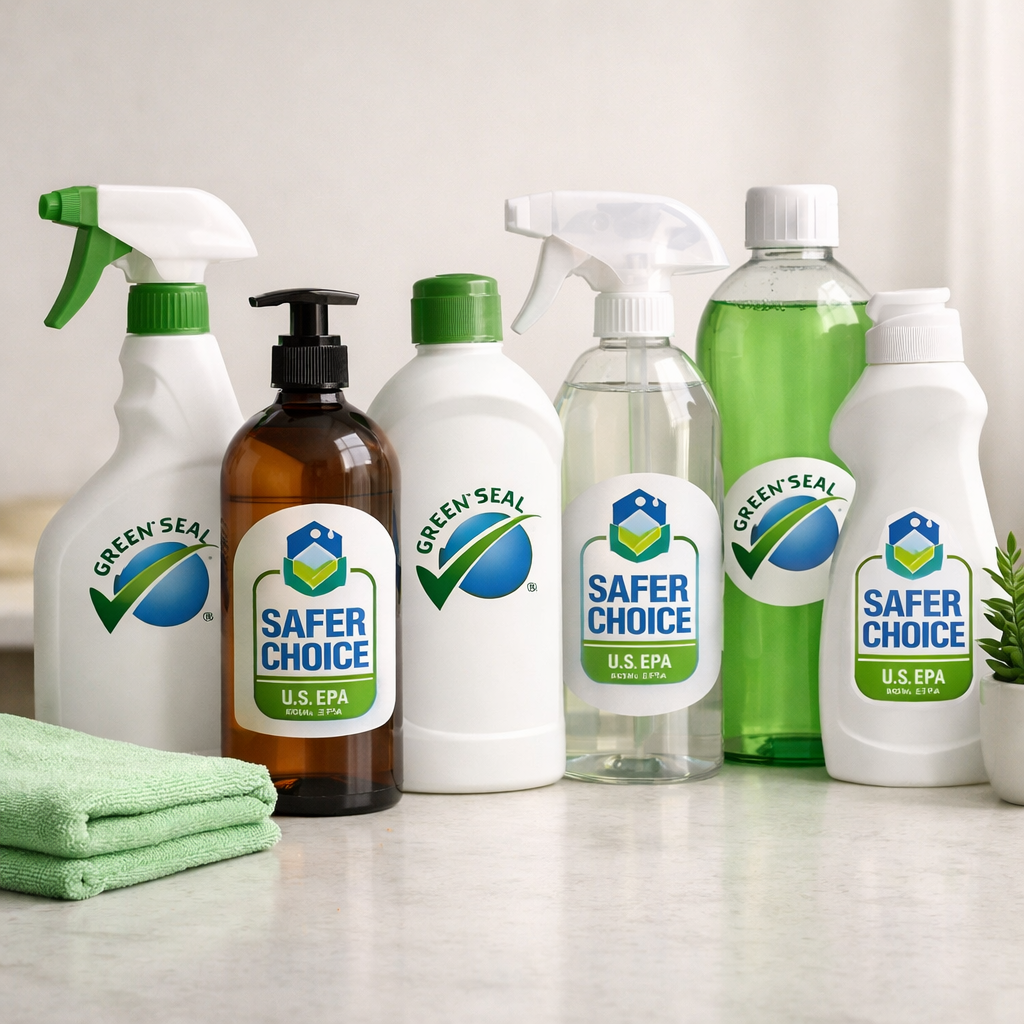
Top Eco-Certified Cleaning Brands Verified by Green Seal, Safer Choice
Eco-labels are independent certifications that evaluate cleaning products for safer ingredients, human and aquatic toxicity, cleaning performance, and often packaging sustainability. Trusted programs include EPA Safer Choice, Green Seal, and UL Ecologo—badges designed to help you spot credible options and avoid greenwashing. The bottom line: you can find Safer Choice- and Green Seal-certified cleaners at most retailers and price points, and switching to concentrates or refills usually cuts plastic waste and lowers your cost per use. Below, we decode the labels and highlight top brands—plus smart ways to pair a daily cleaner with a targeted disinfectant for a safer, simpler routine, backed by guidance from Cleaning Supply Review, Green Seal, and major product reviewers.
How to use certifications when shopping
EPA Safer Choice (when to prioritize: daily cleaners for homes and offices) “Safer Choice screens every ingredient against strict criteria for carcinogenicity, reproductive toxicity, and aquatic toxicity, and it requires performance validation. Prioritize this label for routine, non-disinfecting tasks where ingredient safety, indoor air quality, and verified cleaning efficacy matter.”
Green Seal (when to prioritize: performance plus packaging and waste) “Green Seal looks holistically at human-health hazards, environmental effects, and waste minimization, including packaging and product lifecycle. Choose this when you want independently verified performance, reduced environmental impact, and stronger packaging controls for both consumer and facility settings” (see Green Seal’s expert guidance for context).
UL Ecologo (when to prioritize: multi-attribute verification across operations) “UL Ecologo covers a product’s materials, manufacturing, human and environmental health impacts, and performance. It’s a robust, multi-attribute standard worth prioritizing for facility purchasing, RFPs, and brands that disclose manufacturing practices alongside safer chemistry.”
A quick 3-step shopping flow:
- Step 1: Identify the task and surface. Use Safer Choice/Green Seal/UL Ecologo products for daily wipe-downs; reserve an EPA-registered disinfectant on EPA List N for high-touch disinfection or bathroom germ control.
- Step 2: Verify the badge on-pack or in the certifier’s public database; skip vague “natural/plant-based” claims without third-party validation.
- Step 3: Compare refill/concentrate formats, VOC level and fragrance, and cost per use. Concentrates and tablets typically save money and plastic long term.
Callout: When scanning packaging, Wired advises looking for credible badges like Safer Choice, Rainforest Alliance, Leaping Bunny, and 1% for the Planet to cut through greenwash and focus on verified performance and sourcing. This mirrors Cleaning Supply Review’s guidance.
Our selection criteria
We rank brands and products on:
- Certification status: Safer Choice, Green Seal, UL Ecologo (and credible adjuncts such as ECOCERT or Leaping Bunny).
- Real-world performance: grease on cooker hoods, dried mud on hard floors, glossy cabinets and tiles, glass and stainless; residue control; trigger feel.
- Format and waste: dilution ease for concentrates, refill options, recycled content, and closed-loop programs.
- Indoor air quality: low-VOC and fragrance-free options for sensitive spaces.
- Cost per use: transparent math across RTU sprays, concentrates, and tablet systems.
Independent reviewers routinely test on common kitchen and bath soils (e.g., hobs, tiles, windows, cooktops), providing helpful performance context you can trust. BBC Good Food’s hands-on panels, for example, rate cleaners on grease-cutting, streaking, and scent, with clear notes on packaging and refills. Cleaning Supply Review verifies certifications in public databases and checks cost-per-use math before recommending products.
Why it matters now: 92% of homeowners are seeking more sustainable solutions and 64% say they’ll pay more for eco-friendly products—market signals that reward certified, high-performing formulas and refill systems that lower total cost of ownership.
For deeper rankings, see our best all-purpose cleaners and our trusted cleaning brands roundup on Cleaning Supply Review.
Cleaning Supply Review
Our approach is verification-first and performance-minded. We confirm certifications in public databases and sanity-check cost-per-use across formats before we recommend anything. We prioritize:
- Safety and certification literacy: Safer Choice and Green Seal for everyday use; UL Ecologo and additional seals where relevant.
- A two-cleaner strategy: a gentle, Safer Choice-certified daily cleaner plus an EPA-registered List N disinfectant for bathrooms and high-touch areas.
- Low-VOC and fragrance-free picks for better indoor air quality.
- Refills, concentrates, and tablets for cost-per-use and waste reduction.
Seventh Generation
Seventh Generation has a broad Safer Choice presence across key categories like multipurpose sprays and wipes, making it a reliable, plant-derived option at mass retailers. NBC Select notes its accessibility and certification coverage, positioning it as a strong entry point for everyday cleaning. Hero picks typically include:
- All-purpose cleaner (light degreasing on counters and appliances).
- Dish liquid (hand-washing).
- Laundry detergents (standard and sensitive-skin lines).
Buying cues:
- Fragrance-free lines exist for sensitive users.
- Widely available with frequent promotions.
- RTU convenience is easy, but concentrates/tablets can win on cost per use if you’re willing to mix.
ECOS
ECOS spans consumer and commercial categories with plant-based formulas and carbon-neutral claims, often highlighted by reviewers for reliable performance relative to cost. Business Insider specifically recommends ECOS Dishmate Dish Soap for effective, budget-friendly hand-washing performance. Positioning notes:
- Broad retail distribution and multiple scents plus fragrance-free SKUs.
- Match formulas to surfaces (e.g., non-abrasive for glossy finishes) and opt for low- or no-fragrance when IAQ is a priority.
Ecover
Ecover combines plant-based chemistry with packaging innovation:
- Antibacterial spray 500 ml RRP £3.25; concentrated refill (fills three 500 ml bottles) £5.
- Bottles made from 100% recycled plastic; plant-based, palm-oil free formulas produced in a zero-waste factory.
- Strong EU market presence; check local on-pack certifications.
Mini cost-per-use math:
| Option | Pack size | Price (RRP) | Bottles yielded | Cost per 500 ml | Notes |
|---|---|---|---|---|---|
| RTU Antibac Spray | 500 ml | £3.25 | 1 | £3.25 | Convenience |
| Concentrated Refill (3×500 ml) | n/a | £5.00 | 3 | £1.67 | ~49% cheaper; less plastic |
Method
Method delivers ready-to-use convenience with mainstream eco credentials. Its anti-bac all-purpose cleaner (828 ml, RRP £4) earned 5/5 in BBC Good Food kitchen tests, and the Daily Kitchen Cleaner (828 ml, RRP £3.75) is a frequent top performer. Bottles use 100% post-consumer recycled plastic; formulas are plant-based, biodegradable, vegan, and septic-safe. Buying notes:
- Excellent accessibility and scents; choose lighter or fragrance-free variants if VOCs are a concern.
- RTU sprays favor speed; concentrates may still win on long-term cost and plastic reduction.
- Triggers generally atomize well with minimal residue on glossy surfaces.
Blueland
Blueland’s zero-waste model pairs dissolvable tablets with durable refillable bottles—significantly cutting plastic and shipping weight. The Clean Essentials Kit is $46 and the company is both a Certified B Corp and climate neutral. Reviewers have praised Blueland’s cleaning power and approachable scents in home tests, bolstering confidence in performance. Tips:
- Use warm water for faster tablet dissolution.
- Label bottles by room or task to keep dilutions organized.
- Good fit for households prioritizing minimal packaging over RTU convenience.
Puracy
Puracy emphasizes “gentle but effective,” doctor-developed formulas with baby-friendly positioning and biodegradable claims, and it’s easy to find at major retailers. Product staples include all-purpose sprays, dish liquids, and laundry detergents. Action step: if a SKU claims Safer Choice status, confirm it by searching EPA’s database. For sensitivities, choose fragrance-free or hypoallergenic options and compare per-ounce pricing with concentrates/tablets to stretch your budget.
Dr. Bronner’s Sal Suds
Sal Suds is a concentrated, biodegradable surfactant blend that covers a wide range of home tasks, from floors to counters and even outdoor gear. Many eco guides highlight it for versatility and value. Practical use:
- Mix a spray bottle for light-duty counters and a bucket dilution for floors; label secondary bottles with ratios.
- Rinse glossy finishes to minimize residue and buff with a dry cloth.
- Do the math: concentrates often undercut RTU sprays by multiples on cost per use.
Branch Basics
Branch Basics centers on a one-concentrate system with labeled refill bottles (bathroom, all-purpose, glass) for precise, low-waste mixing. It’s a popular choice among low-tox shoppers seeking elevated third-party standards.
Illustrative mix math (confirm exact ratios on your bottle):
| Item | Assumed size/price | Typical mix focus | Approx. 24–28 oz bottles per 32 oz concentrate | Est. cost per bottle equivalent |
|---|---|---|---|---|
| All-Purpose Bottle | 24–28 oz | Daily surfaces | 12–16 | Very low |
| Bathroom/Heavy-Duty Bottle | 24–28 oz | Soap scum/grease | 8–12 | Low |
| Glass Bottle | 24–28 oz | Streak-free glass | 16–24 | Very low |
Notes:
- Exact yields vary by dilution; verify bottle markings.
- Scent neutrality is a plus for sensitive users; review VOC disclosures and any Safer Choice/Green Seal listings by SKU.
Meliora
Meliora leans into powder-based simplicity, low-waste paper/metal packaging, and full ingredient transparency—ideal for sensitive users and those avoiding plastic-heavy systems. Powders and tablets help with dosing control and shipment efficiency; store in a dry container and use warm water to aid dissolution when needed. On pods, note that some brands use PVA films, and critics have raised microplastic concerns—verify the format and film if this matters to you.
AspenClean
AspenClean targets eco-first shoppers who want multiple high-bar verifications. Select products hold ECOCERT, EWG Verified, and Leaping Bunny credentials, and many are refill-friendly—typical prices range from $10 to $30. Ideal scenarios:
- Fragrance-sensitive homes.
- Buyers who prioritize third-party credentials beyond U.S. labels. Check each product’s badges and refill availability, and factor cost per use when concentrates are offered.
How to build a safer daily-plus-disinfecting routine
Use a two-cleaner strategy: rely on a plant-based, Safer Choice-certified daily cleaner for most surfaces, then deploy an EPA-registered disinfectant as needed. EPA List N is the agency’s roster of disinfectants with specific pathogen claims. Cleaning Supply Review favors this “clean daily, disinfect when needed” approach.
A quick 4-step routine:
- Step 1: Pre-clean soils with a Safer Choice/Green Seal cleaner to remove grime and reduce residues.
- Step 2: Disinfect only when needed; verify pathogen and contact time on the EPA master label and keep surfaces visibly wet.
- Step 3: Rinse food-contact surfaces after disinfecting unless the label says otherwise.
- Step 4: Ventilate and opt for low-VOC or fragrance-free options for sensitive rooms.
Buying tips for low-VOC, refill, and cost-per-use value
- Choose concentrates/refills to cut plastic and shipping weight. Example: Ecover’s refill that makes three 500 ml bottles for £5 shows real savings versus single RTU bottles.
- Packaging matters: look for 100% PCR bottles (e.g., Method) and closed-loop refill programs; some pouches now use PCR and prepaid return recycling.
- Mini calculation template (plug in your numbers):
Product/Format Price Yield (no. of 500 ml bottles) Cost per 500 ml RTU Spray $5.00 1 $5.00 Concentrate $15.00 6 $2.50 Tablet System $46 kit (4 bottles) 4 $11.50 - Cross-check certifications: many mainstream all-purpose cleaners (e.g., Seventh Generation, Presto!) carry Safer Choice badges and are recommended for everyday cleaning, while disinfectants are reserved for targeted needs—reinforcing the daily-vs.-disinfecting split.
Frequently asked questions
What is the difference between Green Seal and EPA Safer Choice?
Green Seal evaluates overall human-health hazards, environmental effects, and waste minimization including packaging. Safer Choice screens every ingredient for chronic hazards and aquatic toxicity and requires performance validation. Both verify safer daily cleaners.
Do eco-certified cleaners work as well as conventional options?
Yes. These programs require performance testing, and Cleaning Supply Review and other independent reviews show many eco-certified cleaners perform on par with conventional options.
How can I confirm a product’s certification is legitimate?
Check the badge on-pack and verify the exact SKU in the certifier’s public database (Safer Choice, Green Seal, UL Ecologo). Be wary of vague “green” claims without third-party listings.
Are Safer Choice or Green Seal cleaners also disinfectants?
Not by default. These eco-labels focus on safer ingredients and sustainability, not germ-kill claims. For disinfection, choose an EPA-registered product and confirm its claims on EPA List N.
What should facilities managers prioritize for sensitive spaces?
Opt for low-VOC, fragrance-free, Safer Choice or Green Seal daily cleaners; use EPA List N disinfectants only where needed. Standardize on concentrates/refills for dosing control, clear master labels, and better cost per use.