Top-Rated Disinfecting Products: EPA List N Cleaners We Recommend
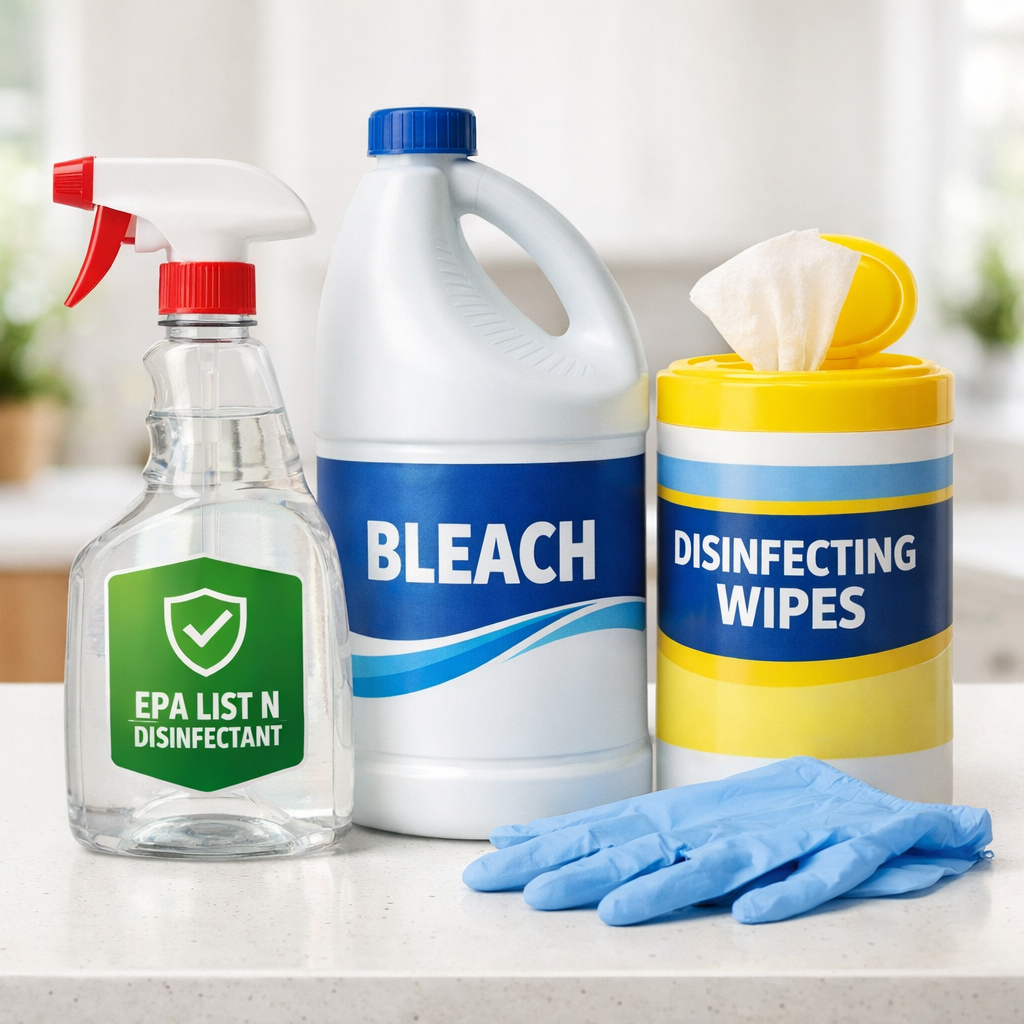
Top-Rated Disinfecting Products: EPA List N Cleaners We Recommend
Looking for top-rated cleaning products for disinfecting that actually deliver? At Cleaning Supply Review, our editors and product testers reviewed EPA List N disinfectant wipes and sprays for verified kill claims, realistic contact times, residue, VOCs, scent, and cost-per-use. The bottom line: choose a List N product, then use it exactly as directed. “Contact time (also called dwell time) is the continuous period a disinfectant must remain visibly wet on a surface to achieve the pathogen-kill stated on the label. If it dries early, re-wet and restart the timing for full efficacy.” Keep reading for our evidence-backed picks—plus how to match chemistry to your surfaces and budgets without sacrificing safety or speed.
How we test and verify EPA List N disinfectants
We start by verifying disinfection claims:
- Confirm the EPA Registration Number on the label.
- Cross-check the product on EPA List N (for SARS‑CoV‑2 where applicable), ensuring the actives and label match.
- Review the master label for required contact times, approved surfaces, and any rinse instructions.
We prioritize label-validated results over marketing claims.
Then we run lab-and-field trials:
- Apply per label to keep surfaces visibly wet for the full contact time; re-wet if needed.
- Assess streaking and residue on common hard, nonporous surfaces (glass, stainless, sealed stone).
- Evaluate scent and potential VOC irritation; note ventilation needs.
- Stress-test packaging—especially wipe canisters—for dry-out or feed issues users routinely report.
We triangulate our findings with third-party testing data to reflect real-world variation by format and active ingredients. For instance, many disinfectant wipes require about 4 minutes of wet time, some Clorox sprays specify approximately 10 minutes, and select residual products (e.g., Microban) claim up to 24 hours of antibacterial protection when left to air-dry, per label directions, as summarized in Good Housekeeping’s lab-backed disinfectant guidance (Good Housekeeping). We also review retail-focused roundups for speed and format nuances (NBC News Select).
What to know before you buy
- Always follow label directions exactly for contact time. Different viruses and bacteria can require different wet times, even within the same product family.
- Residual protection refers to a product’s ability to inhibit microbial growth on surfaces for a period after drying (when used exactly as directed). It complements—but does not replace—routine cleaning and disinfection.
- Trade-offs to consider:
- Disinfectant wipes: fast and convenient for high-touch points, but prone to dry-out if not sealed.
- Disinfectant sprays: some act faster; others need longer wet times. Better for larger areas.
- Concentrates and refills: lower cost-per-use and less waste, but may add dilution steps, rinsing, or storage considerations. Tablet systems can be slower to activate before first use.
1. Cleaning Supply Review methodology and picks overview
What matters most in our selections:
- EPA registration/List N verification where applicable, and clear, label-validated contact times.
- Real-world usability: residue, streaks, scent/VOC profile, and packaging that doesn’t hold you back.
- Value: concentrates, refills, and formats that reduce cost-per-use without undermining performance.
Who each pick is best for:
- Lysol Disinfectant Wipes: quick-turn, high-touch points and on-the-go kits.
- Lysol All-Purpose Cleaner Spray: kitchens/baths needing a fast-acting quat-based disinfectant spray.
- Clorox Clean-Up Cleaner + Bleach: bleach-acceptable bathrooms, lidded trash areas, and stain-prone spots.
- Clorox Disinfecting Wipes: offices and classrooms needing bleach-free wipes.
- Clorox Scentiva Spray: users who prefer scented, bleach-free formulas (with potential longer wet times).
- Microban 24 Hour: high-touch areas with recontamination risk where residual antibacterial protection is useful.
- Mr. Clean Multipurpose Concentrate: budget buyers who want large-format value (verify SKU disinfects).
- Up&Up Lemon Scented Disinfecting Wipes: budget-friendly bulk wipe choice for busy environments.
- Force of Nature Hypochlorous System: lower-chemical load seekers and waste reducers.
- Windex Multipurpose Disinfectant: glass/stainless zones needing clarity plus disinfection.
Key facts to remember:
- Many wipes disinfect in about 4 minutes.
- Some Clorox sprays require up to ~10 minutes wet time.
- Microban’s residual claim is up to 24 hours when air-dried per label.
2. Lysol Disinfectant Wipes
Choose these when speed and simplicity win. Our testing aligns with published label directions: disinfecting in approximately four minutes when the surface is kept visibly wet for the full time. Use enough wipes to re-wet if the surface starts drying, and toss a wipe when it no longer transfers solution. They’re great for door handles, light switches, and breakroom fixtures. Portability is a plus, but smaller canisters can dry out if left ajar—store sealed between uses.
Comparison: Lysol vs. Clorox Disinfecting Wipes
- Similar efficacy on nonporous surfaces when used as directed.
- Scent/style differences; some Clorox variants list longer dwell times depending on the label.
3. Lysol All-Purpose Cleaner Spray
This disinfectant spray is typically quaternary ammonium compound-based (quats), making it a strong fit for kitchen grease and bathroom soils. Labeling commonly notes sanitizing in as little as ~10 seconds for certain bacteria and disinfection around ~2 minutes for specific organisms—always confirm the target pathogen and directions on your exact bottle (NBC News Select). Spot-test on delicate materials (unsealed stone, some soft plastics). Note that peroxide-based variants in the Lysol family can list shorter contact times; differences depend on active ingredients and the specific label.
4. Clorox Clean-Up Cleaner + Bleach
Bleach disinfectant (sodium hypochlorite) remains a gold standard for broad-spectrum disinfection and stain/mold removal on compatible hard, nonporous surfaces. Clorox Clean-Up is marketed to kill 99.9% of bacteria and viruses—check the exact pathogens and contact times on your label (Forbes). Use caution: bleach fumes can be intense, and it’s unsafe for many surfaces (e.g., some metals, fabrics). Ventilate and consider gloves/eye protection as needed. Some Clorox sprays require surfaces to remain wet for about 10 minutes; if the area dries, re-wet and restart the clock.
5. Clorox Disinfecting Wipes
These bleach-free disinfectant wipes are widely available for offices, classrooms, and kitchens on nonporous surfaces. Consumer Reports notes they’re EPA-certified to fight the virus that causes COVID‑19 and other bacteria (Consumer Reports). Pay attention to dwell times—some formulations require longer wet times (around 10 minutes) depending on the label. Keep the surface visibly wet the entire time. For fragrance-sensitive users or those reviewing ingredients, consult EWG’s disinfectant guide for context on actives and additives (EWG).
6. Clorox Scentiva Spray
Scentiva is a bleach-free disinfectant spray with signature scents. It’s a good pick if you prefer fragrance-forward cleaning—but check your contact time, which can be longer (often about 10 minutes) for full disinfection on some labels.
Pros vs. Cons
- Pros: bleach-free, pleasant scents, everyday kitchen/bath versatility
- Cons: possible longer dwell times than faster-acting competitors, scent intensity may be too strong for some; ventilate as needed
7. Microban 24 Hour Multi-Purpose Cleaner
Microban’s value proposition is residual antibacterial protection: when used exactly per label and left to air-dry, it disinfects and then inhibits bacterial growth for up to 24 hours on hard, nonporous surfaces. That residual claim doesn’t replace disinfection—you must first meet the labeled contact time to kill targeted organisms. We recommend it for high-touch areas (railings, doorknobs) where recontamination risk is high and frequent re-wiping is impractical.
Usage flow:
- Clean visible soil
- Apply and keep wet for the labeled contact time
- Allow to air-dry fully to enable residual benefits
8. Mr. Clean Multipurpose Concentrate
If you prioritize value, the Mr. Clean Multipurpose 2X Concentrated format delivers low cost-per-use when diluted—but directions vary by SKU. Verify on-label whether your exact bottle disinfects, and follow any rinse steps (the 2X concentrate typically requires rinsing). Large sizes lower price per ounce but add mixing and storage. For big homes or facilities, concentrates can outcompete wipes and ready-to-use sprays when used correctly.
Cost-per-use tips:
- Compare price per ready-to-use ounce based on dilution ratio.
- Estimate surfaces per batch and frequency of use.
- Factor in any required rinse or PPE.
9. Up&Up Lemon Scented Disinfecting Wipes
Target’s value wipes punched above their price in third-party tests. Consumer Reports found they outperformed others, easily removing sriracha, oil, and jam and dispensing cleanly from the roll (Consumer Reports). They’re a smart choice for budget-conscious households, classrooms, and busy front desks. As always, keep surfaces wet for the full label time and reseal the lid tightly to reduce dry-out. Rotate stock in high-traffic areas.
10. Force of Nature Hypochlorous System
This countertop system electrolyzes water, salt, and a bit of vinegar to generate hypochlorous acid (HOCl), a disinfectant used in healthcare and food settings. Reviews note that Force of Nature is listed on EPA’s List N for use against SARS‑CoV‑2, with claims to kill 99.9% of germs including Norovirus, MRSA, Salmonella, and Influenza A—always verify model-specific labeling and contact times (Force of Nature review). It’s ideal for minimizing harsh chemicals and plastic waste. Remember: generated HOCl has a freshness window; mix only what you’ll use within the device’s stated timeframe.
11. Windex Multipurpose Disinfectant
For mixed-surface zones where clarity matters—glass, mirrors, sealed stainless—Windex Multipurpose Disinfectant balances streak control with List N disinfection. Consumer Reports notes it’s EPA-certified to fight the COVID‑19 virus along with other bacteria (Consumer Reports). It won’t be as streak-optimized as a dedicated glass-only cleaner, and its disinfection dwell time may be longer—be sure to check and follow the label.
How to match chemistry to surface and use
Use the right active ingredient for your surfaces and goals.
| Active ingredient | Typical pros | Typical cons | Typical label contact times | Surfaces to avoid/notes |
|---|---|---|---|---|
| Bleach (sodium hypochlorite) | Broad-spectrum, tackles stains/mold | Strong fumes, may discolor/damage materials; never mix with ammonia/acids | Often 1–10 minutes (label-specific) | Avoid on many metals, fabrics, unsealed stone; ventilate |
| Quats (e.g., benzalkonium chloride) | Widely available, good on kitchens/baths | Some residues; fragrance/VOC concerns for sensitive users | Often ~2–10 minutes (label-specific) | Spot-test on delicate finishes; follow any rinse steps |
| Hydrogen peroxide | Lower-odor and lower-residue than some quats | Can discolor fabrics; not all formulas disinfect | Often ~1–10 minutes (label-specific) | Check label for material compatibility |
| Hypochlorous acid (HOCl) | Effective, often perceived as lower-toxicity | Requires freshness; stability varies | Often a few minutes (label-specific) | Use freshly generated per device instructions |
Sidebar facts:
- Some Clorox sprays require around 10 minutes of wet time; many wipes disinfect in ~4 minutes; select Lysol/peroxide sprays list ~2-minute times—always check your specific label (Good Housekeeping; NBC News Select).
- Practical sequence: Remove visible soil → Pre-clean heavy grease → Apply enough product to keep the surface wet for the full contact time → Air-dry or rinse if the label instructs.
See Cleaning Supply Review’s residue-free cleaner picks for deeper surface-care guidance.
Cost-per-use and refill formats
- Choose concentrates or gallon refills to cut costs for routine disinfection—just note that some require precise dilution and rinsing (e.g., certain Mr. Clean 2X concentrates).
- Refill and tablet systems cut plastic waste, but some cleaner tablets can take around 45 minutes to dissolve before first use, which can delay quick tasks (Wirecutter).
- Quick calculator: Convert concentrates to ready-to-use cost per ounce, estimate number of rooms/high-touch points per bottle, and compare against wipe canister counts to see true cost-per-use.
Safety, ventilation, and fragrance considerations
- Bleach-based disinfectants produce strong fumes and are not safe for all surfaces—use only on compatible materials, ventilate well, and never mix with other chemicals (National Wiper).
- For ingredient transparency and health ratings, consult EWG’s disinfectant cleaner guide; choose fragrance-free or low-VOC options if you’re scent-sensitive (EWG).
- Quick fact: Germs can persist for days on surfaces—up to 5 days on glass, 4 days on wood, and 3 days on plastic—supporting routine disinfection of high-touch areas (National Wiper).
How to check EPA registration numbers and master labels
- Find the EPA Reg. No. on your product (e.g., 12345-12). Search the EPA List N site and confirm the product’s active ingredients, organism claims, and required contact time.
- If you see a supplemental distributor number (e.g., 12345-12-2567), it refers back to a primary registration when the directions are identical.
- Capture the exact product name/SKU and confirm whether your claim is disinfecting vs. sanitizing; brands may offer multiple actives with different directions.
Frequently asked questions
What is EPA List N and how do I confirm a product is listed?
EPA List N is the roster of disinfectants registered to kill SARS‑CoV‑2 when used as directed. Confirm by locating the EPA Reg. No. on your label and matching it—plus the contact time—on List N; see Cleaning Supply Review’s quick-check steps above.
How long should surfaces stay wet for effective disinfection?
Keep them visibly wet for the full label-specified contact time; if drying occurs, re-wet and restart timing—this is the key step we emphasize at Cleaning Supply Review.
Are wipes or sprays better for everyday disinfecting?
Wipes are convenient for quick high-touch cleanups and often disinfect in about 4 minutes; sprays can be faster or slower depending on formula and are more economical for larger areas—choose based on space and label times, as we do in our picks.
Which active ingredients are considered lower toxicity options?
Hydrogen peroxide and hypochlorous acid are commonly viewed as lower-toxicity choices versus bleach or some quats, but always verify the product’s label, EPA registration, and safety directions; see our chemistry table above.
Can I use EPA List N disinfectants on food-contact surfaces?
Generally no—unless the label specifically allows it and provides a rinse step; for prep areas, use a food-contact surface sanitizer and follow directions carefully, as we note throughout this Cleaning Supply Review guide.