Who Sells the Best Plant-Based All-Purpose Cleaners Right Now
Who Sells the Best Plant-Based All-Purpose Cleaners Right Now
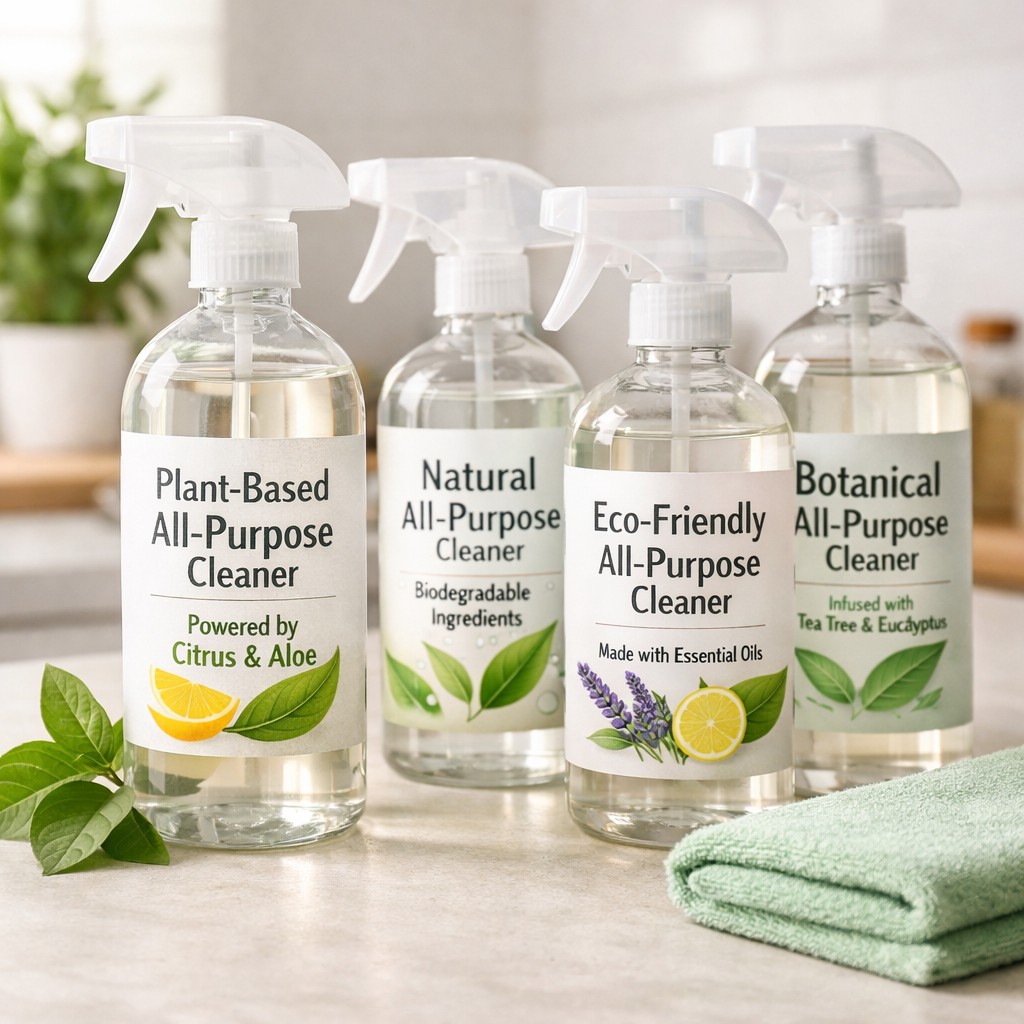
Plant-based all-purpose cleaners now rival conventional formulas for everyday messes, especially when you allow a short dwell time on stubborn grease. Today’s leaders include Method, Seventh Generation, Branch Basics, Meliora, Better Life, Dr. Bronner’s/Sal Suds, Aunt Fannie’s, and Bon Ami (as a scrub-sidekick). Expect trade-offs: slightly longer dwell on baked-on soils and occasional need for a scrubber, but strong results on counters, glass, and sealed surfaces. A ~30-second dwell on stovetop splatter consistently boosts performance in our tests and in independent roundups like One Green Planet’s recommendations.
“Plant-based cleaner” = a formula built primarily on plant-derived surfactants and solvents rather than petroleum-based ones. Plant-derived does not guarantee hypoallergenic; performance varies by surfactant blend, dilution, and dwell time. Many plant-based picks feature biodegradable surfactants and low-VOC profiles, which we prioritize for sensitive households.
How we test plant-based all-purpose cleaners
Cleaning Supply Review blends controlled lab work with at-home trials across kitchens, baths, and high-touch zones. In the lab, we score soil removal (stovetop grease, dried food), residue and streaking on glass/steel, and pH. At home, we assess fume intensity/VOCs by nose (qualitative), rinse feel on bare hands as a non-irritation screen, and labeling accuracy. We verify ingredient disclosures and certifications where applicable. Our picks and comparisons below reflect this method.
What we measure and why:
- Cleaning power vs. dwell time on tough messes; a 30-second dwell on heavy grease is our benchmark for plant-based sprays (consistent with One Green Planet’s guidance).
- Ingredient transparency and certifications: EPA Safer Choice, B Corp, Leaping Bunny, and cross-checks via consumer resources cited by Women’s Health that point to the EWG Guide as a research starting point.
- Cost-per-use and refillability to reflect real-world value and waste.
Product snapshot from our latest round of testing (approximate costs; ratings reflect our lab/home evaluations):
| Product | Format | Fragrance Options | Notable Certifications | Refillable? | Grease (30s dwell) | Soap Scum | Glass Streaking | Approx. Cost per 16 oz |
|---|---|---|---|---|---|---|---|---|
| Method Pink Grapefruit | Ready-to-spray | Essential-oil scented | B Corp; 100% recycled bottle | Yes (bulk available) | Very good | Good | Low | ~$2.50 |
| Seventh Generation Free & Clear | Ready-to-spray | Fragrance-free | EPA Safer Choice | Yes (bulk available) | Good | Good | Low | ~$2.75 |
| Branch Basics Concentrate (All-Purpose dilution) | Concentrate | Fragrance-free | — | Yes | Very good | Good | Low | ~$1.50 |
| Meliora All-Purpose Tablets | Tablet refill | Unscented | — | Yes (keep bottle) | Good | Fair–Good | Low–Moderate | ~$2.00 |
| Better Life All-Purpose | Ready-to-spray | Essential-oil scented | — | Yes (bulk available) | Good | Good | Moderate | ~$3.00 |
| Dr. Bronner’s Pure-Castile (spray dilution) | Concentrate | Unscented or EO-scented | — | Yes | Good | Good | Low | ~$0.20–$0.40 |
| Sal Suds (spray dilution) | Concentrate | Fragrance-free | — | Yes | Very good | Good | Low | ~$0.25 |
| Aunt Fannie’s All-Purpose (vinegar) | Ready-to-spray | Essential-oil scented | — | — | Good | Good | Moderate | ~$4.00 |
| Bon Ami Powder Cleanser | Powder | Unscented | — | — | Excellent (with scrub) | Excellent | — | N/A (per-task pennies) |
Note: Costs vary by retailer; concentrate math uses typical dilution ratios.
What to look for in a plant-based cleaner
Use this quick checklist to match your needs:
- Fragrance profile: For sensitivities, choose fragrance-free cleaner formulas; Seventh Generation Free & Clear has zero synthetic fragrance/dyes and holds EPA Safer Choice, a reliable pick for sensitive homes.
- Format and waste: Prefer concentrates and tablet refills to cut plastic. Meliora’s unscented tablets keep ingredient lists short and eliminate single-use bottles, a win for low-waste routines per deep-dive comparisons from My Chemical-Free House’s 100+ product analysis.
- Surface fit: Most options are safe on sealed counters, appliances, and painted walls. Use caution on natural stone with acidic or vinegar-based formulas.
- Disinfection reality check: Most plant-based all-purpose products are cleaners, not disinfectants; keep a separate EPA-registered disinfectant for pathogen control, and follow the label’s dwell time.
Dwell time = the amount of time a cleaner should sit wet on the surface before wiping. Longer dwell lets surfactants break down soils more effectively, especially grease. It improves cleaning but does not convert a non-disinfectant into a germ-killing product.
Comparison criteria
For sensitive households, compare options across:
- Cleaning performance vs. dwell: Note any difference between fragrance-free and essential-oil variants on residue or streaking; allow ~30 seconds for heavy grease where recommended.
- Ingredient transparency and third-party validations: EPA Safer Choice, B Corp, and published ingredient disclosures. Method is a B Corp and packages in bottles made from 100% recycled plastic—an easy sustainability win.
- Packaging/refills and cost-per-use: Concentrates/tablets often halve cost-per-16oz. For example, MamaSuds concentrate can pencil out to about $5.25 per 16 oz when diluted, illustrating concentrate economics highlighted by My Chemical-Free House.
Suggested “Best for” quick labels:
- Fragrance-sensitive: Seventh Generation Free & Clear
- Plastic-free: Meliora tablets
- Lowest routine cost: Dr. Bronner’s/Sal Suds dilutions or Branch Basics concentrate
- Fastest degreasing with dwell: Method or Sal Suds
Method
Method remains a mainstream go-to for everyday messes thanks to solid grease-cutting paired with recyclable packaging. On stovetop splatter and oily fingerprints, a ~30-second dwell lifts soils reliably in our tests. Sustainability credentials include B Corp status and bottles made with 100% recycled plastic. If you like scent, Pink Grapefruit uses real grapefruit oil rather than synthetic fragrance—reflecting the broader essential-oil trend across plant-based cleaners highlighted by One Green Planet’s roundup. It’s an essential-oil cleaner in a recycled plastic bottle that balances performance and packaging sustainability for daily use.
Seventh Generation
Seventh Generation is a transparency leader with options tailored to sensitive households. Free & Clear is a fragrance-free cleaner with zero synthetic fragrance and dyes and carries the EPA Safer Choice mark, making it a strong default for families minimizing triggers. Prefer a light scent? Lemon Chamomile uses 100% essential oils/botanical fragrance (no synthetics). Many SKUs also carry USDA biobased content claims; compare price-per-16oz to store brands, as bulk sizes can narrow the gap. This is an EPA Safer Choice all-purpose staple we continue to recommend.
Branch Basics
Branch Basics is a versatile concentrate built for whole-home routines and chemical sensitivities. It’s 100% plant- and mineral-based, fragrance-free, and biodegradable, with dilution ratios that adapt by task for value and performance. Its “widely recommended” status across surfaces (even laundry and floors) has been noted by The Strategist, underscoring its broad appeal.
Mini dilution chart (common mixes):
- All-Purpose spray: 1 oz concentrate + 15 oz water (16 oz bottle)
- Bathroom/heavy-duty: 2 oz concentrate + 14 oz water
- Glass/mirrors: 0.5 oz concentrate + 15.5 oz water Approximate cost per 16 oz All-Purpose: ~$1.50, depending on concentrate price.
Meliora
Meliora’s tablet refill cleaner is the plastic-free, short-ingredient-list choice for zero-waste households. Drop a tablet into a reusable bottle, add water, and you’re set—no single-use plastic, minimal storage, and an unscented profile that suits many sensitivities. The brand’s broader sustainability ethos (including powder scrubs) often appears in thorough low-tox roundups like My Chemical-Free House. If your priority is a tablet refill cleaner with minimal packaging, Meliora leads.
Better Life
Better Life offers a user-friendly plant-based lineup with pleasant essential-oil scents and task-specific SKUs. The all-purpose formulas handle daily wipe-downs smoothly; the floor cleaner is plant-based and biodegradable, useful on sealed wood and even marble when used as directed. Compared with concentrates, per-bottle costs are higher, but it’s a straightforward, off-the-shelf solution for renters or busy homes that prefer grab-and-go simplicity.
Dr. Bronner’s and Sal Suds
Castile-style soaps and Sal Suds concentrates are time-tested, budget-friendly workhorses when you dilute correctly. Pure-Castile Soap (plant-based oils) can be mixed for sprays, floors, and more—truly all-purpose with the right ratios. Sal Suds (a coconut-derived surfactant blend) offers extra degreasing and rinses clean. Both are frequently recommended in consumer guides such as Yahoo’s natural cleaning roundup.
Dilution examples:
- Castile spray cleaner: 1/2 Tbsp per 16 oz water
- Sal Suds spray cleaner: 1 tsp per 16 oz water
- Mopping: 2–3 tsp per gallon (either product)
- Heavy soil: Increase dosage by 50–100%, allow 30–60 seconds of dwell Patch test on finishes and for personal sensitivities.
Aunt Fannie’s
If you want vinegar-powered cleaning with simple ingredients, Aunt Fannie’s is a strong natural all-purpose pick. Its vinegar base helps with greasy films and soap scum on sealed surfaces, though avoid natural stone due to acidity. Major product guides like Business Insider have recommended it repeatedly; scents rely on essential oils, so fragrance-sensitive users should consider fragrance-free alternatives.
Bon Ami
Bon Ami is the non-toxic, non-abrasive scrubbing powder we reach for when liquids stall out. It shines on baked-on cookware, tubs, and sinks; pair it with a soft sponge to avoid scratching. It has long been highlighted by experts and industry overviews such as BPI’s natural cleaning products report and earns top marks from safety-focused reviewers. Use it as your stuck-on grime partner alongside a liquid spray.
Side-by-side performance and use cases
Quick-glance guide—based on our lab and home evaluations—to match brands with messes and household needs:
| Brand | Format | Best For | Dwell Time Notes | Fragrance Profile | Notable Certs | Price-Per-16oz |
|---|---|---|---|---|---|---|
| Method | Ready-to-spray | Fast daily degreasing | ~30s boosts stovetop performance | Essential-oil scented | B Corp; 100% recycled bottle | ~$2.50 |
| Seventh Generation Free & Clear | Ready-to-spray | Fragrance-sensitive homes | Standard wipe; extend to 30s on grease | Fragrance-free | EPA Safer Choice | ~$2.75 |
| Branch Basics | Concentrate | Whole-home value/dilutions | Adjust dilution; 30s on heavy soil | Fragrance-free | — | ~$1.50 |
| Meliora | Tablet refill | Low-waste routines | 30–60s on sticky residues | Unscented | — | ~$2.00 |
| Better Life | Ready-to-spray | Off-the-shelf simplicity | 30s on heavier grease | Essential-oil scented | — | ~$3.00 |
| Dr. Bronner’s/Sal Suds | Concentrate | Lowest cost-per-use | 30–60s on tough messes | Unscented or EO-scented (Castile) | — | ~$0.20–$0.40 |
| Aunt Fannie’s | Ready-to-spray | Vinegar cleaning on sealed surfaces | 30s helps with mineral films | Essential-oil scented | — | ~$4.00 |
| Bon Ami | Powder | Stuck-on grime and scouring | Use as paste; keep surface wet | Unscented | — | N/A |
Scenarios:
- Fragrance-sensitive: Seventh Generation Free & Clear
- Low-waste: Meliora tablets
- Whole-home concentrate: Branch Basics
- Budget workhorse: Dr. Bronner’s or Sal Suds
Note: Most entries are cleaners, not disinfectants; keep a separate EPA-registered disinfectant for high-risk areas.
Packaging, refills, and cost per use
Switching to concentrates or tablets can cut both plastic and cost dramatically:
- Concentrate math: A $42 bottle yielding ~8 16-oz cleaners works out to about $5.25 per 16 oz—an illustrative example from My Chemical-Free House’s concentrate comparisons.
- Plastic savings: Tablet systems like Meliora reuse your bottle; concentrates refill the same sprayer for months.
- Recycled content: Method uses bottles made from 100% recycled plastic, which reduces virgin plastic demand. Pro tip: Use a simple calculator—enter concentrate price, dilution ratio, and bottle size—to estimate cost-per-16oz and annual plastic saved.
Safety, sensitivities, and certifications
For sensitive households, prioritize clear disclosures and meaningful certifications.
- EPA Safer Choice evaluates ingredients for human and environmental safety; Seventh Generation Free & Clear carries this mark and avoids synthetic dyes and fragrances.
- The EWG Guide to Healthy Cleaning is frequently cited as a consumer research tool by resources like Women’s Health; use it alongside brand disclosures.
- Labeling gaps: U.S. labels aren’t required to list every ingredient. Lean on published ingredient lists, certifications, and unscented/fragrance-free claims to assess fit.
Fragrance-free means no added masking or perfuming agents, including essential oils. Unscented may include masking scents to neutralize odors. For sensitivities, select products explicitly labeled fragrance-free and verify disclosures for essential oils or botanical extracts.
Our picks and who should buy what
Based on Cleaning Supply Review testing:
- Best overall everyday spray: Method Pink Grapefruit — strong daily clean; allow ~30s dwell for heavy grease; 100% recycled bottle.
- Best fragrance-free: Seventh Generation Free & Clear — EPA Safer Choice; zero synthetic fragrance/dyes.
- Best concentrate for whole-home: Branch Basics — plant/mineral-based, fragrance-free; task-based dilutions stretch value.
- Best plastic-free refills: Meliora tablets — unscented, short ingredient list; very low waste.
- Best vinegar-based cleaner: Aunt Fannie’s — effective natural pick in major guides; use on sealed, non-stone surfaces.
- Best scrub companion: Bon Ami — non-toxic, non-abrasive powder for stuck-on grime.
- Best castile-style versatility: Dr. Bronner’s — plant-based oils; ultra-economical when diluted; Sal Suds for extra degreasing.
Two-cleaner strategy: Pair a daily low-VOC cleaner with an EPA-registered disinfectant for high-risk zones. Most plant-based all-purpose products are not disinfectants.
If you’re building a broader kit, see our latest best all-purpose cleaners guide and our most trusted cleaning brands ranking for more vetted options.
Frequently asked questions
Do plant-based all-purpose cleaners work as well as conventional ones?
In our tests, many do for everyday messes. Allow ~30 seconds of dwell on heavier grease and use a scrub partner (like Bon Ami) for baked-on soils.
What certifications matter for safer plant-based cleaners?
EPA Safer Choice, reputable third-party labels, and transparent ingredient disclosures; we rely on these in our reviews. Use consumer tools referencing the EWG Guide as a cross-check if you have sensitivities.
Should sensitive households choose fragrance-free or essential-oil scented formulas?
Choose fragrance-free to minimize triggers; that’s our default recommendation for sensitive homes. If you want scent, pick clear essential-oil blends and patch test—botanicals can still irritate some users.
Are concentrates and tablets really more economical and lower waste?
Yes—our cost analyses show concentrates and tablets cut plastic and often drop cost-per-16oz. Many dilutions land near $1–$2 per 16 oz, with some even lower.
Can an all-purpose cleaner disinfect, or do I need a separate product?
Most plant-based all-purpose cleaners are not disinfectants. We recommend keeping an EPA-registered disinfectant for high-risk areas and following its dwell time.